E-Commerce Email Marketing: Strategies, Tips, and Best Practices
E-Commerce Email Marketing is a proven, high-ROI channel that helps businesses build relationships, increase conversions, and drive long-term growth. By combining personalization, automation, and performance tracking, brands can deliver relevant messages that keep customers engaged and coming back.
The Importance of Email Marketing in E-Commerce
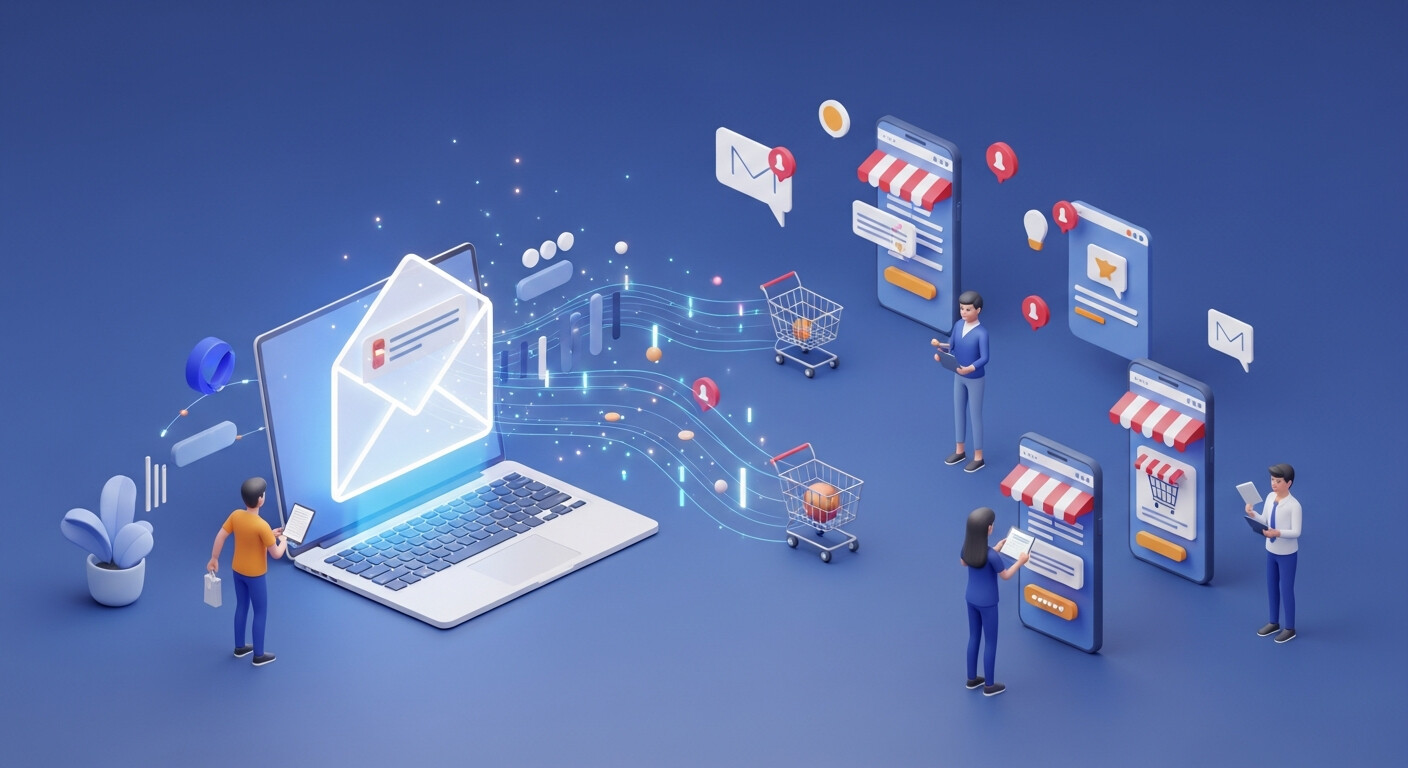
E-Commerce Email Marketing is far more than just another way to drive traffic to your site; it is a powerful, cost-effective channel that delivers your brand message directly to consumers at every stage of the buying journey. By reaching customers in a personal, one-to-one environment, E-Commerce Email Marketing builds stronger relationships, increases brand loyalty, and consistently delivers a return on investment that’s hard to ignore. Here’s why E-Commerce Email Marketing matters:
Best ROI
E-Commerce Email Marketing generates an average of $36 for every $1 spent, according to research from Campaign Monitor, making it one of the highest-performing digital marketing channels—second only to organic search. Email Marketing for E-commerce is especially effective because campaigns are relatively inexpensive to create, automate, and scale, allowing businesses to drive repeat purchases, promote new products, and recover abandoned carts without significant advertising spend.
Targeting & Segmentation
With E-Commerce Email Marketing, advanced targeting and segmentation allow brands to deliver highly personalized experiences based on customer behavior, preferences, purchase history, and lifecycle stage. This level of personalization results in higher open rates, stronger engagement, and improved conversion rates, as customers receive content and offers that are relevant to their specific needs and interests.
Direct, Owned Channel
Unlike social media platforms where algorithms determine who sees your content, E-Commerce Email Marketing provides a direct, owned communication channel. Your email list belongs entirely to your business, giving you consistent access to your audience without reliance on third-party platforms. This control ensures long-term stability, better customer relationships, and greater freedom to communicate your message on your own terms.
Creating Your E-Commerce Email List
Email Address Gathering Tactics
- Website Opt-In Forms:
Website opt-in forms are a foundational element of successful E-Commerce Email Marketing. Place prominent signup boxes on high-traffic areas such as your homepage, footer, checkout pages, and blog articles to maximize visibility. Encourage visitors to subscribe by offering compelling incentives like first-time purchase discounts, free shipping, loyalty rewards, or access to exclusive content. Clear messaging and strong calls to action help communicate the value of joining your email list and support long-term E-Commerce Email Marketing growth. - Exit-Intent Pop-Ups:
Exit-intent pop-ups are a powerful tactic in E-Commerce Email Marketing to capture potential subscribers just before they leave your site. By triggering at the moment a user shows intent to exit, these pop-ups can present time-sensitive offers such as limited-time discounts, free resources, or exclusive deals. When designed thoughtfully and used sparingly, exit-intent pop-ups can significantly reduce bounce rates and convert abandoning visitors into engaged email subscribers. - Lead Magnets:
Lead magnets play a critical role in E-Commerce Email Marketing by offering something of real value in exchange for an email address. Effective lead magnets may include free eBooks, buying guides, style lookbooks, how-to resources, discount codes, or early access to upcoming product launches. High-quality lead magnets position your brand as helpful and trustworthy, making subscribers more likely to engage with future E-Commerce Email Marketing campaigns. - Social Media Campaigns:
Social media campaigns can effectively support E-Commerce Email Marketing by expanding your reach beyond your website. Hosting contests, giveaways, or exclusive promotions on social platforms encourages users to subscribe to your email list for a chance to win or receive special offers. By integrating email signups into social media efforts, brands can attract new subscribers while strengthening their overall E-Commerce Email Marketing strategy.
How To Segment Your Audience For Personalized Campaigns

As soon as you begin collecting email addresses, segmentation becomes a critical component of effective E-Commerce Email Marketing. Sending the same message to every subscriber can lead to lower engagement and higher unsubscribe rates. By segmenting your audience, you ensure that each subscriber receives relevant, timely, and personalized content that aligns with their needs, behaviors, and purchasing habits. Below are key ways to segment your audience for stronger E-Commerce Email Marketing results:
Demographic Segmentation
Demographic data such as age, gender, and geographic location helps refine E-Commerce Email Marketing campaigns by tailoring messaging to specific audience groups. For example, location-based segmentation can support region-specific promotions, seasonal offers, or localized shipping information, while age and gender data can guide product recommendations and content tone.
Behavioral Data
Behavioral segmentation is one of the most powerful tools in E-Commerce Email Marketing. This includes tracking website activity, browsing behavior, recent purchases, and engagement with previous email campaigns. By analyzing actions such as products viewed, items added to cart, or clicks on past emails, brands can send highly targeted follow-ups, product recommendations, and re-engagement emails that drive higher open and conversion rates.
Spending Indicators
Spending-based segmentation allows E-Commerce Email Marketing strategies to focus on customer value. Segmenting high-value customers, frequent shoppers, and cart abandoners enables brands to deliver tailored incentives such as loyalty rewards, VIP offers, exclusive discounts, or reminder emails. This approach not only increases conversions but also strengthens customer retention and lifetime value.
The Art of the E-Commerce Email

Creating Visually Stunning Emails
- Use a Clean Layout:
A clean, well-structured layout is essential for successful E-Commerce Email Marketing. Simple and uncluttered email templates help subscribers quickly understand your message without distraction. Prioritize readability by using clear headings, concise copy, and sufficient white space. Most importantly, ensure your key message, offer, or promotion appears above the fold so recipients immediately see the value of your email. - Mobile-First Design:
Mobile-first design is no longer optional in E-Commerce Email Marketing, as more than 50% of emails are opened on mobile devices. Emails should be fully responsive, with scalable images, legible fonts, and touch-friendly buttons. A seamless mobile experience improves engagement, reduces friction, and increases the likelihood that users will click through and convert—regardless of the device they’re using. - Include Eye-Catching Visuals:
High-quality visuals play a major role in enhancing E-Commerce Email Marketing performance. Professional product images, lifestyle photos, and well-designed graphics make emails more visually appealing and help communicate value quickly. Strong visuals not only capture attention but also build brand credibility and encourage recipients to explore your products further. - Include Clear CTAs (Call-to-Action):
Clear and compelling calls-to-action are a core driver of conversions in E-Commerce Email Marketing. Each email should focus on one primary CTA—such as “Shop Now,” “Learn More,” or “Get the Deal”—that stands out visually and directs subscribers toward a specific action. A single, clearly displayed CTA minimizes confusion and guides users smoothly from email to purchase
Creating Killer Content That Gets Results
Your email needs to be short and punchy and action-oriented. Here are some tips:
- Personalization:
Personalization is a cornerstone of effective E-Commerce Email Marketing. Including the recipient’s name in subject lines or email copy helps capture attention, while tailoring content based on customer preferences, browsing behavior, and past purchases creates a more relevant experience. Personalized product recommendations, dynamic content blocks, and triggered emails make subscribers feel understood, which leads to higher engagement, improved click-through rates, and stronger customer loyalty. Personalization is a cornerstone of effective E-Commerce Email Marketing. Including the recipient’s name in subject lines or email copy helps capture attention, while tailoring content based on customer preferences, browsing behavior, and past purchases creates a more relevant experience. For online sellers—especially those running drop shipping stores—applying Email Marketing Tips for Drop shipping Success such as highlighting fast-delivery products, transparent shipping timelines, and trust-building product recommendations can significantly improve engagement. Personalized product recommendations, dynamic content blocks, and triggered emails make subscribers feel understood, which leads to higher engagement, improved click-through rates, and stronger customer loyalty. - Emphasis Language:
Strategic use of emphasis-driven language is a powerful technique in E-Commerce Email Marketing to drive urgency and action. Phrases such as “Limited Time Offer,” “Last Day to Save,” or “Only a Few Left” tap into fear of missing out (FOMO) and encourage faster decision-making. When used authentically and sparingly, urgency-based messaging can significantly boost open rates and conversions without overwhelming subscribers. - Storytelling:
Storytelling adds emotional depth to E-Commerce Email Marketing campaigns by connecting products to real experiences and values. Sharing stories about product development, customer success, or your brand’s mission humanizes your business and builds trust. Well-crafted narratives help subscribers understand not just what you sell, but why it matters—creating stronger brand affinity and long-term engagement.
How to Automate Your E-Commerce Email Campaigns
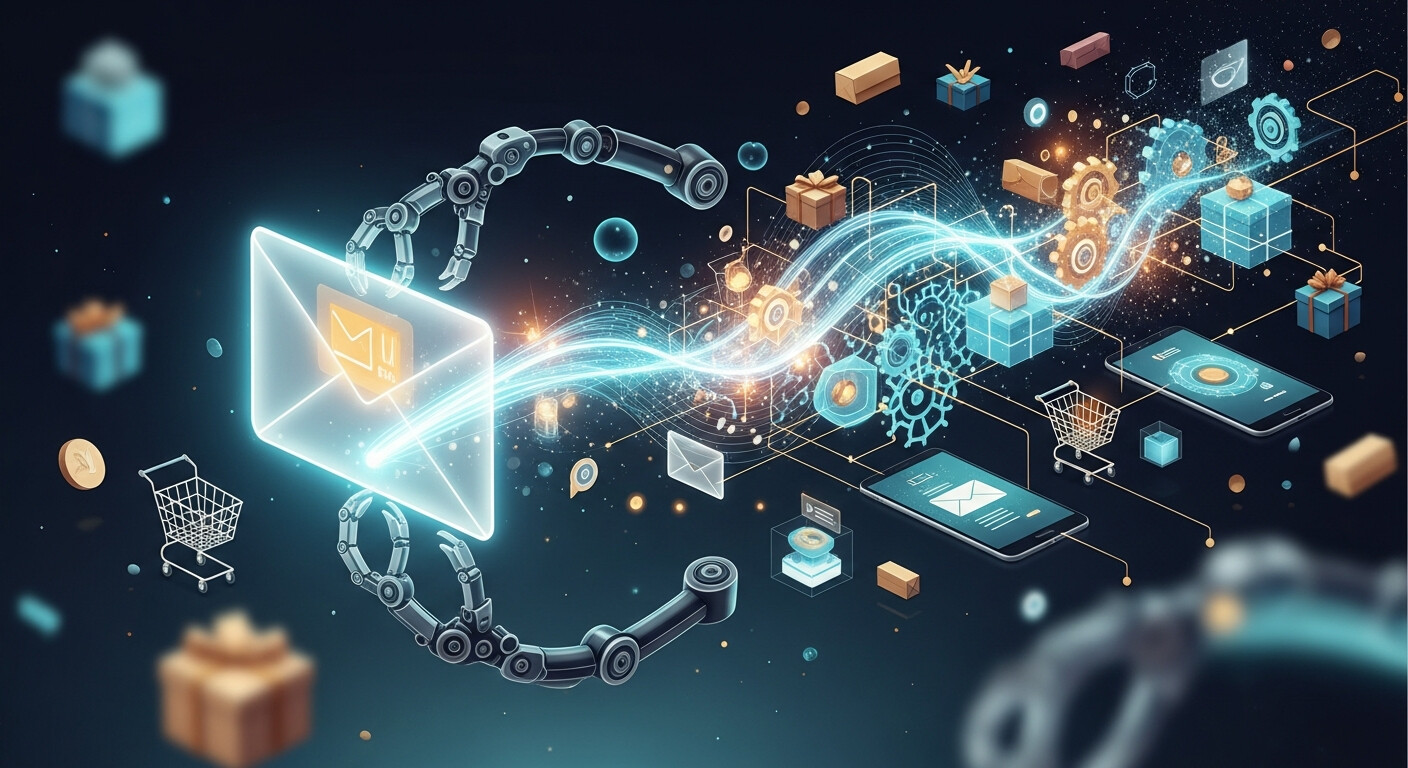
Welcome Emails and Abandoned Cart Reminders Configuration
- Welcome Emails:
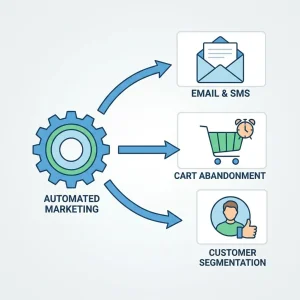
Welcome emails are one of the most important touchpoints in E-Commerce Email Marketing, as they set the tone for your entire customer relationship. This is your opportunity to make a strong first impression by introducing your brand story, values, and what customers can expect from your emails. Highlight your best-selling products, popular categories, or limited-time welcome offers to guide new subscribers toward their first purchase. Well-crafted welcome emails typically achieve higher open and click-through rates, making them a critical driver of early engagement and conversions in E-Commerce Email Marketing. - Abandoned Cart Emails:
Abandoned cart emails are a high-impact tactic within E-Commerce Email Marketing designed to recover lost revenue. These automated emails remind customers of the items they left behind and re-engage them at a moment when purchase intent is still high. Including product images, pricing details, and reassurance such as return policies or customer reviews can help reduce hesitation. Adding incentives like discounts, free shipping, or limited-time offers further encourages customers to complete their purchase and boosts overall conversion rates.
Using Transactional Emails for Marketing
Transactional emails such as order confirmations, shipping notifications, and delivery updates consistently achieve some of the highest open rates in E-Commerce Email Marketing. Because customers actively expect and trust these messages, they provide an ideal opportunity to extend engagement beyond basic order information. By strategically incorporating upsell opportunities, complementary product recommendations, or personalized offers, brands can drive additional revenue without disrupting the customer experience.
In E-Commerce Email Marketing, transactional emails can also reinforce brand value by showcasing related products, limited-time add-ons, or exclusive discounts for repeat purchases. When executed thoughtfully—keeping the primary transactional purpose intact while adding subtle promotional elements—these emails enhance customer satisfaction, increase average order value, and maximize the overall impact of your E-Commerce Email Marketing strategy
E-Commerce Email Marketing: Audits and Action Plans for Your Ecommerce Business

Long-term success is achieved through constant evolution.
Tracking Key Metrics
Measuring performance is essential to refining and scaling E-Commerce Email Marketing efforts. By closely tracking key metrics, brands can understand what’s working, identify areas for improvement, and make data-driven decisions that improve campaign effectiveness. The most important metrics to monitor include:
Open Rate:
The open rate reflects how effective your subject lines and sender name are in capturing attention. In E-Commerce Email Marketing, strong open rates indicate that your messaging resonates with subscribers and that your emails are being delivered at the right time with compelling value propositions.
Click-Through Rate (CTR):
Click-through rate measures how well your email content, visuals, and calls-to-action (CTAs) motivate subscribers to engage. A high CTR in E-Commerce Email Marketing suggests that your email copy, product presentation, and CTA placement are aligned with subscriber intent and expectations.
Conversion Rate:
The conversion rate tracks the percentage of recipients who complete a desired action, such as making a purchase, signing up for a promotion, or downloading a resource. This metric is a direct indicator of revenue performance and overall campaign success in E-Commerce Email Marketing.
A/B Tests for Performance Enhancement
Continuous testing is a cornerstone of optimizing E-Commerce Email Marketing campaigns. A/B testing allows brands to experiment with different elements to discover what resonates most with their audience and improves engagement and conversions. Common elements to test include:
- Subject Lines: Test tone, length, personalization, and urgency to improve open rates.
- CTA Placement and Wording: Experiment with button placement, colors, and action-oriented language to increase clicks.
- Email Layouts: Compare single-column versus multi-section designs to determine what drives better engagement.
- Timing of Sends: Test different days and times to identify when your audience is most responsive.
- The Next Stage of E-Commerce Email Marketing
E-Commerce Email Marketing continues to evolve alongside technology and consumer expectations. Staying ahead of emerging trends ensures long-term relevance and performance. Key trends to watch include:
AI-Powered Personalization:
Artificial intelligence is transforming E-Commerce Email Marketing by enabling hyper-personalized campaigns at scale. AI can analyze customer behavior, predict purchase intent, and dynamically tailor content, product recommendations, and send times for each subscriber.
Interactive Emails:
Interactive elements such as quizzes, polls, sliders, and product carousels are becoming more common in E-Commerce Email Marketing. These features increase engagement by allowing subscribers to interact directly within the email, creating a more immersive and memorable experience.
Sustainability Messaging:
Consumers increasingly favor brands that demonstrate social and environmental responsibility. Incorporating sustainability messaging into E-Commerce Email Marketing—such as eco-friendly products, ethical sourcing, or green initiatives—helps build trust and align with evolving consumer values.
If you’re ready to expand your reach and generate leads through proactive outreach, explore techniques and tools in Mastering the Outbound Market: A Guide to Driving Results.
Frequently Asked Questions (FAQs)
What is E-Commerce Email Marketing?
E-Commerce Email Marketing is the use of email campaigns to promote products, engage customers, recover abandoned carts, and build long-term relationships with online shoppers.
Why is E-Commerce Email Marketing important?
E-Commerce Email Marketing delivers one of the highest ROIs of any digital marketing channel. It allows businesses to communicate directly with customers, personalize messages, and drive repeat purchases without relying on paid ads or social media algorithms.
How often should I send E-Commerce marketing emails?
The ideal frequency depends on your audience and goals, but most brands see success with 1–3 emails per week. Monitoring open rates, click-through rates, and unsubscribe rates helps determine the best sending schedule.
What types of emails perform best in E-Commerce Email Marketing
High-performing emails include welcome emails, abandoned cart reminders, promotional campaigns, transactional emails, and personalized product recommendations.
How does segmentation improve E-Commerce Email Marketing results
Segmentation allows you to send targeted messages based on customer behavior, demographics, and spending habits. This leads to higher engagement, better conversions, and improved customer retention.
Can small businesses benefit from E-Commerce Email Marketing
Yes. E-Commerce Email Marketing is scalable and cost-effective, making it ideal for businesses of all sizes. Even small brands can achieve strong results through automation and personalization.
What metrics should I track to measure success?
Key metrics include open rate, click-through rate (CTR), conversion rate, and revenue generated per campaign. These indicators help optimize and refine your E-Commerce Email Marketing strategy.
Learn more about: Why Your E-commerce Business Needs a Marketing Agency