
E-commerce Marketing Management: Your Complete Strategy Guide
E-commerce marketing management is the strategy of attracting, converting, and retaining online customers using SEO, social media, email, ads, and personalization. Success relies on understanding customer behavior, optimizing campaigns, and leveraging new technologies for growth.
E-commerce has revolutionized how businesses connect with customers, but success requires more than just setting up an online store. Marketing management in the digital retail space demands a strategic approach that combines data-driven insights, customer-centric thinking, and agile execution.
Whether you’re launching your first online store or scaling an existing e-commerce business, understanding the fundamentals of marketing management can mean the difference between thriving and merely surviving. This comprehensive guide explores the essential components of e-commerce marketing management, from customer acquisition strategies to retention tactics that drive long-term growth.
Modern e-commerce marketing management extends far beyond traditional advertising. It encompasses everything from search engine optimization and social media engagement to email marketing automation and conversion rate optimization. The most successful e-commerce businesses treat marketing management as an integrated system where each component works together to create seamless customer experiences.
Understanding E-commerce Marketing Management Fundamentals
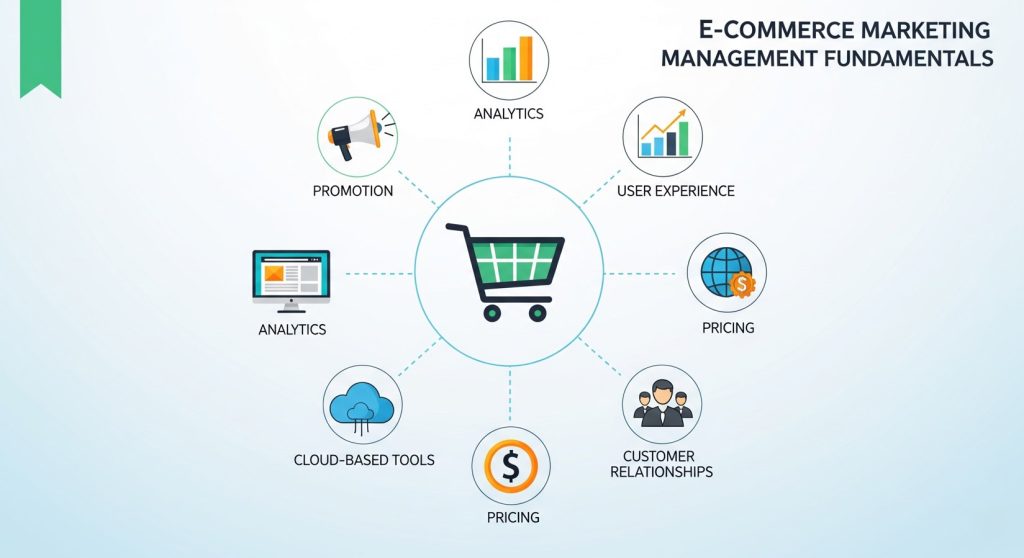
E-commerce marketing management involves planning, executing, and analyzing marketing activities specifically designed for online retail environments. Unlike traditional retail marketing, e-commerce marketing management operates in a digital ecosystem where customer behavior can be tracked, measured, and optimized in real-time. You can learn more about digital process automation in financial services to understand how automation enhances efficiency.
The foundation of effective e-commerce marketing management rests on understanding your customer journey. This journey typically includes awareness, consideration, purchase, and post-purchase phases. Each stage requires different marketing approaches and tools to guide customers toward conversion and encourage repeat purchases.
Key Components of E-commerce Marketing Strategy
Successful e-commerce marketing management integrates multiple channels to create a seamless customer experience. The most effective brands align paid advertising, organic content, email marketing, and social engagement into one cohesive system, as demonstrated in mastering e-commerce online marketing.
Search engine optimization forms the backbone of most e-commerce marketing strategies. By optimizing product pages, category pages, and blog content for relevant keywords, businesses can attract qualified traffic without relying solely on paid advertising. This organic approach provides sustainable, long-term growth potential.
Social media marketing has become increasingly important in e-commerce marketing management. Platforms like Instagram, Facebook, and TikTok offer opportunities to showcase products, build brand awareness, and drive direct sales through integrated shopping features.
Customer Acquisition Strategies in E-commerce
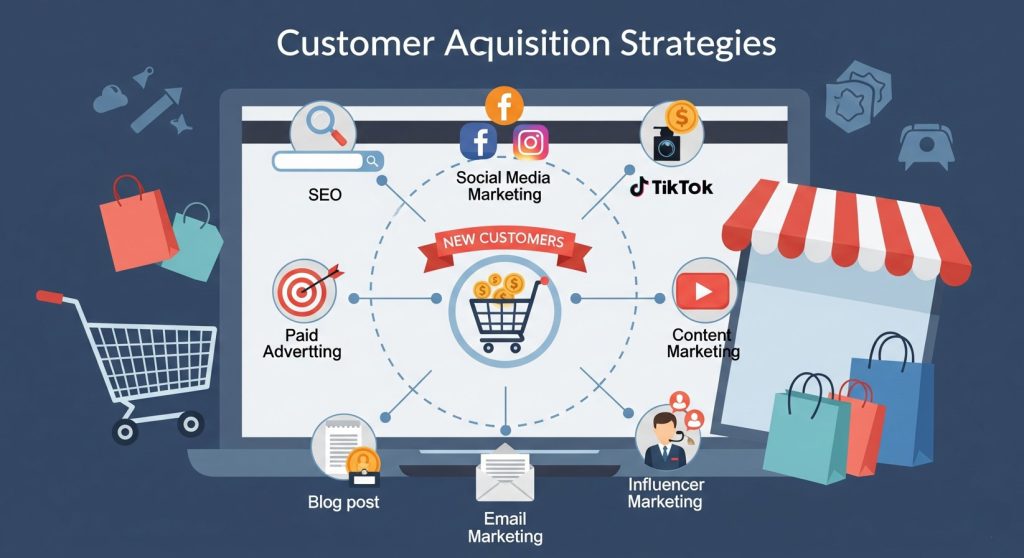
Acquiring new customers represents one of the primary challenges in e-commerce marketing management. Successful customer acquisition requires a multi-channel approach that combines various marketing tactics to reach potential customers at different stages of their buying journey.
Pay-per-click advertising offers immediate visibility, while content marketing attracts prospects organically by providing value before purchase. Educational blogs, comparison guides, and video content help establish trust and authority—core principles covered in this complete guide to e-commerce marketing.
Content marketing serves as a powerful customer acquisition tool by providing value to potential customers before they’re ready to purchase. Blog posts, product guides, comparison articles, and video content can attract organic traffic and establish brand authority in your industry.
Conversion Rate Optimization Techniques
Converting visitors into customers requires a frictionless experience. E-commerce marketing management must focus on fast load times, intuitive navigation, mobile responsiveness, and secure checkout processes. Conversion optimization becomes even more powerful when paired with marketing automation, as shown in these e-commerce marketing automation strategies.
Website design and functionality play crucial roles in conversion optimization. Fast loading times, intuitive navigation, mobile responsiveness, and secure checkout processes all contribute to higher conversion rates. A/B testing different elements of your website can reveal which changes have the most significant impact on sales.
Product presentation significantly affects conversion rates in e-commerce. High-quality product images, detailed descriptions, customer reviews, and clear pricing information help customers make confident purchasing decisions. Interactive features like zoom functionality and 360-degree product views can further enhance the shopping experience.
Customer Retention and Loyalty Programs

While acquisition drives growth, retention fuels profitability. Existing customers are more likely to repurchase and typically generate higher lifetime value. Email marketing automation is one of the most effective retention tools, especially when guided by proven email marketing strategies for e-commerce.
Email marketing automation represents one of the most effective retention strategies in e-commerce. Welcome series, abandoned cart reminders, post-purchase follow-ups, and personalized product recommendations can significantly increase customer lifetime value.
Loyalty programs encourage repeat purchases by rewarding customers for their continued business. Points-based systems, tiered benefits, and exclusive access to new products or sales can strengthen customer relationships and increase retention rates.
Personalization and Customer Experience
Modern e-commerce marketing management relies heavily on personalization to improve customer experiences and drive sales. By analyzing customer behavior, purchase history, and preferences, businesses can create tailored experiences that resonate with individual customers.
Product recommendations based on browsing history and previous purchases can significantly increase average order value. Dynamic content that changes based on customer segments or behavior patterns creates more relevant shopping experiences.
Customer service and support directly impact retention and brand perception. Live chat functionality, comprehensive FAQ sections, easy return policies, and responsive customer service teams all contribute to positive customer experiences that encourage repeat business.
Personalization is now a cornerstone of modern e-commerce marketing management. By analyzing browsing behavior and purchase history, brands can deliver tailored experiences that increase engagement and revenue. Advanced tools powered by AI are redefining this space, as explained in this deep dive on AI personalization in e-commerce.
Analytics and Performance Measurement
Effective e-commerce marketing management requires constant monitoring and analysis of key performance indicators. Understanding which marketing channels and tactics generate the best results enables businesses to allocate resources more effectively and optimize their strategies.
Revenue attribution helps identify which marketing channels contribute most to sales. Multi-touch attribution models provide more accurate insights than last-click attribution by considering all touchpoints in the customer journey.
Customer lifetime value calculations help determine how much businesses can afford to spend on customer acquisition while maintaining profitability. This metric influences budget allocation across different marketing channels and campaigns.
Data-Driven Decision Making
E-commerce marketing management benefits tremendously from data-driven decision making. Regular analysis of website analytics, conversion funnels, customer behavior patterns, and marketing campaign performance provides insights that guide strategic decisions.
Cohort analysis reveals how customer behavior changes over time and helps identify trends in retention and purchasing patterns. This information can inform product development, marketing messaging, and customer service improvements.
Competitive analysis provides context for your performance metrics and helps identify opportunities for improvement. Monitoring competitor pricing, marketing tactics, and customer feedback can reveal gaps in your strategy.
Sustainability and Ethical Marketing
Modern consumers increasingly value brands that demonstrate social responsibility. Marketing management in e-commerce now includes communicating sustainability efforts, ethical sourcing, and corporate responsibility initiatives.
Highlighting eco-friendly products, transparent supply chains, and community involvement in your campaigns resonates with conscious consumers. Ethical marketing not only strengthens brand image but also differentiates your business in crowded markets, fostering deeper customer loyalty.
Emerging Technologies in E-commerce Marketing
Technology is transforming how e-commerce brands connect with customers. AI-powered personalization, chatbots for instant customer support, AR/VR for virtual product trials, and voice commerce are rapidly becoming mainstream.
Marketing management requires staying ahead of these trends to remain competitive. Implementing AI-driven recommendation engines or predictive analytics can enhance personalization, while immersive AR experiences allow customers to interact with products virtually, increasing confidence and conversion rates. Businesses that adopt these technologies strategically will be better positioned for long-term success.
Email Marketing and Automation
Email marketing remains one of the most effective tools for e-commerce businesses. With automated campaigns, brands can reach customers at the right time with personalized messages, nurturing them throughout the buying journey. Welcome sequences, abandoned cart reminders, post-purchase follow-ups, and promotional emails allow businesses to maintain constant engagement with their audience.
Automation ensures that these emails are sent based on customer behavior and preferences, rather than manually, saving time while boosting conversion rates. Segmenting email lists according to purchase history, engagement, and demographics enables marketers to deliver highly relevant content, increasing open rates, click-throughs, and repeat purchases.
Mobile Optimization and App Marketing
Mobile devices are increasingly becoming the primary platform for e-commerce shopping. Optimizing websites for mobile ensures fast loading times, responsive design, and smooth navigation on smartphones and tablets. Mobile optimization is crucial for reducing bounce rates and improving conversion rates.
For businesses with dedicated apps, app marketing strategies can enhance engagement and loyalty. Push notifications, in-app promotions, and loyalty rewards within apps provide direct channels to reach customers, encourage repeat purchases, and create personalized experiences.
Retargeting and Cart Abandonment Strategies
Many potential customers browse products without making a purchase on their first visit. Retargeting campaigns are essential to bring these visitors back to your site and complete their purchase.
Cart abandonment emails are a highly effective tool in e-commerce marketing management. Personalized reminders, product recommendations, and time-sensitive discounts can motivate customers to finalize their purchase. Retargeting ads on social media or Google Display Network can reinforce the brand message, keeping your products top-of-mind for potential buyers. This proactive approach ensures that marketing investments are not wasted and maximizes conversion potential.
Social Commerce and Community Building

Social media platforms have evolved beyond engagement and advertising—they now enable direct shopping experiences through social commerce. Platforms like Instagram, Facebook, and TikTok allow users to explore and purchase products without leaving the app, making the path from discovery to purchase seamless.
Community building on social media further enhances brand loyalty. Engaging customers through user-generated content, contests, live streams, and interactive posts fosters emotional connections with the brand. Active communities not only drive sales but also act as brand ambassadors, spreading awareness organically.
Emerging Trends in E-commerce Marketing
The e-commerce marketing landscape continues evolving with new technologies and changing consumer preferences. Staying current with emerging trends helps businesses maintain competitive advantages and adapt to market changes.
Artificial intelligence and machine learning are increasingly important in e-commerce marketing management. These technologies enable more sophisticated personalization, predictive analytics, and automated campaign optimization.
Video content has become essential for e-commerce marketing. Product demonstrations, unboxing videos, customer testimonials, and behind-the-scenes content can significantly impact purchasing decisions and brand perception.
Voice commerce and mobile optimization continue growing in importance as more consumers use smart speakers and mobile devices for shopping. E-commerce marketing strategies must account for these changing consumption patterns.
Building Your E-commerce Marketing Foundation
Success in e-commerce marketing management requires patience, consistency, and continuous optimization. Building a strong foundation takes time, but the long-term benefits justify the initial investment in strategy development and implementation.
Start by clearly defining your target audience and understanding their needs, preferences, and shopping behaviors. This foundation informs all subsequent marketing decisions and helps ensure your efforts reach the right people with the right message.
Develop a comprehensive marketing calendar that coordinates campaigns across different channels. This strategic approach ensures consistent messaging and maximizes the impact of your marketing efforts while avoiding conflicts between different campaigns.
Focus on building sustainable, long-term growth rather than pursuing short-term gains that might compromise your brand reputation or customer relationships. The most successful e-commerce businesses prioritize customer satisfaction and brand building alongside immediate sales objectives.
E-commerce marketing management represents both an opportunity and a challenge for modern businesses. Those who invest in understanding their customers, optimizing their strategies, and adapting to changing market conditions will find themselves well-positioned for sustained growth and success.
Frequently Asked Questions (FAQ)
What is e-commerce marketing management?
E-commerce marketing management is the strategic planning, execution, and analysis of marketing activities designed specifically for online retail. It focuses on attracting, converting, and retaining customers through digital channels while optimizing the overall customer experience.
How can small businesses succeed in e-commerce marketing?
Small businesses can succeed by understanding their target audience, using cost-effective marketing tactics like social media and email campaigns, and focusing on customer retention through loyalty programs and personalized experiences.
What is the role of data in e-commerce marketing management?
Data provides insights into customer behavior, campaign performance, and ROI. It helps marketers make informed decisions, optimize strategies, personalize experiences, and predict future trends.
Why is customer retention important in e-commerce?
Retaining customers costs less than acquiring new ones and often results in higher lifetime value. Loyal customers are more likely to make repeat purchases, refer friends, and act as brand advocates.
How can content marketing improve e-commerce sales?
Content marketing builds authority, educates customers, and provides valuable information that guides purchasing decisions. Well-crafted content can attract organic traffic, improve SEO, and increase conversions.
What emerging trends should e-commerce marketers watch?
AI-driven personalization, voice commerce, AR/VR product experiences, interactive video content, and ethical/sustainable marketing are key trends shaping the future of e-commerce marketing.
How do I measure the success of e-commerce marketing campaigns?
Success is measured through metrics like conversion rates, customer acquisition cost (CAC), customer lifetime value (CLV), website traffic, email engagement, social media interactions, and ROI from paid campaigns.