Affiliate Marketing vs Dropshipping: Which Business Model Should You Choose?
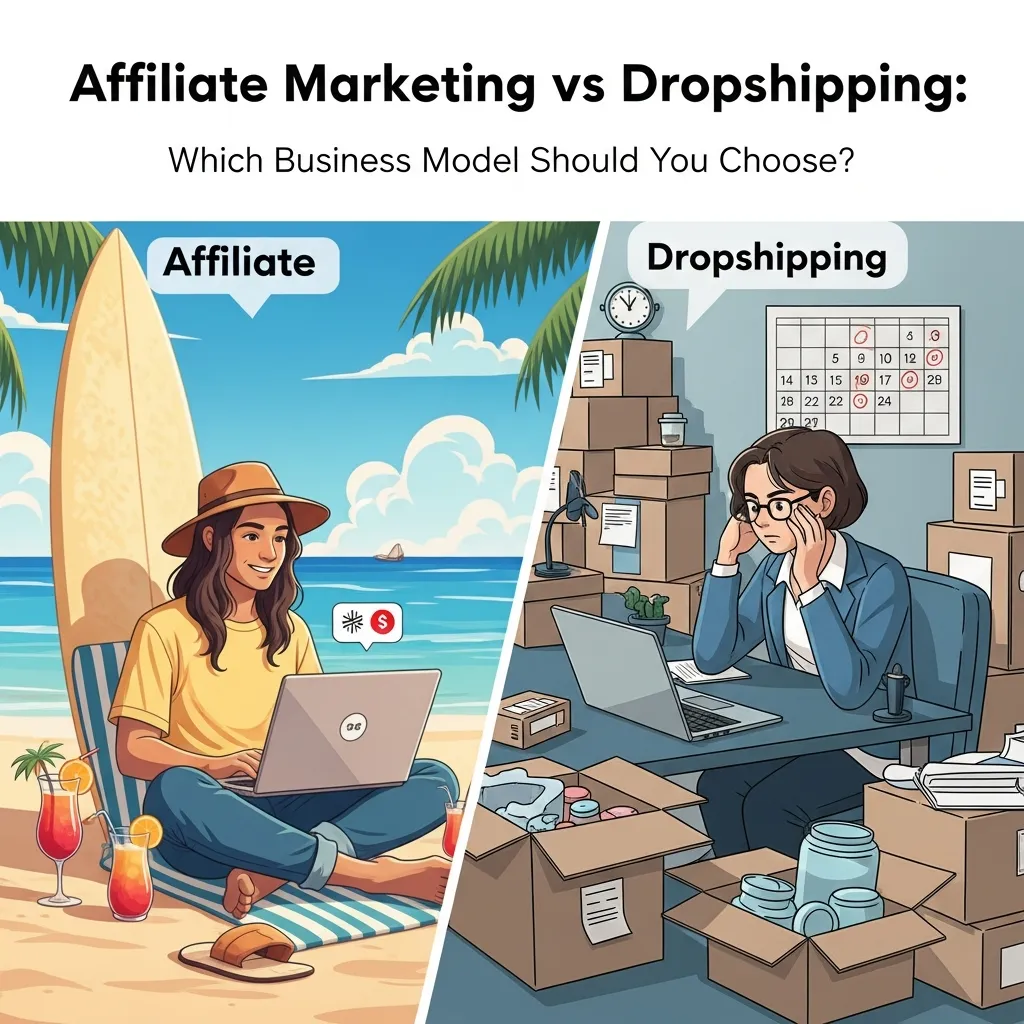
When comparing Affiliate Marketing vs Dropshipping, you are looking at two of the most popular ways to start an online business without manufacturing products or holding inventory. In short, affiliate marketing involves promoting other companies’ products for a commission, while dropshipping involves setting up your own storefront and having suppliers ship products directly to your customers. Both models offer a low barrier to entry, but they require entirely different day-to-day operations and skill sets.
Choosing the right path can dictate your financial success and lifestyle. Both methods allow you to work from anywhere with an internet connection. However, they demand different levels of customer interaction, technical setup, and financial risk.
If you want to build an online income stream, you need to understand the nuances of Affiliate Marketing vs Dropshipping. We will break down how each model works, the pros and cons, and how to decide which one aligns with your personal and financial goals.
Understanding Affiliate Marketing
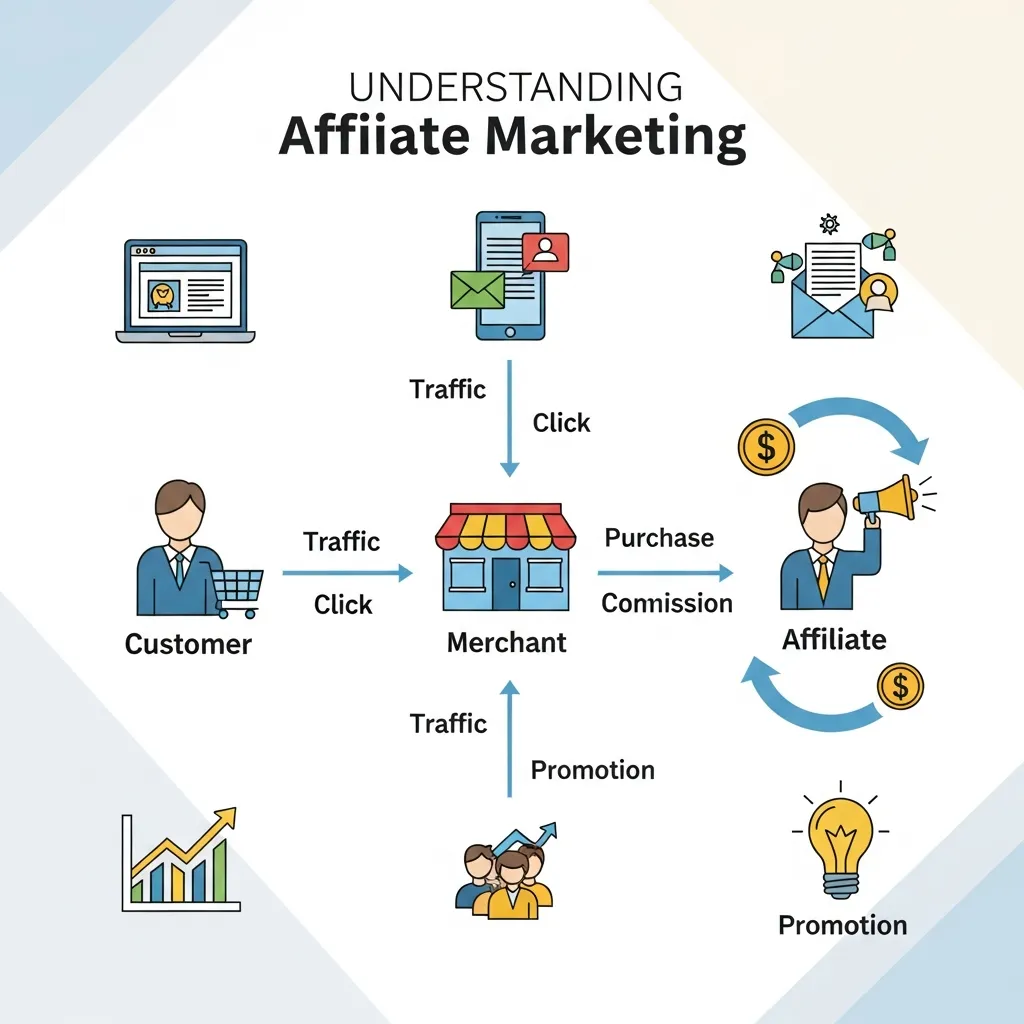
Affiliate marketing is a performance-based business model where you earn a commission by promoting someone else’s product or service. You act as the middleman between the creator and the consumer. When a user clicks your unique affiliate link and makes a purchase, the merchant tracks that click and pays you a percentage of the sale.
How It Works
You sign up for an affiliate program through a network like Amazon Associates, ShareASale, or a direct company program. You then create content—such as blog posts, YouTube videos, or social media posts—that drives traffic to your affiliate links. The merchant handles the transaction, product delivery, and customer service.
Pros of Affiliate Marketing
- Zero Customer Service: You never deal with returns, complaints, or shipping inquiries.
- Low Startup Costs: You only need a platform to share your links, such as a basic blog or a free social media account.
- Passive Income Potential: Evergreen content can generate clicks and commissions long after it is published.
Cons of Affiliate Marketing
- No Control Over Pricing: The merchant sets the price and the commission rate.
- Lack of Brand Ownership: You are building an audience for someone else’s product, making it harder to establish your own brand equity.
- Payment Delays: Many affiliate networks have payout thresholds or hold funds for 30 to 60 days.
Understanding Dropshipping
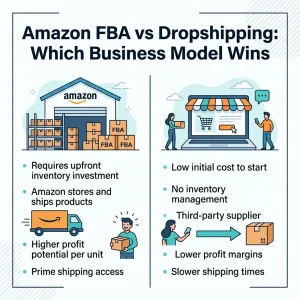
Dropshipping is an ecommerce model where you run an online store but do not keep the products you sell in stock. When a customer buys an item from your store, you purchase the item from a third-party supplier, who then ships it directly to the customer.
How It Works
You build an ecommerce storefront using a platform like Shopify. You select products from suppliers on platforms like AliExpress, Spocket, or Zendrop, and list them at a markup. When a customer pays you $50 for a product, you pay the supplier $20, and you keep the $30 difference as gross profit (minus advertising and operational costs).
Pros of Dropshipping
- Brand Building: You own the store, the customer list, and the brand identity. You can eventually transition to private labeling.
- Control Over Margins: You dictate the retail price, allowing you to scale your profit margins as you see fit.
- Instant Payouts: Since you are the merchant of record, customer payments go directly into your account (subject to standard payment gateway processing times).
Cons of Dropshipping
- Customer Support: You are entirely responsible for handling angry customers, processing refunds, and tracking lost packages.
- Supplier Reliance: If your supplier ships a defective product or takes weeks to deliver, your brand’s reputation takes the hit.
- Higher Operational Costs: You have to pay for store hosting, premium themes, payment processing fees, and customer service tools.
Key Differences: Affiliate Marketing vs Dropshipping
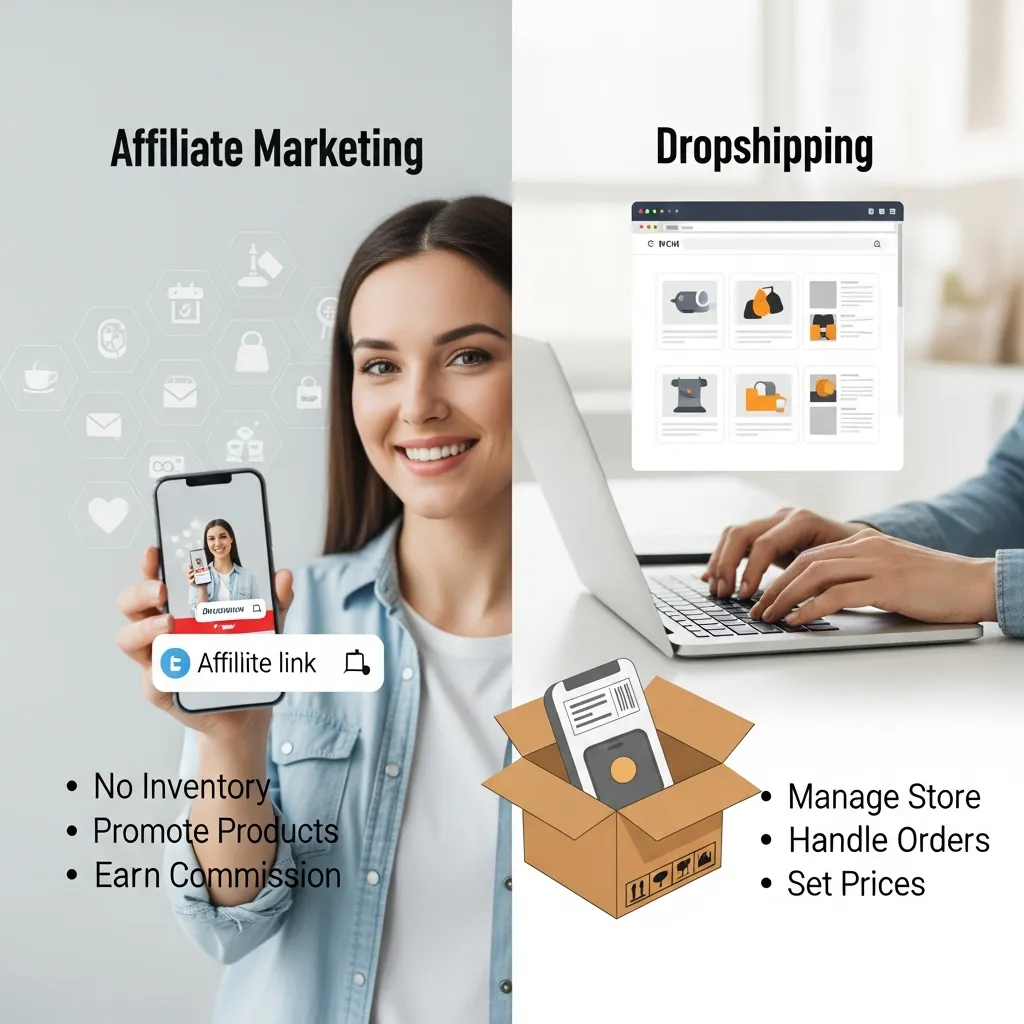
When evaluating Affiliate Marketing vs Dropshipping, the most significant difference lies in control. Dropshipping gives you control over the pricing, the storefront, and the customer data. You are building a distinct business asset that can potentially be sold in the future.
Affiliate marketing offers very little control over the product or the customer journey. You simply drive the traffic. Once the visitor clicks your link, your job is essentially done. This makes affiliate marketing much more hands-off, but it also means you are at the mercy of the merchant’s conversion rate and program terms.
Another major difference is customer acquisition. In dropshipping, paid advertising (like Facebook or TikTok ads) is the primary driver of traffic. In affiliate marketing, while paid ads are used, organic search engine optimization (SEO) and organic social media content are far more common due to the lower profit margins per sale.
Similarities in the Business Models
Despite their differences, Affiliate Marketing vs Dropshipping share several compelling benefits that make them attractive to new entrepreneurs.
First, neither requires you to hold inventory or manage a warehouse. This eliminates the massive upfront capital normally required to start a retail business. Second, both models are highly scalable. Because you do not handle physical fulfillment, you can theoretically sell one item or one thousand items a day with minimal changes to your physical workload.
Finally, both require a strong grasp of digital marketing. Whether you are promoting an affiliate link or your own dropshipping product, you must understand how to attract an audience, write persuasive copy, and convert visitors into buyers.
Revenue Potential
The revenue potential in Affiliate Marketing vs Dropshipping is heavily debated.
Dropshipping generally offers a higher earning ceiling per transaction. Because you control the markup, you can sell high-ticket items and secure profit margins of 30% to 50%. A successful dropshipping store can scale rapidly into a multi-million dollar business, especially if a product goes viral.
Affiliate marketing typically yields lower revenue per transaction, with physical product commissions often ranging from 2% to 10%. Digital products and software can offer much higher commissions (up to 50% or recurring payouts), but you still do not own the customer. However, affiliate marketing can be highly lucrative because you can promote dozens of different products simultaneously across multiple niches, creating diversified income streams.
Startup Costs and Risks
When analyzing the financial risk of Affiliate Marketing vs Dropshipping, affiliate marketing is undeniably safer. You can start an affiliate business for the cost of a domain name and basic web hosting (under $100 a year). If you fail to make sales, your financial loss is minimal.
Dropshipping requires a larger upfront investment. You need an ecommerce platform subscription, paid apps for store functionality, and most importantly, an advertising budget. Testing products with paid ads can easily cost hundreds or thousands of dollars before you find a profitable winner. If your ad accounts get banned or a supplier fails to deliver, you carry the financial burden of refunding customers.
Choosing Your Path
Deciding between Affiliate Marketing vs Dropshipping comes down to your personality, skills, and capital.
Choose affiliate marketing if you prefer creating content, writing, or building communities. If the idea of dealing with customer complaints, managing suppliers, and handling returns sounds miserable to you, affiliate marketing is the clear winner. It is ideal for patient individuals who want to build passive income over time.
Choose dropshipping if you are highly analytical, enjoy running paid advertising campaigns, and want to build a standalone brand. If you have some startup capital to test ads and you don’t mind handling customer service inquiries, dropshipping offers a faster path to large revenue numbers and the opportunity to build an asset you can eventually sell.
Strategies for Success
To succeed in either model, you need to treat it like a real business, not a get-rich-quick scheme.
For affiliate marketing, focus on building trust with your audience. Do not just spam links. Provide in-depth, honest reviews and tutorials. Focus heavily on SEO so your articles rank on Google, bringing you free, high-converting traffic for years to come. Collect email addresses so you can market to your audience repeatedly.
For dropshipping, your primary focus should be on product research and ad creative. You need to find products that solve a problem or have a strong “wow” factor. Your video ads must be thumb-stopping. Furthermore, prioritize finding a reliable supplier with fast shipping times, as slow shipping is the number one cause of chargebacks and negative reviews.
The Future of Ecommerce

The debate between Affiliate Marketing vs Dropshipping will continue as the digital landscape evolves. Both business models are legitimate and have created countless successful entrepreneurs. Your success depends entirely on your execution, consistency, and willingness to adapt to market changes. Ultimately, you must evaluate your own strengths, your budget, and your long-term goals to decide which path will lead you to financial independence.
Frequently Asked Questions (FAQs)
1. Which is easier for beginners, Affiliate Marketing vs Dropshipping?
When comparing Affiliate Marketing vs Dropshipping, affiliate marketing is generally easier for beginners. It requires no inventory, no customer support, and no supplier management. Your main focus is simply driving traffic and promoting products. In contrast, dropshipping involves handling orders, dealing with customers, and managing suppliers, which can be more complex for newcomers.
2. Can I do both Affiliate Marketing and Dropshipping at the same time?
Yes, combining Affiliate Marketing vs Dropshipping can be a smart strategy. Many online entrepreneurs run a dropshipping store while also using affiliate marketing on blogs or content platforms to recommend related products. This allows you to diversify income streams and maximize your earning potential.
3. How much money do I need to start dropshipping?
In the Affiliate Marketing vs Dropshipping comparison, dropshipping requires more upfront investment. While setting up a store can be inexpensive, you should realistically budget around $500 to $1,000. This covers platform fees (like Shopify), apps, and paid advertising needed to test products and generate sales.
4. How much money do I need to start affiliate marketing?
One major advantage in Affiliate Marketing vs Dropshipping is that affiliate marketing can be started with little to no money. You can use free platforms like YouTube, TikTok, or social media. If you choose to build a website, you may only need $50 to $100 for a domain and hosting.
5. Do I need a registered business entity for either model?
For both Affiliate Marketing vs Dropshipping, you can start as a sole proprietor in the beginning. However, as your business grows and income increases, it is recommended to register a legal entity such as an LLC or corporation to protect your assets and improve credibility.
6. Which model is more passive?
When analyzing Affiliate Marketing vs Dropshipping, affiliate marketing is significantly more passive. Once you publish content like blog posts or videos, they can generate income for months or even years. Dropshipping, on the other hand, requires ongoing effort, including order processing, customer service, and store management.
7. How fast can I make money with dropshipping?
In the Affiliate Marketing vs Dropshipping debate, dropshipping has the potential for faster results. If you launch a successful paid advertising campaign, you can start making sales almost immediately. However, finding a winning product and optimizing ads often takes time, testing, and investment.
8. How fast can I make money with affiliate marketing?
Affiliate marketing results depend on your traffic source. In the Affiliate Marketing vs Dropshipping comparison, affiliate marketing can be slower if you rely on SEO, often taking 6–12 months to see consistent income. However, if you already have an audience on social media, you can generate earnings much faster.
9. What are the best traffic sources for dropshipping?
For those choosing between Affiliate Marketing vs Dropshipping, dropshipping relies heavily on paid traffic. Platforms like Facebook Ads, TikTok Ads, and Google Shopping are among the most effective for quickly reaching potential customers and scaling sales.
10. What are the best traffic sources for affiliate marketing?
In the Affiliate Marketing vs Dropshipping comparison, affiliate marketing performs best with organic traffic sources. SEO (Google search), YouTube, Pinterest, and email marketing are highly effective for driving targeted visitors who are more likely to convert.
11. Do I need to be a technical expert to build a dropshipping store?
No, you don’t need advanced technical skills when choosing between Affiliate Marketing vs Dropshipping. Platforms like Shopify make it easy to create a professional online store using drag-and-drop tools, even for beginners with no coding knowledge.
12. Can dropshipping be a long-term business?
Yes, in the long run, the Affiliate Marketing vs Dropshipping comparison shows that dropshipping can evolve into a sustainable business. However, long-term success requires building a brand, improving product quality, offering better shipping, and creating a strong customer experience instead of relying only on basic dropshipping methods.