E-commerce Marketing: Your Complete Guide to Online Success
E-commerce has transformed how businesses reach customers, but success requires more than just setting up an online store. With global e-commerce sales expected to reach $8.1 trillion by 2026, the competition for customer attention has never been fiercer. Smart marketing strategies separate thriving online businesses from those that struggle to gain traction.
This comprehensive guide explores proven marketing tactics that drive e-commerce growth. You’ll discover how to attract qualified traffic, convert browsers into buyers, and build lasting customer relationships that fuel long-term success. Whether you’re launching your first online store or optimizing an existing business, these strategies will help you navigate the competitive digital marketplace.
Understanding E-commerce Marketing Fundamentals

E-commerce marketing encompasses all promotional activities designed to drive traffic to your online store and convert visitors into customers. Unlike traditional retail marketing, it relies heavily on digital channels and data-driven insights to reach and engage potential buyers.
Successful e-commerce marketing requires understanding your customer journey from awareness to purchase. This journey typically includes discovery through search engines or social media, research and comparison shopping, and finally, the decision to buy. Each stage presents unique opportunities to influence purchasing decisions through targeted messaging and strategic touchpoints.
The most effective e-commerce marketers focus on building integrated campaigns that work across multiple channels. This approach ensures consistent messaging while maximizing reach and providing multiple opportunities for customer engagement.
Search Engine Optimization for E-commerce

Search engine optimization forms the foundation of sustainable e-commerce marketing. When potential customers search for products you sell, appearing prominently in search results can generate consistent, high-quality traffic without ongoing advertising costs.
E-commerce SEO requires optimizing both category pages and individual product listings. Category pages should target broader keywords like “running shoes” or “kitchen appliances,” while product pages focus on specific, long-tail keywords that include brand names, model numbers, or detailed specifications.
Product descriptions play a crucial role in SEO success. Rather than copying manufacturer descriptions, create unique content that incorporates relevant keywords naturally while highlighting benefits that matter to your customers. Include technical specifications, use cases, and compatibility information that helps both search engines and shoppers understand what you’re selling.
Technical SEO elements like site speed, mobile responsiveness, and structured data markup significantly impact search rankings for e-commerce sites. Fast-loading pages reduce bounce rates and improve user experience, while structured data helps search engines display rich snippets that can increase click-through rates from search results.
Pay-Per-Click Advertising Strategies
Pay-per-click advertising provides immediate visibility and can generate sales quickly. Google Ads shopping campaigns are particularly effective for e-commerce businesses. For Shopify-specific campaigns, see Google Ads for your Shopify store.
Search ads work best for high-intent keywords where users are actively looking to purchase specific products. Focus on long-tail keywords that include buying signals like “buy,” “order,” or “discount.” These terms typically cost less per click while attracting more qualified traffic.
Retargeting campaigns help recapture visitors who browsed your site without purchasing. These ads can showcase specific products people viewed, offer limited-time discounts, or highlight customer reviews and testimonials. Since these visitors already showed interest in your products, retargeting campaigns often achieve higher conversion rates than general advertising.
Dynamic product ads automatically show relevant products to potential customers based on their browsing behavior and interests. These ads work across platforms like Facebook, Instagram, and Google, creating personalized shopping experiences that feel tailored to individual preferences.
Social Media Marketing for Online Stores
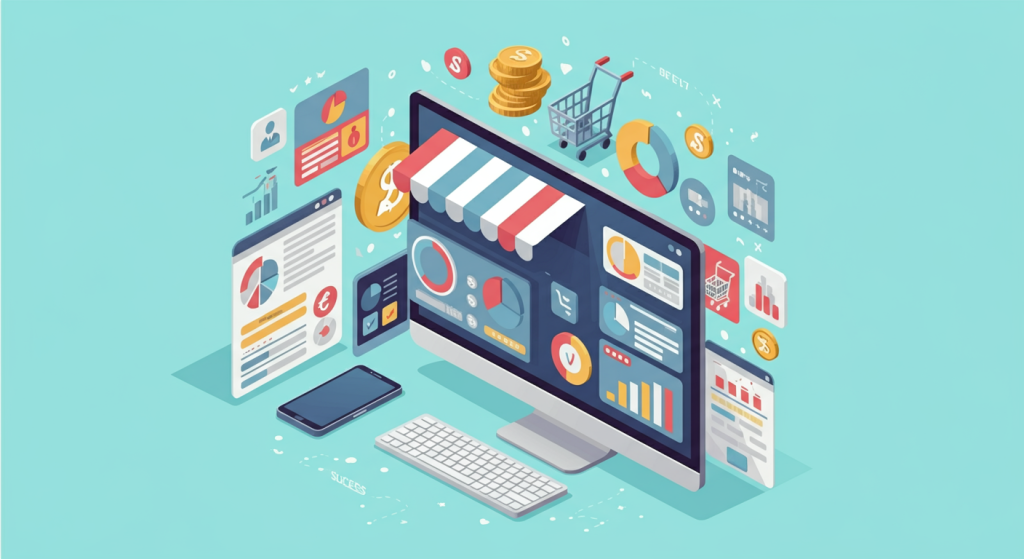
Social media platforms offer powerful opportunities to showcase products, build brand awareness, and drive traffic to your e-commerce site. Each platform attracts different demographics and supports various content formats, making platform selection crucial for success.
Instagram and Pinterest excel at visual product discovery. High-quality product photography, lifestyle images, and user-generated content perform well on these platforms. Instagram Shopping features allow users to purchase directly through the app, reducing friction in the buying process.
Facebook’s detailed targeting options make it effective for reaching specific customer segments. The platform’s extensive user data enables precise audience targeting based on interests, behaviors, and demographics. Facebook Groups also provide opportunities to build communities around your brand or product categories.
TikTok has emerged as a powerful platform for product discovery, particularly among younger consumers. Short-form videos demonstrating products, showing behind-the-scenes content, or participating in trending challenges can generate significant organic reach and brand awareness.
Email Marketing Excellence
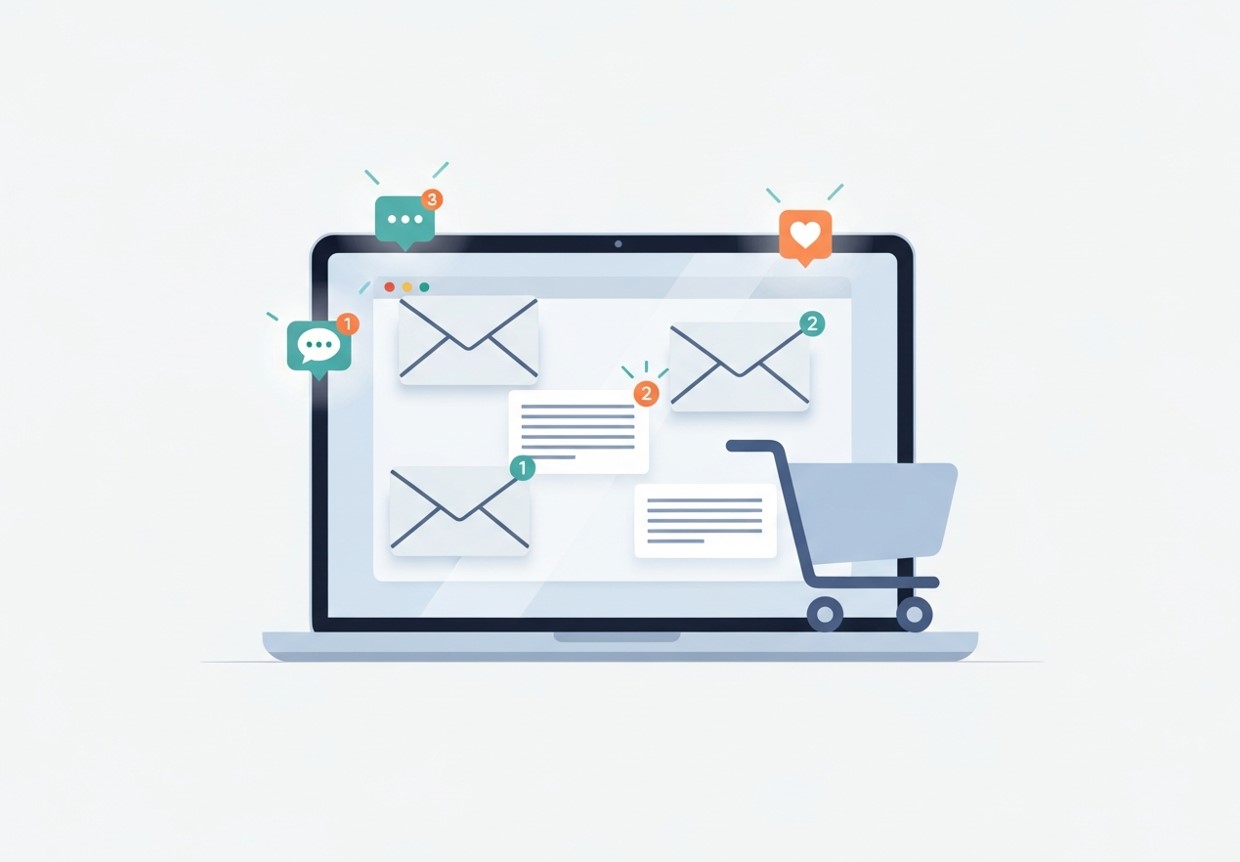
Email marketing remains one of the highest-ROI channels for e-commerce businesses. It allows direct communication with customers and prospects while providing detailed performance metrics to guide optimization efforts.
Welcome email series introduce new subscribers to your brand and products while setting expectations for future communications. These emails typically achieve high open rates because recipients recently engaged with your brand and expect to hear from you.
Abandoned cart emails address one of e-commerce’s biggest challenges: shopping cart abandonment. These automated messages remind customers about items they left behind and often include incentives like discounts or free shipping to encourage completion of the purchase.
Segmentation dramatically improves email performance by delivering more relevant content. Implement strategies from marketing analytics hacks to improve email open rates to maximize ROI from your campaigns.
Content Marketing That Drives Sales
Content marketing builds trust, demonstrates expertise, and guides customers toward purchases. E-commerce content marketing guides provide examples of educational and inspirational content, such as buying guides, tutorials, and user-generated content.
Buying guides help customers navigate complex product categories by explaining key features, comparing options, and recommending products for specific use cases. These comprehensive resources attract high-intent traffic and often rank well in search engines for valuable commercial keywords.
Product demonstrations through videos, tutorials, or detailed blog posts help customers understand how products work and envision using them. This approach works particularly well for complex or innovative products that require explanation.
User-generated content like customer reviews, photos, and testimonials provides social proof that influences purchasing decisions. Encouraging customers to share their experiences creates authentic content while building community around your brand.
Conversion Rate Optimization
Converting website visitors into customers requires ongoing optimization of your site’s design, functionality, and messaging. Small improvements in conversion rates can significantly impact revenue without increasing traffic acquisition costs.
Product page optimization focuses on providing all information customers need to make confident purchasing decisions. This includes multiple high-quality product images, detailed descriptions, sizing information, shipping details, and customer reviews. Trust signals like security badges, return policies, and contact information also influence conversion rates.
Checkout process simplification reduces abandoned transactions by eliminating unnecessary steps and form fields. Guest checkout options, multiple payment methods, and clear progress indicators all contribute to higher completion rates.
A/B testing different elements like headlines, call-to-action buttons, and page layouts helps identify changes that improve performance. Focus on testing one element at a time to clearly understand what drives improvement.
Influencer and Creator Marketing for E-commerce
Influencer marketing has evolved into a core growth channel for e-commerce brands because it combines trust, reach, and social proof. Consumers increasingly rely on recommendations from creators they follow rather than traditional brand advertising. When influencers authentically showcase products in real-life contexts, it reduces buyer hesitation and accelerates purchasing decisions.
Successful e-commerce influencer marketing focuses on alignment rather than follower count. Micro-influencers with niche audiences often drive higher engagement and conversion rates because their recommendations feel personal and credible. These partnerships work best when creators have creative freedom to present products in a way that resonates with their audience rather than following scripted brand messaging.
Long-term influencer relationships tend to outperform one-off campaigns. Ongoing collaborations allow audiences to see repeated product usage, reinforcing trust and brand familiarity. Over time, these creator-driven narratives contribute to stronger brand perception and consistent sales growth.
Customer Retention and Loyalty Marketing
Acquiring new customers is significantly more expensive than retaining existing ones, making customer retention a critical pillar of e-commerce marketing success. Loyalty-focused strategies increase customer lifetime value while creating predictable revenue streams.
Personalized post-purchase communication plays a major role in retention. Follow-up emails, product care tips, reorder reminders, and exclusive offers make customers feel valued beyond the initial transaction. This emotional reinforcement encourages repeat purchases and brand loyalty.
Loyalty programs further strengthen retention by rewarding repeat behavior. Points systems, early access to new products, and exclusive discounts create incentives for continued engagement. When loyalty benefits are easy to understand and genuinely valuable, customers are more likely to stay connected to the brand rather than explore competitors.
Marketplace Marketing and Third-Party Platforms
Selling through online marketplaces like Amazon, eBay, Etsy, or regional platforms has become an essential extension of e-commerce marketing. These platforms already attract massive buyer intent, making them powerful discovery channels for brands that struggle with organic reach on their own websites. Marketplace visibility helps brands tap into customers who are ready to purchase but may not yet know your brand exists.
However, marketplace marketing is not just about listing products. Optimizing titles, images, descriptions, and reviews plays a crucial role in ranking within marketplace search algorithms. Sponsored listings and promotional tools offered by these platforms can further amplify visibility. When managed strategically, marketplaces can act as acquisition channels that later drive customers back to owned platforms for repeat purchases.
Brand Building in a Performance-Driven Environment
E-commerce marketing often prioritizes short-term performance metrics like conversions and return on ad spend, but long-term success depends heavily on brand building. Strong brands reduce reliance on constant discounting and paid traffic by creating recognition, trust, and preference.
Brand-building efforts include consistent visual identity, tone of voice, messaging, and customer experience across all channels. Over time, these elements compound into mental availability, meaning customers think of your brand first when they are ready to buy. E-commerce brands that invest in brand equity typically experience higher conversion rates, better ad performance, and stronger customer loyalty.
Mobile Commerce and Omnichannel Experience
Mobile commerce now accounts for a significant share of e-commerce sales, making mobile optimization non-negotiable. Customers expect seamless experiences across devices, whether they discover products on social media, browse on mobile, or complete purchases on desktop.
A successful omnichannel strategy ensures consistency across all touchpoints. Pricing, promotions, product availability, and branding should remain aligned regardless of platform. When customers encounter discrepancies, trust erodes and conversion rates suffer.
Mobile-first design prioritizes speed, simplicity, and usability. Features like one-click checkout, digital wallets, and mobile-friendly navigation reduce friction and improve conversion rates. Brands that invest in mobile optimization gain a competitive advantage as consumer shopping behavior continues shifting toward smartphones.
Your Next Steps to E-commerce Marketing Success
Marketing e-commerce successfully requires combining multiple strategies while continuously testing and optimizing performance. Start by establishing strong SEO foundations and email marketing systems, then expand into paid advertising and social media as you gain experience and data insights.
Focus on understanding your customers’ needs, preferences, and shopping behaviors through analytics and direct feedback. This knowledge guides strategic decisions and helps prioritize marketing investments that deliver the strongest returns.
Remember that e-commerce marketing is an ongoing process rather than a set-and-forget activity. Consumer behaviors, platform algorithms, and competitive landscapes constantly evolve, requiring adaptability and continuous learning to maintain long-term success.
Successful e-commerce marketing combines multiple strategies while continuously optimizing performance. Start with SEO and email, expand into social and paid advertising, and continuously analyze customer behavior. For comprehensive learning, see Google digital marketing e-commerce certification.
Frequently Asked Questions (FAQ)
What is the most effective e-commerce marketing channel?
There is no single best channel. The most effective e-commerce marketing strategies combine SEO, paid advertising, email marketing, and social media to create a balanced, integrated approach.
How long does it take to see results from e-commerce marketing?
Paid advertising and email campaigns can generate immediate results, while SEO and content marketing typically take several months to show significant impact. Long-term success comes from combining short-term and long-term strategies.
How important is personalization in e-commerce marketing?
Personalization significantly improves engagement and conversion rates by delivering relevant products, offers, and messaging based on customer behavior and preferences.
Should small e-commerce businesses invest in paid ads?
Yes, but carefully. Small businesses should start with targeted, high-intent campaigns and track performance closely to ensure positive return on investment before scaling.
How can e-commerce brands reduce cart abandonment?
Simplifying checkout, offering multiple payment options, displaying trust signals, and using abandoned cart emails are among the most effective ways to recover lost sales.
Is e-commerce marketing still effective in competitive niches?
Yes. Competitive niches reward brands that differentiate through strong branding, customer experience, and data-driven optimization rather than competing solely on price.