E-Commerce Markets: Trends, Opportunities & Growth

E-commerce continues to grow due to mobile shopping, personalization, and subscription models, offering businesses global reach and customer convenience. Success relies on optimized websites, SEO, content marketing, and effective digital strategies to overcome challenges like competition, cart abandonment, and logistics. Staying agile and adopting trends like AR, voice commerce, and sustainability ensures long-term growth in a competitive market.
What Is an E-Commerce Market?

An e-commerce market is a digital space where goods or services are sold through online platforms. These markets can be broadly divided into the following models:
- Business-to-Consumer (B2C): Selling directly to individual customers, like Amazon or ASOS.
- Business-to-Business (B2B): Selling products or services to other businesses, like Alibaba.
- Consumer-to-Consumer (C2C): Platforms where individuals sell to other individuals, like eBay or Facebook Marketplace.
E-commerce offers unparalleled convenience, 24/7 availability, and access to global customers. The market is no longer just about convenience but innovation, personalization, and speed.
Why Is E-Commerce Growing?
E-commerce markets have witnessed unprecedented growth over the past decade, driven by evolving technology, changing consumer behavior, and globalization. The convenience of shopping online, combined with advanced digital tools, has made e-commerce a dominant force in retail. Here’s why e-commerce continues to thrive:
Mobile Shopping
With smartphones in nearly every pocket, mobile commerce (m-commerce) has become a major driver of online sales. Consumers can now browse, compare, and purchase products anytime, anywhere. Optimized mobile websites, app-based shopping platforms, and seamless payment gateways—like digital wallets and one-click checkout—have removed friction from the buying process. Additionally, features like push notifications and location-based offers allow retailers to engage customers in real-time, increasing conversion rates and fostering brand loyalty.
Personalization
AI-powered algorithms and machine learning allow e-commerce platforms to deliver highly personalized shopping experiences. From recommending products based on browsing history to sending targeted email offers, personalization increases relevance and encourages repeat purchases. Our AI personalization in e-commerce article explores this in detail.
Subscription Models
Subscription-based e-commerce is increasingly popular, particularly for products like coffee, snacks, cosmetics, and software services. Consumers enjoy curated, scheduled deliveries, while businesses gain predictable revenue streams and higher customer lifetime value. Our guide on e-commerce subscription opportunities explains how brands can implement these models effectively.
Opportunities in E-Commerce Markets

The e-commerce landscape is as exciting as it is competitive. Below are some major opportunities for businesses:
Niche Markets
Specialized stores catering to niche markets, like vegan products or eco-friendly goods, can thrive in e-commerce. Consumers are willing to pay a premium for products that align with their values and lifestyles.
Cross-Border Commerce
Online platforms connect buyers and sellers from across the globe. Expanding internationally opens up a vast customer base and increases brand exposure.
D2C (Direct-to-Consumer)
Brands opting for direct-to-consumer sales can cut out intermediaries, resulting in better pricing for customers and higher margins for businesses.
Key Components of a Successful E-Commerce Business
Fast-loading, mobile-friendly websites with intuitive navigation encourage higher engagement and conversions. For a detailed look at platforms that enhance performance, see e-commerce platforms market share.. Here are the foundational components you need to master:
Website Optimization
- Fast loading times
- Seamless navigation
- Mobile-friendly design
A smooth user experience encourages higher engagement and sales.
SEO
Most online activity starts with a search engine. Effective SEO strategies ensure your website ranks high for relevant keywords, ensuring organic traffic flows in.
Payment Gateways
Offer multiple payment options to accommodate various customer preferences. Secure and easy payment methods enhance trust and reduce drop-offs.
Social Media Integration
Social platforms are no longer just for engagement. Instagram, Pinterest, and TikTok are key drivers of e-commerce traffic. Social shopping is growing, with users buying directly through these platforms.
Inventory Management
Inventory management software reduces errors and ensures products are always in stock without over-committing your resources.
How Digital Marketing Supercharges E-Commerce
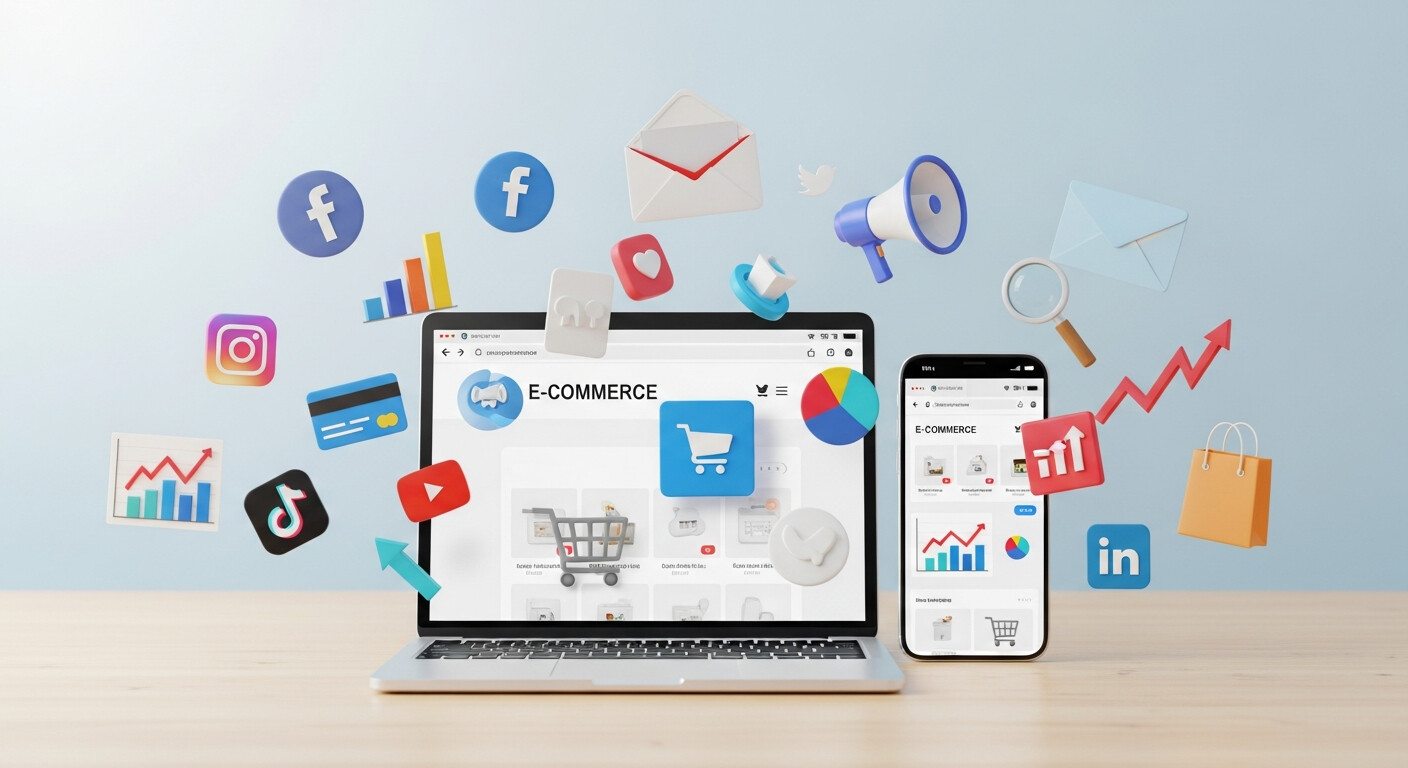
Digital marketing is indispensable for promoting e-commerce businesses. Here’s how you can leverage it:
Social Media Ads
Social media advertising allows e-commerce businesses to reach highly targeted audiences across platforms such as Facebook, Instagram, and LinkedIn. These platforms offer advanced targeting options based on demographics, interests, behaviors, and past interactions, enabling brands to deliver their messages to the most relevant users. Creating visually compelling and engaging ad content—such as videos, carousel posts, or interactive stories—helps capture attention in crowded feeds. Tracking performance through metrics like click-through rates, impressions, and conversions allows businesses to continually optimize campaigns, test different creatives, and maximize ROI. By strategically combining paid social ads with organic content, e-commerce businesses can strengthen brand awareness, drive traffic, and convert potential buyers more efficiently.
Email Campaigns
Email marketing remains one of the most cost-effective ways to engage customers and drive conversions in e-commerce markets. Businesses can send a variety of email types, including welcome emails to introduce new subscribers, promotional campaigns highlighting exclusive offers, seasonal product announcements, and abandoned cart reminders to recover potential lost sales. Personalized emails that leverage user behavior, past purchases, and browsing history are particularly effective at increasing engagement. By segmenting audiences and tailoring content to their interests, e-commerce brands can nurture leads, build loyalty, and maintain consistent communication with customers. Tracking metrics such as open rates, click-through rates, and conversions provides actionable insights to refine email campaigns over time.
SEO
Search engine optimization (SEO) is essential for driving organic traffic to e-commerce websites. By incorporating keywords like “e-commerce markets” naturally into blog posts, product descriptions, meta tags, and headers, businesses can improve their visibility on search engines like Google. On-page optimization should be complemented with high-quality content, optimized images, fast-loading pages, and mobile-friendly design to enhance user experience. Tools such as SEMrush, Ahrefs, or Moz can help identify valuable keywords, monitor competitor strategies, and track organic performance. Over time, SEO efforts not only increase website traffic but also establish the brand’s authority, build trust with searchers, and generate long-term, sustainable sales.
Content Marketing
Content marketing allows e-commerce businesses to educate, engage, and build trust with their audience while improving search visibility. Publishing blogs, tutorials, product guides, or industry news can help position the brand as a knowledgeable authority in its niche. For e-commerce, this might include seasonal buying guides like “Top Products for Summer 2026,” detailed tutorials such as “How to Use X Product Effectively,” or comparison articles to help customers make informed decisions. Well-structured content improves SEO, encourages social sharing, and provides valuable resources that keep users engaged with the brand. Over time, consistent content marketing drives organic traffic, nurtures leads, and ultimately supports higher conversion rates.
Challenges in E-Commerce Markets (and How to Overcome Them)
E-commerce continues to grow rapidly, but businesses face several significant challenges that can impact profitability, customer satisfaction, and long-term success. Understanding these hurdles and implementing targeted strategies is essential to thrive in competitive online markets. Here are a few and how to address them:
High Competition
The e-commerce market is highly saturated, with numerous brands competing for the same target audience. This makes it increasingly difficult for businesses to capture attention and convert visitors into loyal customers. Simply having competitive pricing is no longer enough; differentiation is key. Brands can stand out by offering unique or exclusive products, creating a compelling brand story, and delivering a superior customer experience. Leveraging data-driven insights allows businesses to identify market gaps, understand customer preferences, and personalize offerings to specific segments. Additionally, engaging content marketing—such as blogs, videos, and social proof—can help build authority and trust in the crowded marketplace.
Cart Abandonment
Cart abandonment remains one of the most persistent and costly challenges in e-commerce. Research indicates that nearly 70% of online shopping carts are left incomplete, meaning potential revenue is lost at the final step of the customer journey. Shoppers abandon carts for a variety of reasons, ranging from unexpected shipping costs and hidden fees to overly complicated checkout processes, limited payment options, or simply uncertainty about the purchase. Addressing cart abandonment requires a deep understanding of the user experience and strategic interventions that guide customers through to completion. E-commerce businesses can improve conversion rates by optimizing checkout flows to be simple and intuitive, ensuring mobile-friendly designs, and offering multiple payment methods, including digital wallets and flexible solutions like buy-now-pay-later. Additionally, personalized follow-ups through email or push notifications can remind users of their pending purchases and re-engage them with targeted messaging. By regularly analyzing abandonment patterns, businesses can identify friction points, refine the purchasing journey, and implement strategies that encourage shoppers to complete their transactions, ultimately increasing revenue and enhancing customer satisfaction.
Logistics and Fulfillment
Expanding into new markets or scaling e-commerce operations introduces significant challenges in logistics and fulfillment. Customers now expect fast, reliable delivery, and even minor delays or mistakes can quickly damage a brand’s reputation. Efficient logistics management requires careful planning, strong partnerships, and technological support. Businesses must work closely with trusted logistics providers that have a proven track record for timely delivery while also leveraging inventory management and fulfillment software to track stock levels, prevent overselling, and maintain transparency. To reduce shipping times and improve customer experience, many companies utilize multiple fulfillment centers or regional warehouses, ensuring that products are closer to buyers. In some cases, drop-shipping or third-party fulfillment partnerships allow businesses to scale operations efficiently, particularly during peak periods or promotional campaigns. By streamlining the supply chain and optimizing order fulfillment, e-commerce companies can reduce delivery times, lower operational costs, and ensure a smooth, reliable customer experience that builds loyalty and trust.
The Future of E-Commerce Markets
The e-commerce market is poised for continued growth and transformation in the coming years, driven by rapid technological advancements and evolving consumer expectations. Emerging trends such as voice commerce are making it easier for shoppers to browse and purchase products using smart speakers or voice assistants, streamlining the buying process and creating new opportunities for brands to connect with customers. Augmented reality (AR) shopping experiences are also reshaping online retail, allowing consumers to virtually try on clothing, visualize furniture in their homes, or explore products in 3D before making a purchase, increasing confidence and reducing return rates. Sustainability is becoming a key factor in purchasing decisions, with eco-friendly packaging, carbon-neutral shipping options, and transparent supply chains influencing buyer loyalty and brand perception. Additionally, AI-driven personalization, advanced analytics, and omnichannel integration are enabling businesses to provide highly tailored shopping experiences and predictive recommendations. Companies that remain agile, embrace these innovations, and anticipate consumer needs will be well-positioned to thrive in the competitive and ever-evolving e-commerce landscape.
Transform Your E-Commerce Strategy Today
Whether you’re launching a new e-commerce business or scaling an existing one, success lies in understanding the market, leveraging digital marketing, and offering unparalleled value to your customers. Start small, adapt tirelessly, and always keep your audience’s needs at the forefront.
To learn more about scaling your business with digital marketing, check out our beginner’s guide. From SEO to social ads, we’ll help you make the most of your e-commerce venture.
Frequently Asked Questions (FAQs)
What is the best e-commerce model for beginners?
For most beginners, B2C e-commerce is the easiest to start with, as it allows direct selling to individual customers without complex contracts or bulk sales logistics.
How much does it cost to start an e-commerce business?
Startup costs vary widely, depending on platform, inventory, marketing, and logistics. A lean, dropshipping model can start with a few hundred dollars, while full inventory-based businesses require several thousand dollars.
How do I drive traffic to my e-commerce store?
Traffic can be generated through SEO, social media marketing, paid ads, email campaigns, influencer partnerships, and content marketing. A combination of organic and paid strategies often works best.
How can I reduce cart abandonment?
Offer simplified checkout, multiple payment options, free shipping incentives, exit-intent popups, and timely follow-up emails to encourage purchase completion.
Is mobile commerce important?
Absolutely. Over 50% of e-commerce traffic now comes from mobile devices. Mobile-optimized websites and apps are crucial for usability and conversions.
How can I differentiate my e-commerce business in a competitive market?
Focus on niche products, offer unique value propositions, deliver exceptional customer service, leverage personalization, and emphasize sustainable or ethical practices.