
The E-commerce Packaging Market: Growth, Trends, and Opportunities

The e-commerce packaging market is booming, driven by online shopping and consumer demand for sustainable, protective, and engaging packaging. Key trends include smart packaging, personalization, automation, and eco-friendly materials. Challenges like supply chain issues and rising costs are balanced by opportunities in customization, subscription boxes, and technology-driven solutions.
Market Size and Growth Projections
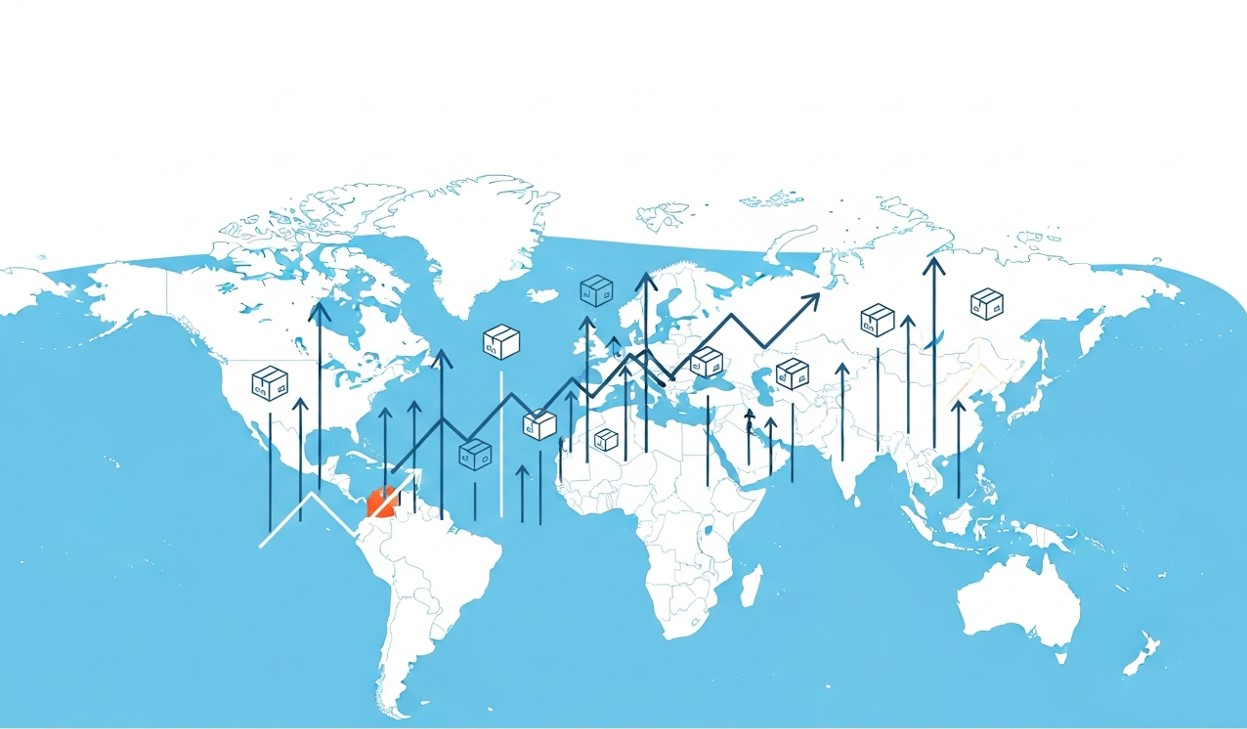
The global e-commerce packaging market has experienced explosive growth over the past decade. Industry analysts estimate the market reached approximately $27.5 billion in 2023, with projections suggesting it could exceed $55 billion by 2030. This represents a compound annual growth rate (CAGR) of roughly 10-12%.
Several factors drive this remarkable expansion. The surge in online shopping, accelerated by the COVID-19 pandemic, fundamentally changed consumer behavior. Even as physical stores reopened, many consumers continued purchasing online, creating sustained demand for specialized packaging solutions.
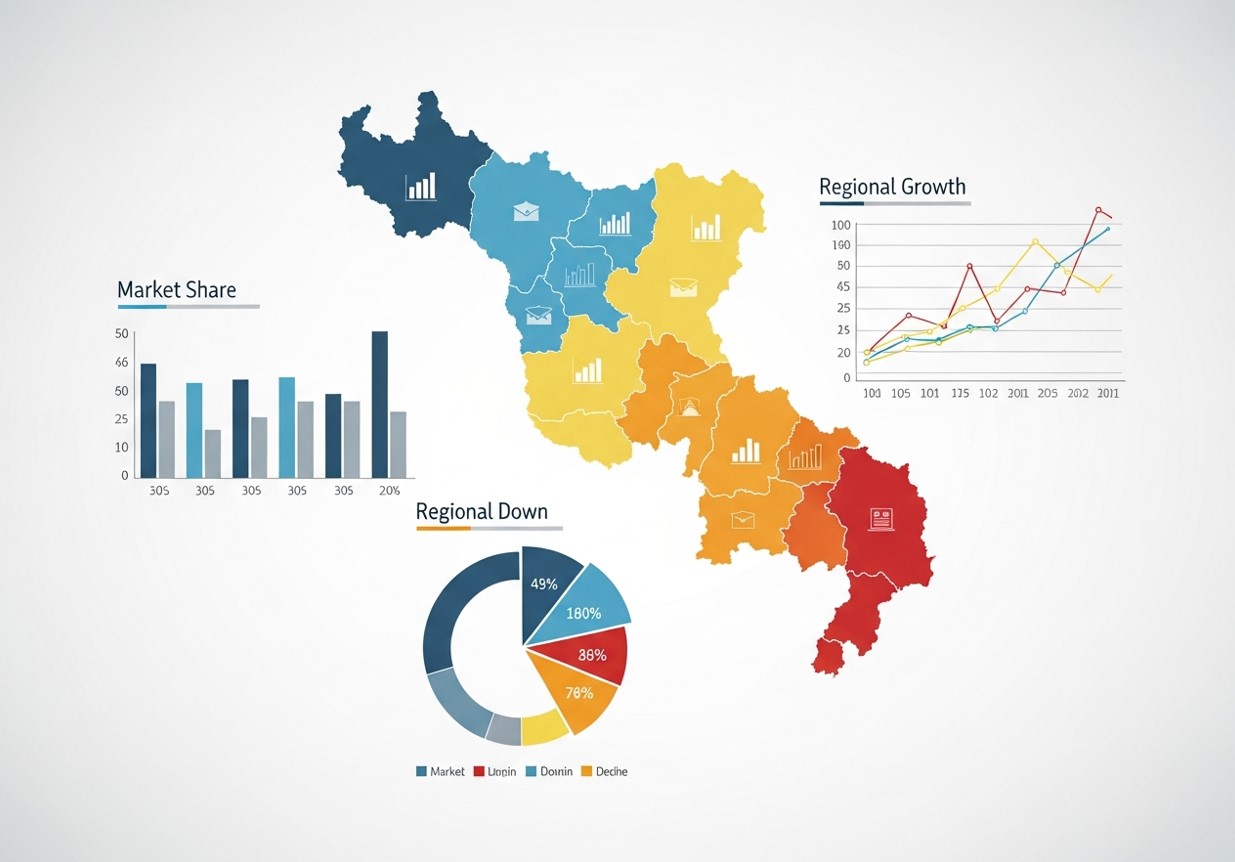
Geographic distribution of market growth varies significantly. North America and Europe currently dominate market share, accounting for roughly 60% of global revenue. However, the Asia-Pacific region shows the highest growth rates, driven by expanding e-commerce markets in countries like India, Southeast Asian nations, and continued growth in China.
Key Market Segments and Materials
Corrugated Cardboard Dominance
Corrugated cardboard remains the backbone of the e-commerce packaging market, representing approximately 60% of total market share. Its popularity stems from several advantages: cost-effectiveness, recyclability, customization options, and adequate protection for most products.
The corrugated segment continues to innovate with lighter-weight options that reduce shipping costs while maintaining structural integrity. Advanced printing technologies now allow for high-quality graphics directly on corrugated surfaces, eliminating the need for additional labels or sleeves.
Plastic Packaging Evolution
Plastic packaging, while controversial from an environmental standpoint, still holds significant market share due to its durability and moisture resistance. However, the segment is rapidly evolving toward more sustainable options, including biodegradable plastics and recycled content materials.
Flexible plastic packaging, particularly poly mailers, has gained traction for lightweight products like clothing and accessories. These solutions offer cost advantages and space efficiency that traditional boxes cannot match.
Emerging Alternative Materials
Innovation in sustainable materials is reshaping the e-commerce packaging market. Companies are experimenting with mushroom-based packaging, seaweed derivatives, and other biodegradable alternatives. While these materials currently represent a small market share, their growth trajectory suggests increasing adoption as technology improves and costs decrease.
Sustainability: The Game-Changing Trend
Environmental concerns have become a primary driver of innovation in the e-commerce packaging market. Consumer awareness and regulatory pressures are reshaping packaging decisions. Circular economy principles and programs like Amazon’s Compact by Design promote reuse and waste reduction. Companies integrating e-commerce digital marketing campaigns with sustainability messaging can strengthen brand perception and loyalty.
Circular Economy Principles
Leading companies are adopting circular economy principles, designing packaging for reuse, recycling, or composting. This shift requires rethinking traditional packaging design, moving away from mixed materials that complicate recycling toward mono-material solutions.
Amazon’s Compact by Design program exemplifies this trend, encouraging manufacturers to create products that require less packaging material. Similarly, many retailers now offer packaging-free shipping options for certain products.
Regulatory Pressures
Government regulations increasingly influence packaging decisions. European Union directives on single-use plastics, various plastic bag bans worldwide, and extended producer responsibility laws create compliance requirements that drive market demand for sustainable alternatives.
These regulations often create competitive advantages for companies that proactively adopt sustainable packaging solutions, positioning them ahead of regulatory curves while appealing to environmentally conscious consumers.
Technology Integration and Smart Packaging

The e-commerce packaging market increasingly incorporates advanced technologies to enhance functionality and customer experience. Smart packaging solutions integrate sensors, QR codes, and other digital elements to provide additional value beyond simple product protection.
Track and Trace Technologies
RFID tags and smart labels enable real-time tracking throughout the supply chain, reducing lost packages and providing customers with detailed delivery information. These technologies also help retailers gather valuable data about shipping patterns and customer behavior.
Interactive Packaging Elements
QR codes and NFC tags on packaging create opportunities for enhanced customer engagement. Customers can access product information, tutorial videos, or loyalty program benefits by scanning packaging elements with their smartphones.
Some companies use these technologies to create gamified unboxing experiences, building brand loyalty and encouraging social media sharing.
Regional Market Analysis
North American Market Characteristics
The North American e-commerce packaging market benefits from mature e-commerce infrastructure and high consumer spending power. The region shows strong demand for premium packaging solutions and early adoption of sustainable alternatives.
Regulatory environments vary significantly between the United States and Canada, with Canadian provinces often implementing more stringent environmental regulations that influence packaging choices.
European Market Dynamics
European markets lead globally in sustainability requirements, driving innovation in eco-friendly packaging materials and design. The European Union’s Green Deal and related legislation create both challenges and opportunities for packaging companies.
Consumer awareness of environmental issues runs particularly high in Northern European countries, creating market demand for sustainable solutions that often exceeds regulatory requirements.
Asia-Pacific Growth Opportunities
The Asia-Pacific region presents the highest growth potential for the e-commerce packaging market. Rapidly expanding middle classes, improving logistics infrastructure, and increasing internet penetration create favorable conditions for sustained growth.
China’s massive e-commerce market, while mature in urban areas, continues expanding into rural regions. India’s e-commerce growth, though from a smaller base, shows remarkable acceleration as digital payment systems and logistics networks improve.
Challenges Facing the Market
Supply Chain Disruptions
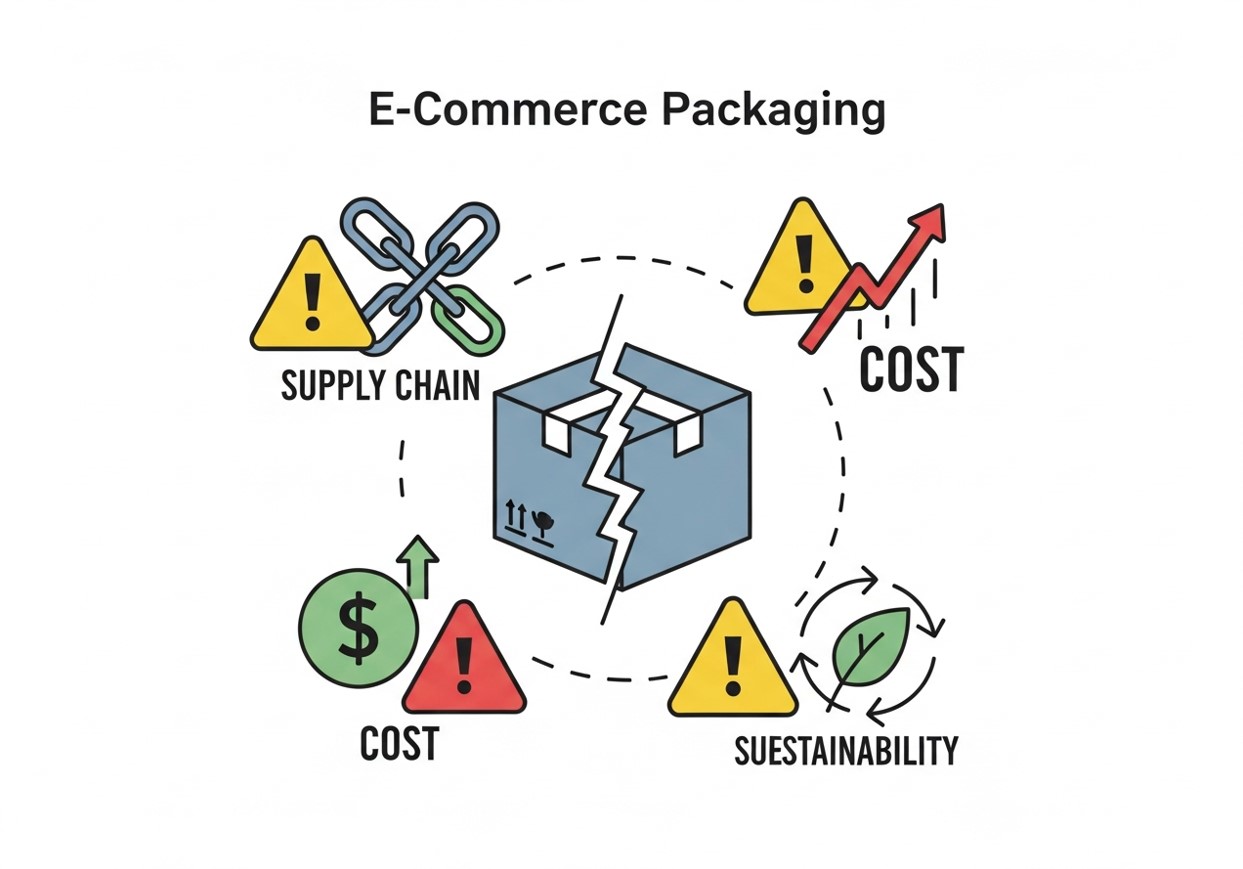
The e-commerce packaging market is particularly sensitive to supply chain disruptions, which can arise from geopolitical events, natural disasters, or labor shortages can delay raw materials like cardboard and plastics. Companies are diversifying suppliers and using predictive analytics to reduce risk, complementing e-commerce logistics market growth strategies.
For example, fluctuations in the paper and cardboard markets—caused by shortages, plant closures, or import/export restrictions—can lead to higher packaging prices and limited inventory availability. Similarly, transportation bottlenecks, port congestions, and rising fuel costs can disrupt the timely delivery of finished packaging products.
To mitigate these risks, companies are increasingly diversifying supplier bases, sourcing materials from multiple regions, and establishing strategic stockpiles or safety buffers. Some businesses are also exploring local sourcing to reduce dependence on international supply chains, while leveraging technology like predictive analytics to anticipate disruptions and adjust procurement strategies proactively.
Balancing Sustainability and Performance
E-commerce brands today face a dual challenge: meeting sustainability goals while ensuring packaging adequately protects products during shipping. Sustainable materials—such as recycled cardboard, biodegradable plastics, or plant-based alternatives—often behave differently than traditional materials. They may be less rigid, more susceptible to moisture, or require special handling, making it critical to carefully evaluate their performance for different product categories.
Companies must conduct rigorous testing to strike the right balance between eco-friendliness and functionality. This includes drop tests, compression tests, and environmental condition simulations to ensure products arrive intact, even in long-distance or international shipments. Innovative designs, such as reinforced structures or modular inserts, are often employed to enhance protection while minimizing material use.
Achieving this balance not only preserves product integrity but also enhances brand credibility. Consumers are increasingly aware of environmental impacts, and packaging that fails to protect products—or generates excess waste—can damage both reputation and customer trust.
Cost Pressures
Cost management remains a critical concern in the e-commerce packaging sector. Rising raw material prices, labor expenses, energy costs, and transportation fees put significant pressure on packaging budgets. For example, surges in corrugated cardboard prices or plastic resin costs directly increase per-unit packaging expenses, which can erode profit margins if not managed strategically.
To control costs without compromising quality or sustainability, businesses are exploring several approaches. These include optimizing packaging dimensions to reduce shipping weight and dimensional fees, adopting lightweight but durable materials, implementing automation in packaging lines to reduce labor costs, and negotiating long-term contracts with suppliers to lock in favorable rates.
Furthermore, companies are conducting total cost of ownership analyses to evaluate trade-offs between material costs, shipping efficiency, product protection, and environmental impact. This holistic approach ensures that packaging decisions support both financial performance and customer satisfaction, rather than focusing solely on upfront material costs.
Future Market Opportunities
Personalization and Customization
Advances in digital printing, on-demand manufacturing, and variable data technologies have revolutionized the possibilities for personalized e-commerce packaging. Brands can now tailor packaging designs to individual customers, specific product lines, or targeted marketing campaigns without incurring excessive production costs. This personalization can include custom colors, printed messages, customer names, or even unique patterns that reflect a customer’s purchase history or preferences.
Such customization does more than just differentiate a product on the shelf—it significantly enhances the customer experience. A well-designed personalized package creates a sense of exclusivity and connection, fostering brand loyalty and encouraging repeat purchases. Moreover, unboxing experiences that feel personal are more likely to generate organic social media engagement, with customers sharing photos or videos of their customized packages.
Beyond marketing benefits, on-demand manufacturing also reduces inventory risk. Companies can produce packaging in smaller batches tailored to demand, reducing overproduction, storage costs, and waste. This approach not only aligns with sustainability goals but also enables flexible, scalable operations that respond quickly to seasonal or promotional campaigns.
Automation and Efficiency
Automated packaging systems are becoming a cornerstone of modern e-commerce fulfillment operations. These systems can adapt to varying product sizes and shapes while minimizing material usage, creating efficiencies across multiple dimensions—labor, speed, and sustainability. For example, robotic packaging lines can fold boxes, insert products, apply protective materials, and seal shipments with minimal human intervention.
Investing in automation offers measurable returns. Labor costs are reduced as manual repetitive tasks are replaced by machines, and production throughput improves with consistent, high-speed operations. Automation also reduces packaging material waste, as machines can precisely measure and cut materials to fit products exactly, rather than relying on overcompensation common in manual processes.
In addition to operational efficiency, automation supports scalability. As e-commerce volumes fluctuate, automated systems can adjust production rates to meet demand without compromising consistency or delivery timelines. This adaptability is critical for businesses looking to compete in fast-paced, high-volume markets.
Subscription Box Market Growth
The rise of subscription services—spanning beauty, food, fashion, and lifestyle sectors—has created a unique niche within the e-commerce packaging market. Subscription boxes require packaging that is not only functional but also memorable and on-brand, as these boxes serve as a key touchpoint for customer engagement.
Brands are investing in premium packaging designs, custom inserts, and unique unboxing elements such as tissue papers, ribbons, or interactive cards to enhance the overall experience. The goal is to create anticipation and delight with every delivery, turning routine shipments into brand-building opportunities.
Subscription services also demand packaging that is durable enough for repeat shipments yet flexible enough to accommodate a rotating selection of products. On-demand packaging production and modular designs allow companies to meet these dynamic requirements while minimizing waste. Furthermore, these businesses increasingly leverage sustainable materials to appeal to eco-conscious subscribers, reflecting broader trends in consumer expectations for responsible packaging.
Preparing for Market Evolution
The e-commerce packaging market will continue to evolve as technology, regulations, and consumer preferences shift. Businesses that remain agile, invest in sustainable solutions, and focus on customer experience alongside digital marketing for e-commerce strategies are well-positioned to succeed.
Understanding these market dynamics enables better strategic planning, whether you’re a retailer selecting packaging solutions, a manufacturer developing new products, or an investor evaluating opportunities in this growing sector. The e-commerce packaging market offers significant potential for those prepared to navigate its complexities and capitalize on emerging trends.
Frequently Asked Questions (FAQ)
How important is sustainability in e-commerce packaging today?
Sustainability has become a key differentiator for brands. Consumers increasingly prefer eco-friendly packaging, and adopting sustainable materials can boost brand perception while ensuring compliance with regulations.
Can smart packaging improve the customer experience?
Yes. Smart packaging with QR codes, NFC tags, or sensors enhances engagement, provides tracking information, and can even gamify the unboxing experience, creating memorable interactions that encourage repeat business.
What materials are most commonly used in e-commerce packaging?
Corrugated cardboard dominates due to its durability, cost-effectiveness, and recyclability. Plastic, while still common, is evolving toward biodegradable and recycled options. Emerging materials like mushroom or seaweed-based packaging are gaining traction for sustainability.
How can packaging influence brand perception?
Packaging is often the first physical touchpoint with a customer. Well-designed packaging communicates brand values, enhances unboxing experiences, and can encourage social sharing, all of which strengthen customer loyalty.
What are the biggest challenges in e-commerce packaging?
Challenges include balancing sustainability and protection, managing supply chain disruptions, controlling costs, and navigating varying international regulations. Continuous innovation is necessary to meet these challenges effectively.
How is technology shaping the future of e-commerce packaging?
Automation, AI-driven packaging optimization, smart sensors, and interactive digital elements are transforming packaging into a functional, engaging, and data-rich part of the customer journey.