
E-commerce Platform: A Complete Guide to Choosing the Best Online Selling Solution

Choosing the right e-commerce platform is an important step toward building a successful online business. Whether you are launching a small online store or expanding an established company, the right solution can help you manage products, process payments, improve customer experiences, and increase sales. From Shopify and WooCommerce to BigCommerce and Wix, different platforms offer features for different business needs. This guide explores the best e-commerce platforms, website development, store management, software solutions, and essential factors to consider before choosing the right option for your business.
Online shopping has become an essential part of modern consumer behavior, creating opportunities for businesses of all sizes. Entrepreneurs can now sell products to customers across different locations without needing a traditional physical store. However, building a successful online business requires more than simply listing products on a website. Businesses need reliable technology, secure payment processing, effective marketing, and efficient order management.
An e-commerce platform provides the foundation for these activities by allowing businesses to create, operate, and grow their online stores. The right solution can simplify daily operations, improve website performance, and help business owners deliver a smooth shopping experience. Understanding the available options makes it easier to choose technology that supports both current requirements and long-term growth.
Best E-commerce Platforms
The best e-commerce platforms provide the essential tools businesses need to sell products online, manage inventory, accept payments, and communicate with customers. However, the ideal choice depends on your budget, technical knowledge, product range, and business goals.
Shopify is popular among entrepreneurs who want a straightforward hosted solution with integrated store management features. Woo Commerce is suitable for businesses that prefer WordPress and greater control over website customization. Big Commerce offers features designed to support growing businesses, while Wix provides an accessible website-building experience for smaller stores.
When evaluating an e-commerce platform, consider pricing, customization, security, scalability, integrations, and customer support. A platform that works well for a startup may not offer the flexibility required by a rapidly growing company. Comparing these factors helps you invest in a solution that meets your business needs without unnecessary expenses.
Your decision should also account for your marketing plans. For example, businesses that depend on repeat purchases may benefit from automated customer communications. Understanding email marketing automation can help you develop campaigns that encourage repeat orders, recover abandoned carts, and strengthen customer relationships.
Online Shopping Platform
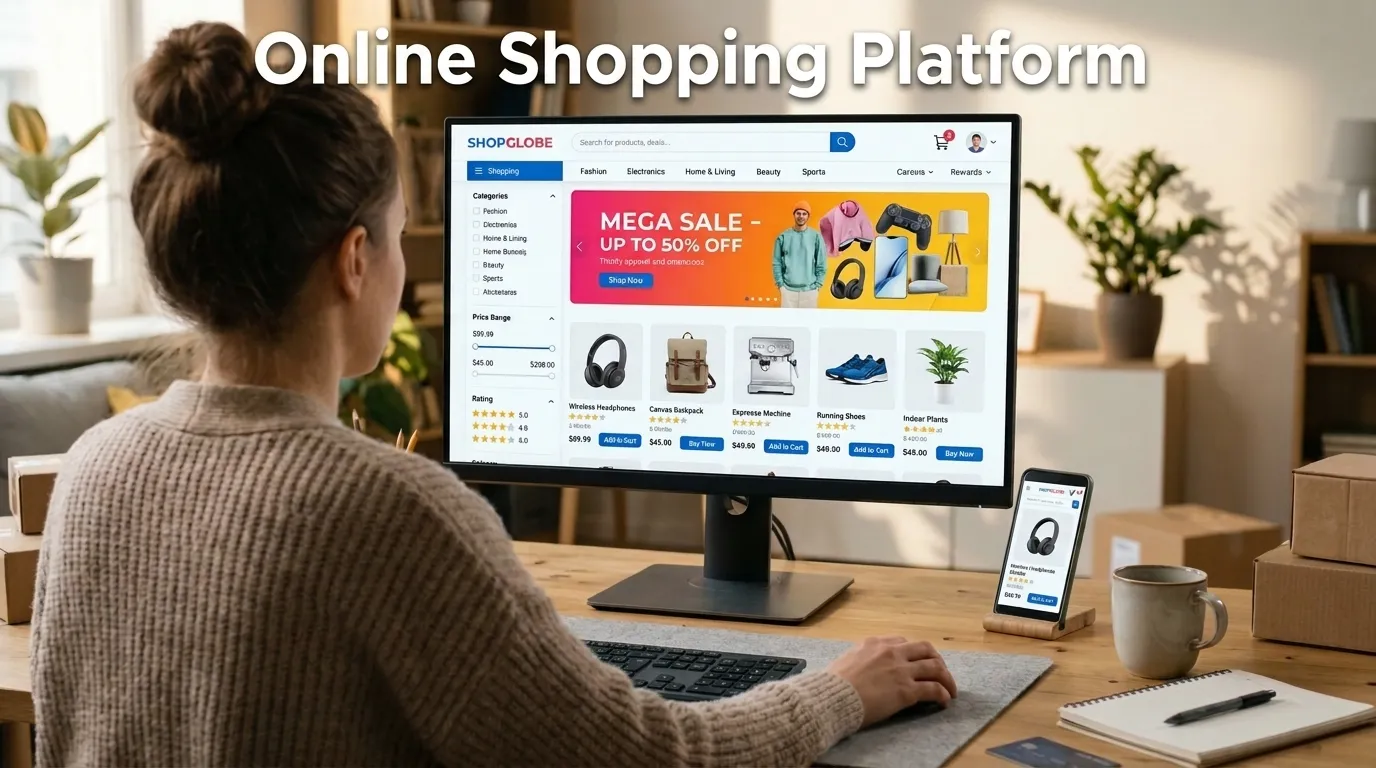 An online shopping platform connects customers with products through a convenient digital storefront. It allows visitors to browse categories, review product descriptions, compare prices, add items to their carts, and complete purchases from their devices.
A successful shopping experience depends on more than attractive design. Customers expect fast-loading pages, simple navigation, transparent pricing, secure checkout, and clear delivery information. If shoppers struggle to find products or encounter unexpected charges, they may abandon their purchases.
A well-designed e-commerce platform helps businesses organize product catalogs, display inventory information, and provide payment options that suit their target audiences. Mobile responsiveness is particularly important because many consumers browse and purchase products using smartphones.
Businesses should also consider customer reviews, product recommendations, search functionality, and convenient return policies. These features can increase trust and make purchasing decisions easier. By regularly analyzing customer behavior and website performance, store owners can identify problems and improve the overall shopping experience.
E-commerce Website Development
E-commerce website development involves planning, designing, building, and maintaining an online store that supports business objectives. The process includes selecting a domain, choosing hosting or a hosted service, organizing product categories, configuring payment gateways, and creating essential pages.
The right e-commerce platform can reduce development complexity by offering ready-made themes, templates, and integrations. Businesses with specific requirements may also need custom development to support unique product configurations, advanced search, membership programs, or connections with existing business systems.
Website security should remain a priority throughout development. Secure connections, trusted payment providers, software updates, appropriate access controls, and regular backups help protect business information and customer data.
Search engine optimization is another important consideration. Clear URLs, descriptive product titles, useful content, optimized images, and logical site navigation can help search engines understand your website. Publishing helpful articles can also attract potential customers who are researching products before making a purchase.
An effective development strategy combines usability, performance, accessibility, and search visibility. Instead of focusing only on appearance, businesses should build a website that makes browsing and purchasing straightforward while remaining flexible enough to accommodate future growth.
Online Store Management System
An online store management system helps business owners coordinate the daily activities required to operate an online shop. These activities include inventory tracking, order processing, payment monitoring, customer communication, shipping coordination, and returns management.
A capable e-commerce platform centralizes many of these tasks in one dashboard. Store owners can review incoming orders, update product availability, monitor sales, and identify items that need replenishment. Automation can reduce repetitive administrative work and minimize mistakes caused by manual data entry.
For businesses selling through multiple channels, synchronization is especially valuable. Inventory and order information should remain consistent across the website, marketplaces, and physical retail locations whenever possible.
Reporting tools also help managers understand which products generate the most revenue, which marketing campaigns attract customers, and where operational problems occur. These insights support better purchasing decisions and more efficient resource allocation.
As order volume increases, an organized management system becomes increasingly important. Choosing an e-commerce platform with suitable integrations and automation capabilities can help a business handle growth without creating unnecessary operational complexity.
E-commerce Business Solutions
 E-commerce business solutions extend beyond website creation. They include payment processing, customer relationship management, shipping integrations, marketing automation, inventory management, analytics, and customer support tools.
The most effective solution connects these functions so information can move smoothly between systems. For example, a completed purchase can update inventory, trigger an order confirmation, notify a fulfillment team, and add relevant information to customer records.
Businesses should select tools according to their actual requirements rather than paying for every available feature. A small retailer may need a simple storefront and reliable shipping integration, while a larger company might require advanced reporting, multiple currencies, or business-to-business purchasing features.
Marketing is another essential part of a complete business strategy. Developing a clear digital marketing strategy can help businesses attract relevant visitors, build brand awareness, and turn website traffic into sales.
Entrepreneurs exploring new opportunities can also review these e-commerce business ideas to identify potential products, customer groups, and market niches. Combining a practical business model with suitable technology creates a stronger foundation for sustainable growth.
E-commerce Platform Comparison
Comparing available solutions before making a decision helps businesses understand which features provide the greatest value. Shopify, Woo Commerce, Big Commerce, and Wix differ in their hosting arrangements, customization options, maintenance requirements, and pricing structures.
Shopify offers hosted infrastructure and integrated store management, making it attractive to businesses seeking convenience. Woo Commerce provides a flexible WordPress-based approach, although owners must consider hosting, updates, backups, and security responsibilities. Big Commerce includes extensive built-in commerce features, while Wix combines website creation with online selling tools.
An e-commerce platform should be assessed according to total ownership cost rather than its advertised starting price alone. Subscription fees, hosting, paid extensions, transaction charges, premium themes, developer assistance, and payment processing can all affect the final cost.
Businesses should also examine scalability and portability. Consider whether the solution can accommodate additional products, increased traffic, international customers, and more complicated workflows. Review available integrations and determine how easily you could export essential business data if you eventually change providers.
The best comparison focuses on your priorities rather than declaring one solution universally superior. A platform that offers the right balance of usability, functionality, cost, and flexibility will usually deliver greater long-term value.
Best Platform for Online Business
The best platform for online business depends on what you sell and how you plan to operate. A beginner selling a limited number of products may prioritize ease of use, while an established retailer might focus on customization, advanced inventory controls, and integration with accounting or fulfillment software.
Before selecting an e-commerce platform, define your target audience, expected order volume, product types, and available budget. Consider whether you need subscriptions, digital downloads, international shipping, wholesale pricing, or multiple storefronts.
Customer support is another important factor. Accessible documentation, responsive assistance, and a strong ecosystem of developers or service providers can make troubleshooting much easier.
Businesses should also consider their promotional channels. Some rely heavily on search engines, while others use social media, paid advertising, or email campaigns. A suitable platform should integrate effectively with the channels most relevant to your audience.
If your company uses several advertising formats, understanding traditional marketing and digital marketing differences can help you choose an appropriate promotional mix. The right technology should support your business strategy rather than force you to change it unnecessarily.
E-commerce Software Solutions
E-commerce software solutions provide the technical capabilities required to operate an online business. Depending on the provider, these capabilities may include storefront creation, checkout management, inventory tracking, sales reporting, customer accounts, and integrations with external services.
Hosted software generally simplifies maintenance because the provider manages much of the underlying infrastructure. Self-hosted solutions can offer greater technical control but usually require more responsibility for updates, backups, hosting performance, and security.
When selecting software, investigate its integration ecosystem. Your store may need to connect with accounting software, customer relationship management systems, shipping providers, analytics tools, and advertising platforms.
Businesses should also examine data ownership, access permissions, backup options, and compliance requirements relevant to their locations and industries. Customer information must be handled responsibly, and payment processing should use appropriate security measures.
A reliable e-commerce platform can become the operational center of your business when its features match your workflow. Reviewing software capabilities carefully helps prevent costly migrations and reduces the need for complicated workarounds as the company expands.
Shopify vs. Woo Commerce
Shopify and Woo Commerce are two widely used options, but they serve different preferences. Shopify is a hosted commerce service that bundles storefront functionality, hosting, and various management features. It is often appealing to business owners who want to launch quickly without managing much of the underlying technical infrastructure.
Woo Commerce is an open-source commerce plugin for WordPress. It provides extensive customization possibilities and can be attractive to businesses that want greater control over their website, content, and technical setup. However, users are generally responsible for arranging hosting and managing updates, backups, and compatible extensions.
The cost difference depends on how each store is configured. Shopify has subscription plans and may involve additional expenses for applications or particular payment arrangements. Woo Commerce itself is available without a standard platform license fee, but hosting, premium extensions, development, and maintenance can add up.
Shopify may suit entrepreneurs who value convenience and a managed environment. Woo Commerce may be better for businesses that prioritize flexibility and are comfortable managing a WordPress website or hiring technical assistance.
Ultimately, the best e-commerce platform is the one that aligns with your resources, technical preferences, and long-term goals. Test both options where practical and compare the complete cost of operating your store before committing.
Online Store Builder
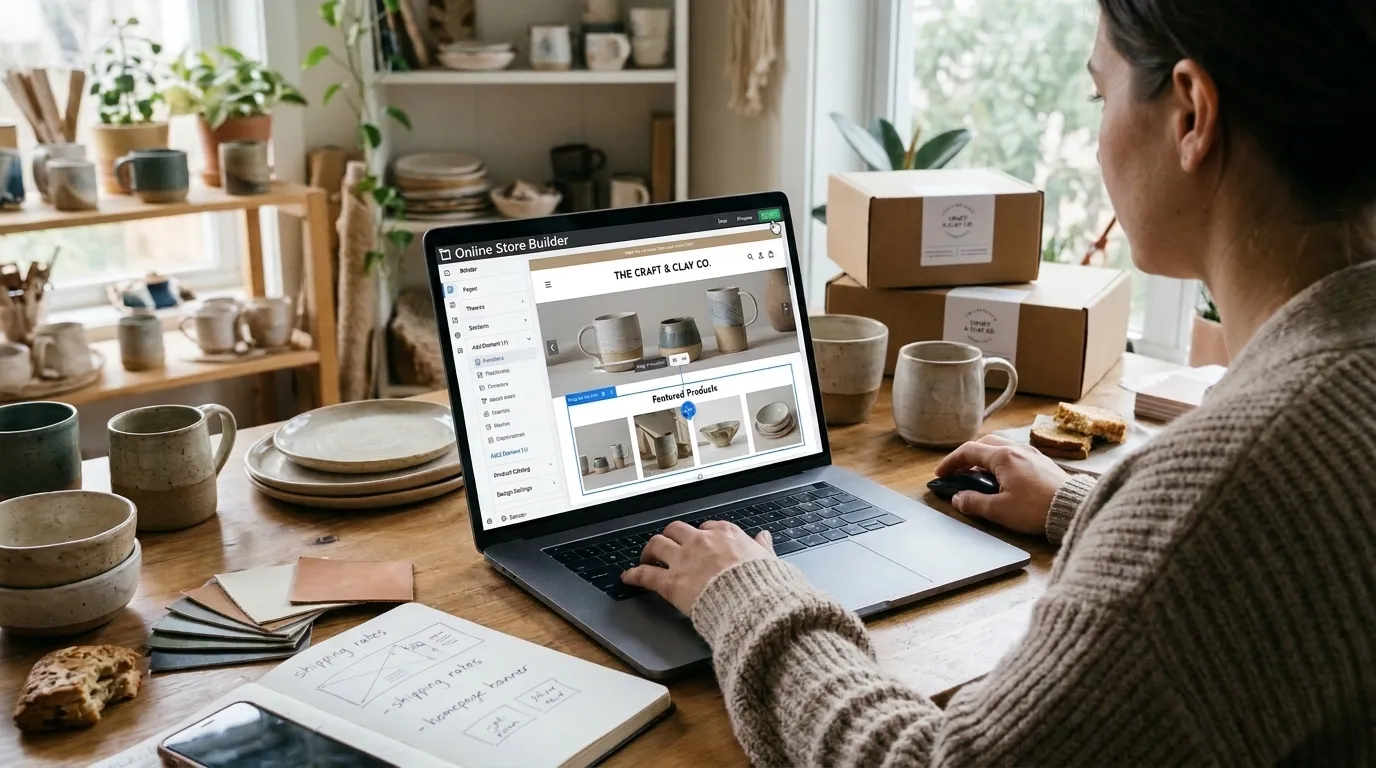 An online store builder makes it possible to create a digital storefront without developing every feature from scratch. Many builders include visual editors, responsive templates, product management tools, payment integrations, and customizable checkout experiences.
These tools are especially useful for entrepreneurs who want to validate a business idea before investing heavily in custom development. A ready-made template can help establish a professional appearance while allowing the owner to concentrate on product quality, pricing, and customer acquisition.
However, choosing a builder requires careful evaluation. Check whether the templates support your product catalog, whether the checkout can accommodate your preferred payment methods, and whether the service integrates with your shipping and marketing tools.
Seasonal promotions and special offers can also influence store performance. Businesses can use seasonal marketing strategies to plan campaigns around holidays, shopping events, and changing customer needs.
Retailers should also consider how they will attract customers beyond their website. For example, understanding future trends and strategies in TV advertising may help brands evaluate broader promotional opportunities when their budgets and audiences justify them.
A store builder provides the technical foundation, but success ultimately depends on useful products, trustworthy service, effective marketing, and continuous improvement. Selecting a flexible solution makes it easier to refine the store as customer expectations evolve.
Conclusion
Choosing the right e-commerce platform is an important investment in your business’s future. The ideal solution should make selling easier, support secure transactions, simplify store management, and provide the flexibility needed for growth. Before making a final decision, compare features, pricing, customization, integrations, security, and ongoing maintenance requirements. Consider your customers’ shopping preferences and the marketing channels you intend to use.
FAQ
1. What is an e-commerce platform?
An e-commerce platform is software that enables businesses to create and manage online stores. It typically provides tools for product listings, shopping carts, payment processing, order management, and sales reporting.
2. Which e-commerce platform is best for beginners?
Shopify and Wix are popular options for beginners because they offer hosted services and visual store-building tools. The right choice depends on your budget, preferred design options, and required features.
3. Is Shopify better than WooCommerce?
Neither is universally better. Shopify is often easier to maintain because it provides a hosted environment, while WooCommerce offers greater flexibility for WordPress users who want more control over their website.
4. Can I start an online store without coding?
Yes. Many store builders offer templates, visual editors, and ready-made integrations that allow you to launch a store without programming skills. More advanced customization may require technical assistance.
5. How much does an e-commerce platform cost?
Costs vary by provider and configuration. Expenses may include subscriptions, hosting, domain registration, payment processing, premium applications, themes, maintenance, and marketing.
6. Is an e-commerce website secure?
An online store can be secure when it uses appropriate safeguards, including HTTPS, trusted payment providers, regular updates, strong access controls, and secure handling of customer information. Security also requires ongoing maintenance.
7. Can I manage inventory through an e-commerce platform?
Yes. Many platforms include inventory management tools that track product availability, update stock levels, and help process orders. Additional integrations may be useful for businesses selling across multiple channels.
8. Can an e-commerce platform help increase sales?
Yes. Features such as mobile-friendly design, product recommendations, abandoned-cart recovery, analytics, and marketing integrations can support better conversion rates. Results depend on implementation and customer demand.
9. Can I change my e-commerce platform later?
Yes, but migration may require transferring products, customer records, orders, website content, and URL structures. Planning carefully helps minimize downtime, preserve search visibility, and reduce disruption.
10. What should I consider before choosing an online store builder?
Evaluate pricing, ease of use, customization, payment options, security, integrations, mobile performance, customer support, and scalability. Choose a solution that meets your current requirements while supporting your expected business growth.