What is Digital Marketing in E-Commerce? A Complete Guide
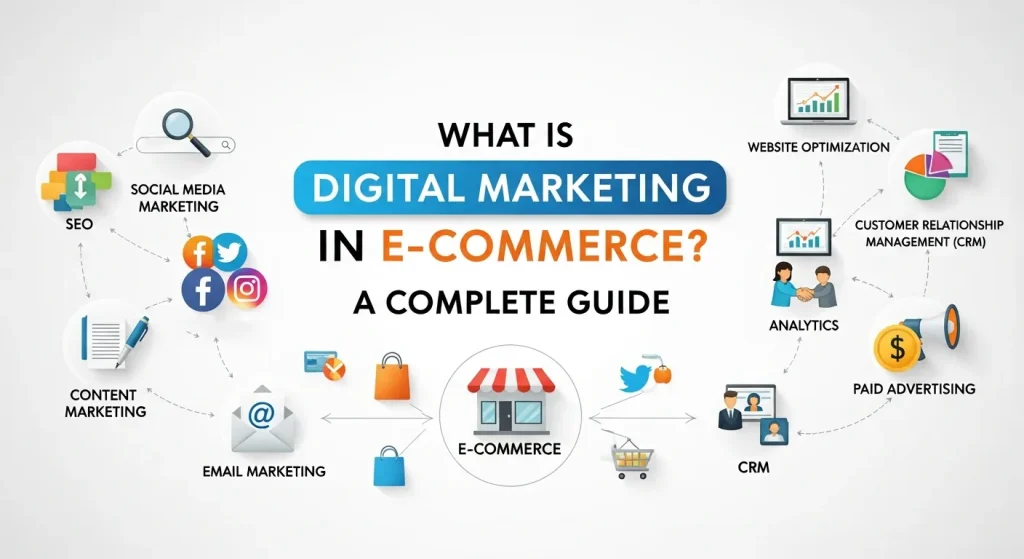
Digital marketing in e-commerce uses online channels like SEO, social media, email, and paid ads to attract customers, drive website traffic, increase sales, and build a strong brand presence digitally.
Digital marketing is more than just a buzzword, especially in e-commerce. For businesses that operate online, digital marketing is the only way to pull customers over—a bringer of traffic and a point where thoughts of solvency can drive. It can also lead to sales.
So what on earth is digital marketing in e-commerce? How can you make sure that it’s effective in growing your online store? This guide breaks down the details of digital marketing, why it is so important for online vendors, and also gives practical recommendations on what kind of strategy you should be using to stay ahead.
What is Digital Marketing in E-Commerce?
Digital marketing in e-commerce involves the use of online channels and strategies to promote and sell products through an online store. Whether you’re selling handmade goods through Etsy, running a Shopify store, or managing a larger marketplace like Amazon, digital marketing is critical.
This method includes various tactics like social media marketing, paid advertisements, email campaigns, search engine optimization (SEO), and content creation. The goal? To drive web traffic, convert visitors into customers, and cultivate a loyal audience.
Why Digital Marketing is Crucial for E-Commerce
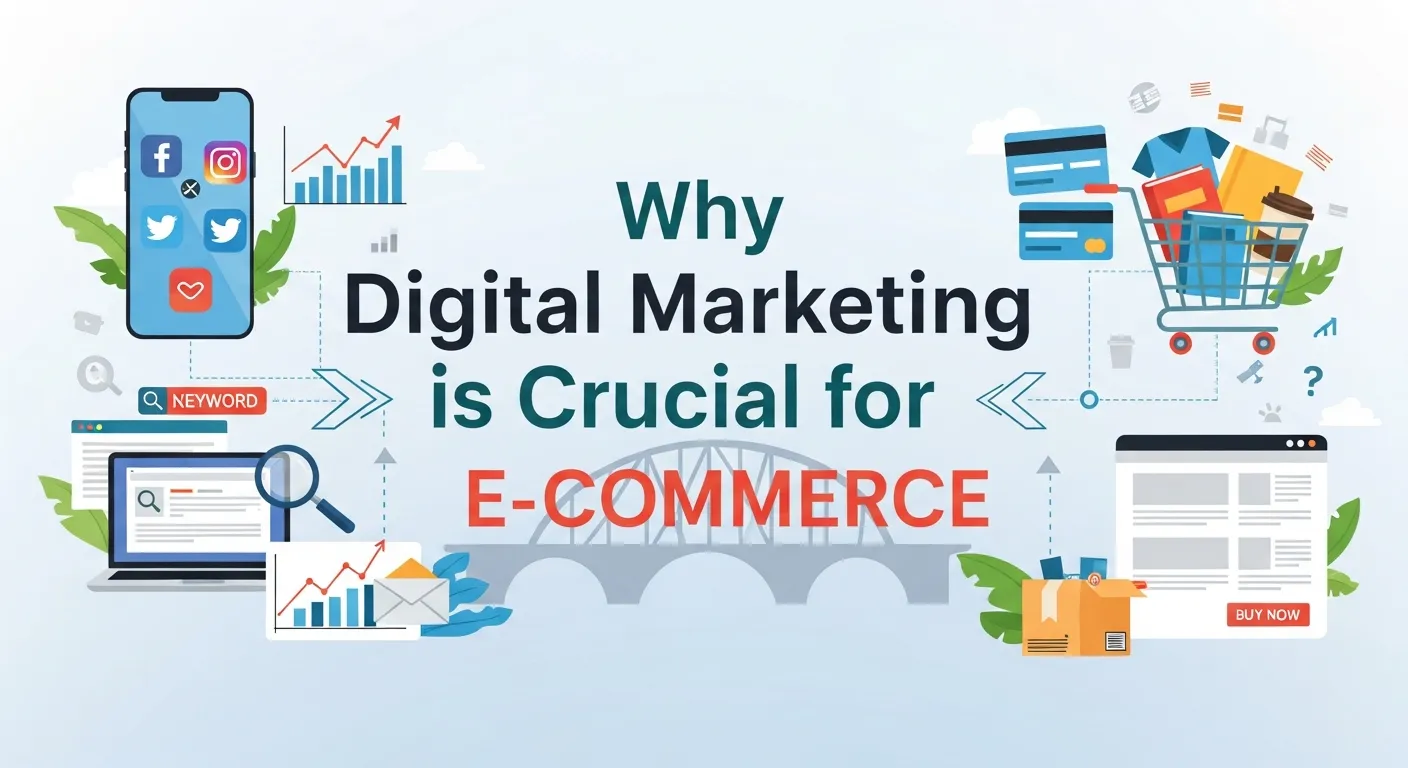
Unlike traditional brick-and-mortar stores, e-commerce businesses face different challenges, such as gaining visibility in a saturated online market and fostering customer trust without physical interaction. Here’s why digital marketing is essential for e-commerce growth:
1. Increase Visibility
With millions of online stores, standing out is tough. Digital marketing ensures your products are seen by the right people at the right time, helping you cut through the noise.
2. Target Your Audience
Digital tools enable you to segment your audience based on demographics, interests, and online behavior. Imagine running Facebook ads targeted at 25- to 34-year-olds who are searching for “sustainable beauty products.” That level of precision drives results.
3. Build Trust and Credibility
Smart campaigns using reviews, testimonials, and influencer partnerships build trust with potential customers—even if they’ve never seen your brand before.
4. Track and Improve Performance
Unlike traditional advertising, digital marketing provides measurable data. This lets you evaluate what’s working (or not) and pivot your strategies in real time.
Key Digital Marketing Strategies for E-Commerce Success
Mastering digital marketing comes down to using the right mix of tools and channels. Below, we’ve outlined the most impactful strategies:
Search Engine Optimization (SEO)
SEO is the foundation of your e-commerce store’s visibility. By optimizing your website to rank higher on search engines like Google, you attract organic visitors without spending on ads.
How to Get SEO Right for E-Commerce:
- Keyword Research: Use tools like Google Keyword Planner or Ahrefs to target high-volume, low-competition search terms relevant to your products.
- Optimize Product Pages: Your product descriptions, meta titles, and headings should include primary keywords while remaining user-friendly and informative.
- Technical SEO: Improve site speed, mobile responsiveness, and fix crawl errors for better rankings.
- Content Creation: Blogs, tutorials, and video content around your niche drive valuable long-term traffic.
Pay-Per-Click Advertising (PPC)
PPC ads, such as Google Ads or social media ads, place your e-commerce store in front of potential customers almost instantly. While these campaigns require a budget, they offer a fantastic return on investment when done strategically.
PPC Best Practices:
- Create a Compelling Ad Copy: Highlight benefits like free shipping or limited-time offers to inspire action.
- Use Retargeting Ads: Re-engage cart abandoners or recent site visitors with targeted ads that encourage them to complete a purchase.
- Leverage High-Converting Keywords: Invest in keywords with high purchase intent, such as “[product name] buy online” or “best [product category] deals.”
Social Media Marketing
Social media channels like Instagram, TikTok, Facebook, and Pinterest are invaluable for connecting with audiences and building a strong brand presence. For e-commerce, visual platforms like Instagram and Pinterest work especially well for showcasing products.
Tips for Effective Social Media Marketing:
- Post consistently: Stick to a schedule and mix product promotions, educational posts, and user-generated content.
- Utilize Influencer Marketing: Collaborating with influencers adds credibility and expands your reach.
- Engage Actively: Respond to comments, share stories, and create polls or quizzes to interact with your audience.
Email Marketing
Email remains one of the highest-converting digital marketing channels in e-commerce. From welcoming new subscribers to sending follow-ups on abandoned carts, email keeps you connected with your customers.
Must-Try Email Marketing Campaigns:
- Welcome Series: Onboard new customers with personalized emails introducing your brand and products.
- Promotional Emails: Announce sales, new arrivals, or exclusive discounts.
- Post-Purchase Follow-Ups: Express gratitude, request a review, or suggest complementary products.
Content Marketing
Content marketing involves more than just blogging. For e-commerce, it’s about creating valuable resources that answer your customers’ questions, inspire, or educate them about your products.
Ideas for E-Commerce Content Marketing:
- Product Tutorials: Show how to use or style your products.
- Buying Guides: Help customers choose the best option (e.g., “How to Choose the Right Running Shoes”).
- Customer Stories: Share testimonials, reviews, or success stories to build trust.
Affiliate and Influencer Marketing
Affiliate marketing and influencer partnerships go hand-in-hand with boosting e-commerce sales. Affiliates earn a commission by promoting your products, while influencers bring your brand to audiences you might not otherwise reach.
Why It Works:
- An affiliate network taps into niche communities that trust the affiliate’s recommendations.
- Influencers provide authentic content showcasing your product in real-life scenarios.
Analytics and Optimization
Everything in digital marketing should be tracked, measured, and optimized. Using tools like Google Analytics or platforms like Shopify Analytics, you can understand customer behavior and identify growth opportunities.
Conversion Rate Optimization (CRO) in Digital Marketing in E-Commerce
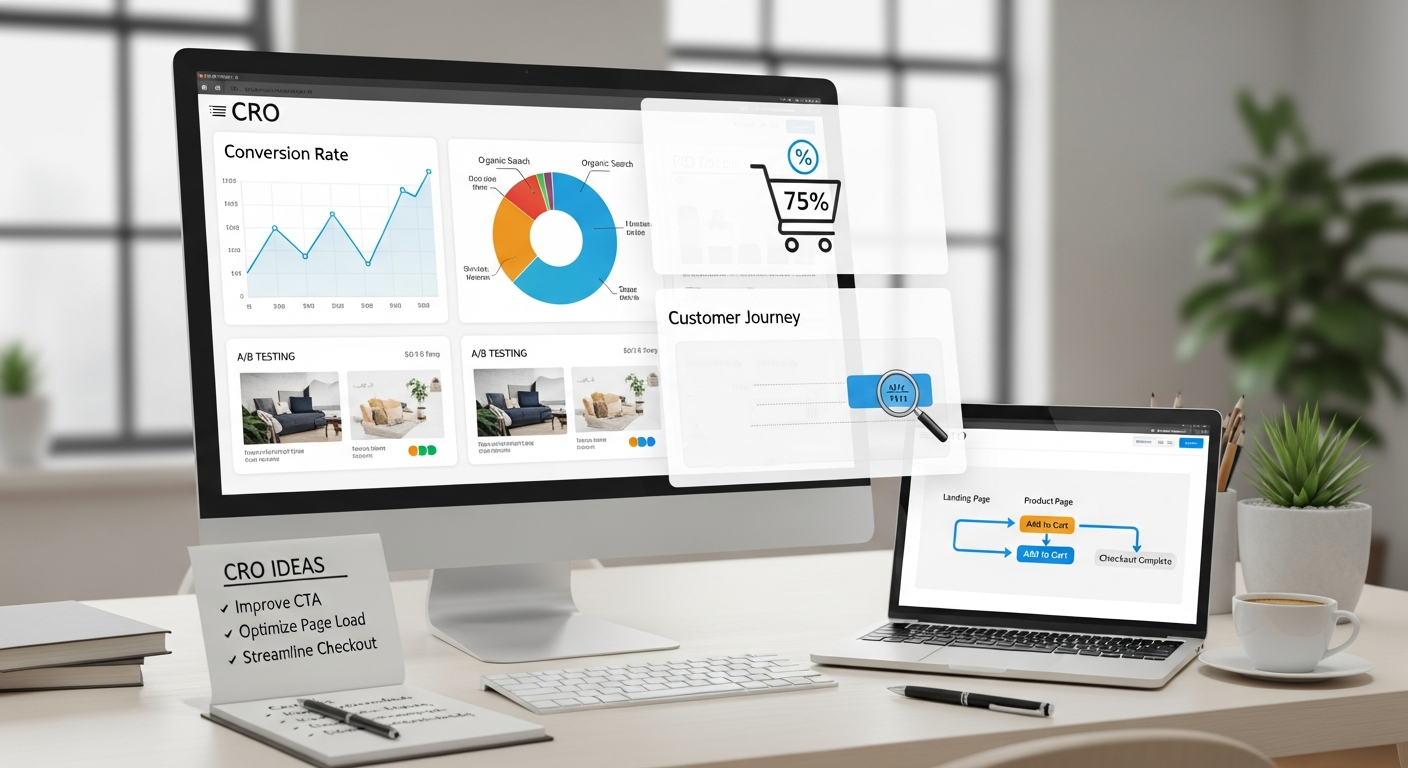
Driving traffic is important, but converting visitors into buyers is what truly defines success in Digital Marketing in E-Commerce. Conversion Rate Optimization (CRO) focuses on improving your website experience so more visitors complete desired actions—such as purchases, sign-ups, or adding items to cart.
In today’s competitive e-commerce market, even small changes can significantly increase revenue without increasing ad spend.
Why CRO Matters
- Reduces cart abandonment
- Increases average order value (AOV)
- Improves return on ad spend (ROAS)
- Maximizes results from existing traffic
Key CRO Tactics for Marketing-Ecommerce
- A/B Testing: Test product images, CTA buttons, headlines, and pricing formats.
- Optimized Checkout Process: Enable guest checkout and multiple payment methods.
- Trust Signals: Add security badges, reviews, and money-back guarantees.
- Product Page Enhancements: Use high-quality images and FAQs.
- Live Chat & Chatbots: Answer real-time questions to prevent drop-offs.
Example CRO Optimization Table
| CRO Element | Optimization Strategy | Expected Impact |
|---|---|---|
| Checkout Page | One-page checkout | Lower abandonment rate |
| Product Page | Add video demo | Higher conversion |
| CTA Button | Change color & wording | Improved click rate |
| Pricing | Bundle offers | Increased AOV |
CRO ensures your commerce-strategy generates maximum profitability from existing traffic.
Customer Retention & Customer Loyalty Programs
While acquisition is vital, retention drives long-term profitability in online marketing in e-commerce. Repeat customers spend more, convert faster, and promote your brand organically.
Customer Loyalty Programs are powerful tools within Digital Marketing in E-Commerce to build strong brand relationships.
Benefits of Customer Loyalty Programs
- Encourages repeat purchases
- Improves customer lifetime value (CLV)
- Strengthens brand advocacy
- Reduces dependency on paid ads
Effective Loyalty Strategies
- Points-Based Systems: Earn points per purchase
- VIP Tiers: Reward high-spending customers
- Referral Bonuses: Incentivize word-of-mouth growth
- Subscription Models: Ideal for personal-care-product brands
- Exclusive Access: Early product launches or private discounts
Retention vs Acquisition Comparison
| Factor | Customer Retention | Customer Acquisition |
|---|---|---|
| Cost | Lower | Higher |
| Conversion Rate | Higher | Moderate |
| Revenue Stability | Strong | Variable |
| Brand Trust | Established | Developing |
Strong services-strategies should balance both acquisition and retention for sustainable growth.
Marketing Automation & AI in E-Commerce Growth
Automation is transforming Digital Marketing in E-Commerce by improving efficiency, personalization, and scalability. Modern tools allow businesses to automate campaigns while delivering personalized experiences.
Why Automation Matters
- Saves time
- Improves targeting precision
- Enhances customer journey
- Increases sales through smart segmentation
Automation Applications
Email-Marketing-Ecommerce Automation:
- Abandoned cart sequences
- Post-purchase upsell emails
- Re-engagement campaigns
Email-Marketing-Strategies Using AI:
- Behavior-triggered emails
- Dynamic product recommendations
- Personalized discount codes
Shopping Campaigns Automation:
- Smart bidding strategies
- AI-driven ad placements
- Dynamic product ads
Automation Impact Table
| Automation Tool | Function | Business Benefit |
|---|---|---|
| Email Workflows | Trigger-based emails | Higher conversion |
| AI Product Recommendations | Personalized suggestions | Increased AOV |
| Smart Shopping Ads | Automated bidding | Better ROAS |
| CRM Integration | Customer segmentation | Improved targeting |
By integrating automation into your marketing-ecommerce strategy, you create scalable systems that continuously optimize performance within the evolving e-commerce market.
How to Get Started with Digital Marketing for E-Commerce
Starting with digital marketing doesn’t have to be overwhelming. Here’s a quick roadmap to guide you:
- Define Your Goals: Whether it’s increasing traffic, boosting sales, or enhancing customer loyalty, set actionable goals.
- Know Your Audience: Use tools or surveys to understand your customers’ preferences and behaviors.
- Pick the Right Channels: Focus on 2-3 strategies initially, such as SEO, email marketing, and social media.
- Create a Content Plan: Plan campaigns and content around key dates or product launches.
- Monitor Results: Regularly analyze your campaign’s performance to identify strengths and areas for improvement.
Achieve E-Commerce Success with Digital Marketing
In today’s digital-first world, achieving e-commerce success is impossible without a well-planned digital marketing strategy. It’s no longer enough to simply have an online store; businesses need to actively attract, engage, and convert their audience across multiple digital touchpoints.
The Pillars of E-Commerce Success
-
Search Engine Optimization (SEO)
Being visible on search engines is critical. High-ranking pages ensure organic traffic, which is often more cost-effective and long-lasting than paid campaigns. Focus on:
- Optimizing product pages with relevant keywords
- Creating high-quality content that answers customer questions
- Ensuring your website is mobile-friendly and fast-loading
-
Social Media Engagement
Platforms like Instagram, TikTok, Facebook, and Pinterest are more than just promotional channels—they are spaces where your audience interacts with your brand. By consistently posting valuable content, engaging with followers, and leveraging influencer partnerships, you can:
- Build brand awareness
- Drive traffic to your online store
- Foster community and trust
-
Email and SMS Marketing
Email remains one of the highest-converting channels for e-commerce. Combining it with SMS marketing can maximize reach and engagement. Key strategies include:
- Sending personalized recommendations and promotions
- Creating automated sequences like welcome emails and abandoned cart reminders
- Running seasonal or flash sales campaigns
-
Analytics-Driven Decision Making
Success in digital marketing depends on measuring and optimizing. By tracking KPIs such as traffic sources, conversion rates, and customer lifetime value, you can:
- Identify which campaigns deliver the best ROI
- Improve targeting for future campaigns
- Adjust strategies in real-time to maximize results
-
Customer Retention and Loyalty
Acquiring new customers is important, but repeat buyers generate long-term revenue. Loyalty programs, personalized offers, and excellent post-purchase experiences encourage:
- Higher repeat purchases
- Positive reviews and referrals
- Long-term brand advocacy
Creating a Balanced Digital Marketing Mix
The key to success is integration. SEO, social media, email marketing, and analytics shouldn’t operate in isolation—they should work together to create a seamless customer journey. For example:
-
Use social media to drive awareness → direct traffic to optimized product pages → capture emails for follow-up campaigns → retarget through ads or SMS → encourage repeat purchases with loyalty programs.
Frequently Asked Questions (FAQs) About Digital Marketing in E-Commerce
1. What is digital marketing in e-commerce?
Digital marketing in e-commerce uses online channels like SEO, social media, email, and paid ads to promote products, drive website traffic, increase sales, and build a strong brand presence digitally.
2. Why is digital marketing crucial for an online store?
Unlike traditional stores, e-commerce businesses need digital marketing to increase visibility, target the right audience, build trust, and track measurable results in a competitive e-commerce market.
3. Which digital marketing channels work best for e-commerce?
Effective channels include SEO, social media marketing, PPC campaigns, email marketing, SMS marketing, content marketing, and affiliate marketing. A combined strategy usually delivers the best results.
4. How does email marketing help e-commerce businesses?
Email marketing drives sales through welcome series, promotional campaigns, abandoned cart follow-ups, and customer retention initiatives. It’s a high-converting strategy for boosting revenue and loyalty.
5. What is the difference between SMS marketing and email marketing for e-commerce?
SMS marketing delivers short, time-sensitive messages, while email marketing allows detailed, personalized campaigns with promotions, tutorials, and newsletters. Using both in a combined strategy is highly effective.
6. How can affiliate marketing boost online sales?
Affiliate marketing leverages partners who promote your products to their audience in exchange for a commission, increasing reach, credibility, and sales with minimal upfront cost.
7. What role do customer loyalty programs play in e-commerce marketing?
Loyalty programs encourage repeat purchases, improve customer lifetime value, and build brand advocacy. Examples include points systems, VIP tiers, referral bonuses, and subscription-based rewards.
8. How can social media strategies like Facebook or WhatsApp campaigns help?
Platforms like Facebook and WhatsApp allow precise audience targeting, retargeting, and direct communication with potential buyers, increasing engagement, conversions, and brand awareness.
9. How can small e-commerce stores start with digital marketing?
Begin by defining goals, understanding your audience, picking 2–3 key channels, creating a content plan, and continuously monitoring performance. Start small and scale gradually.
10. How do I measure the success of my e-commerce digital marketing efforts?
Use analytics tools like Google Analytics, Shopify Analytics, or social media insights to track traffic, conversions, ROI, and customer behavior. Continuous optimization ensures growth and improved sales.