What Is E-Commerce and Internet Marketing? A Complete Guide
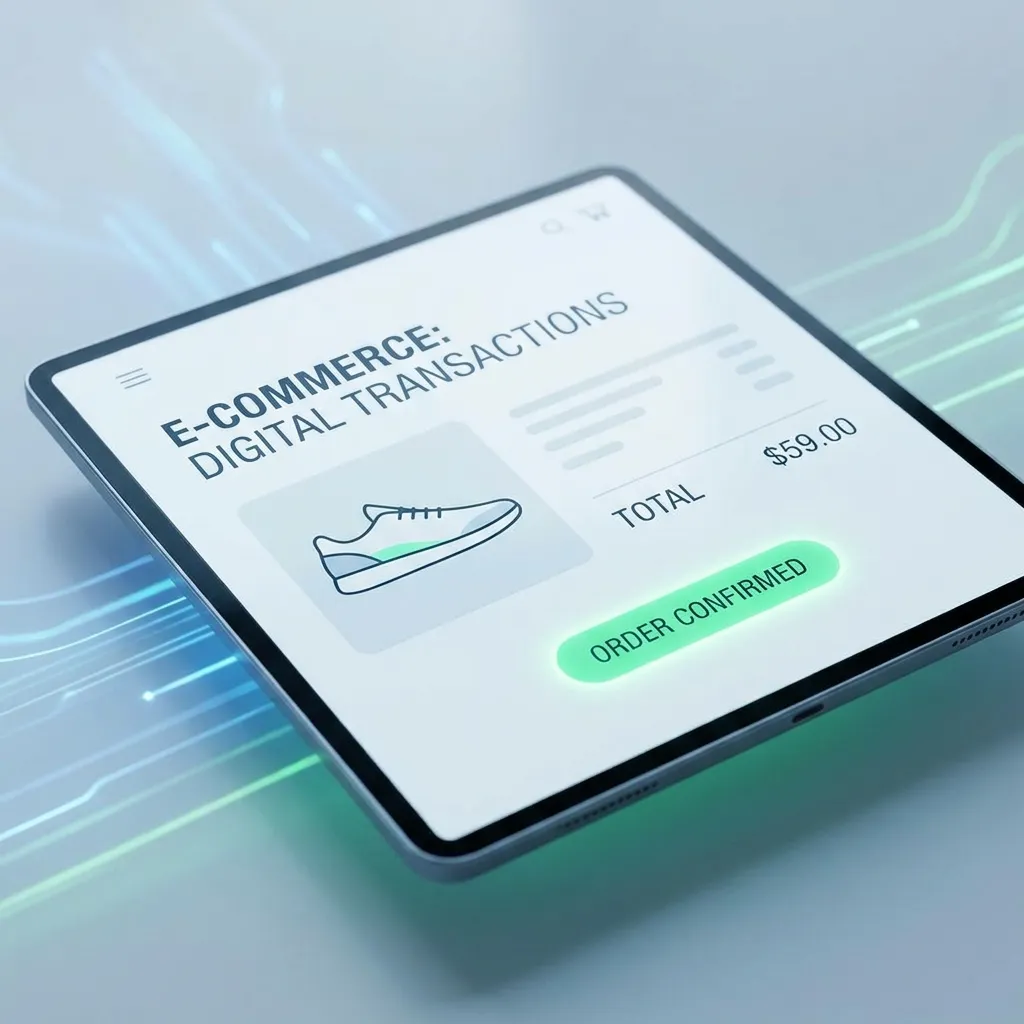
E-Commerce and Internet Marketing work as a team. E-Commerce is the buying and selling of goods and services online, while Internet Marketing is the set of strategies used to attract visitors, convert them into customers, and keep them coming back. Together, they power nearly every successful online business today.
Running an online store is one thing. Getting people to find it, trust it, and buy from it is another challenge entirely. That’s where the relationship between E-Commerce and Internet Marketing becomes essential.
If you’ve ever wondered how small brands suddenly appear everywhere—in your search results, your social feeds, and your inbox—the answer lies in this partnership. E-Commerce gives businesses a place to sell. Internet Marketing gives them a way to be discovered.
This guide breaks down what both terms mean, how they fit together, and the specific strategies that drive results. You’ll learn about the core pillars of digital marketing, the metrics that matter, and where the industry is heading next. Whether you’re launching a store or trying to grow an existing one, understanding E-Commerce and Internet Marketing gives you a clear roadmap to follow.
Introduction to E-Commerce and Internet Marketing
The world of online business rests on two connected ideas. One handles the transaction. The other handles the attention. Let’s define each before exploring how they reinforce one another.
What Is E-Commerce?
E-Commerce, short for electronic commerce, is the process of buying and selling products or services over the internet. It covers everything from a single seller listing handmade jewelry to global retailers processing millions of orders a day.
E-Commerce includes the storefront, the shopping cart, the payment gateway, and the order fulfillment system. Anytime money changes hands online for a product or service, E-Commerce is at work. Platforms like Shopify, WooCommerce, and Amazon have made it possible for almost anyone to set up shop without writing a line of code.
What Is Internet Marketing?
Internet Marketing—also called digital marketing—is the practice of promoting products, services, and brands through online channels. It includes search engines, social media, email, paid ads, and content.
The goal of Internet Marketing is simple: connect the right people with the right offer at the right time. A beautiful online store means little if no one visits it. Internet Marketing fills that gap by driving qualified traffic and guiding shoppers toward a purchase.
The Synergy Between E-Commerce and Internet Marketing
E-Commerce and Internet Marketing depend on each other. An online store without marketing is invisible. Marketing without a store to sell from has nowhere to send buyers.
When the two align, results compound. Internet Marketing brings visitors to the E-Commerce site. The site converts those visitors into customers. Data from each sale then feeds back into marketing campaigns, making them sharper over time. This loop—attract, convert, learn, repeat—is the engine behind modern online retail.
The Evolution of E-Commerce
E-Commerce has changed dramatically since its early days. Understanding that journey helps explain why Internet Marketing has become so central to selling online.
From Brick-and-Mortar to Click-and-Mortar
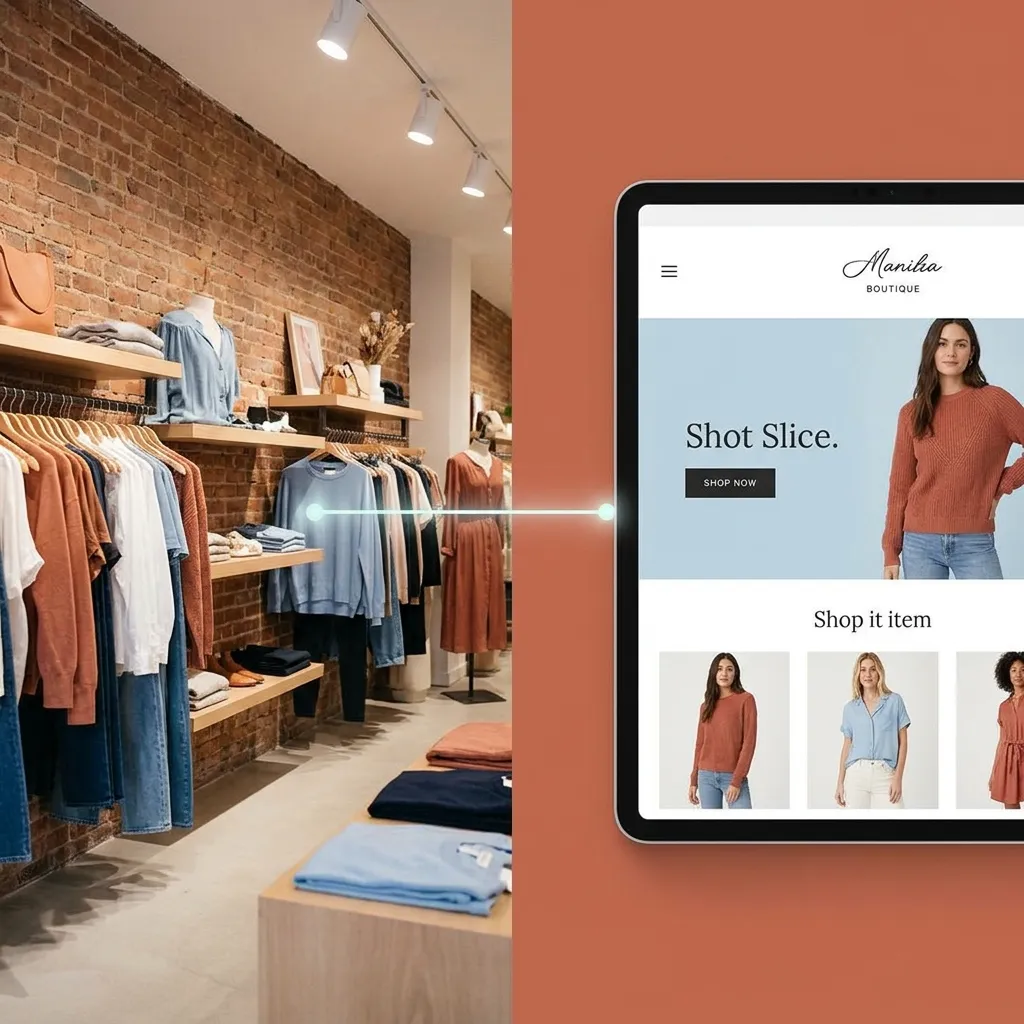
Retail once meant a physical location with shelves and a cash register. The internet changed that. First came pure online stores with no physical presence. Then traditional retailers added websites, creating “click-and-mortar” businesses that blend in-person and online shopping.
Today, many shoppers research online and buy in store—or browse in store and buy online. The line between physical and digital retail has blurred almost completely.
Key E-Commerce Models (B2C, B2B, C2C, D2C)
E-Commerce comes in several forms, each serving a different relationship between buyer and seller:
- B2C (Business-to-Consumer): A company sells directly to individual shoppers. Think of an online clothing retailer.
- B2B (Business-to-Business): One business sells to another, such as a software company selling tools to other firms.
- C2C (Consumer-to-Consumer): Individuals sell to each other through platforms like eBay or Etsy.
- D2C (Direct-to-Consumer): A manufacturer skips the middleman and sells straight to customers, often through its own website.
The Impact of Mobile Commerce and Social Commerce
Smartphones reshaped how people shop. Mobile commerce, or m-commerce, lets shoppers browse and buy from anywhere. A growing share of online sales now happens on mobile devices.
Social commerce takes this further by turning social platforms into storefronts. Shoppers can discover a product on Instagram or TikTok and buy it without ever leaving the app. This shortens the path from inspiration to purchase—and makes Internet Marketing on social channels more valuable than ever.
Pillars of Internet Marketing for E-Commerce
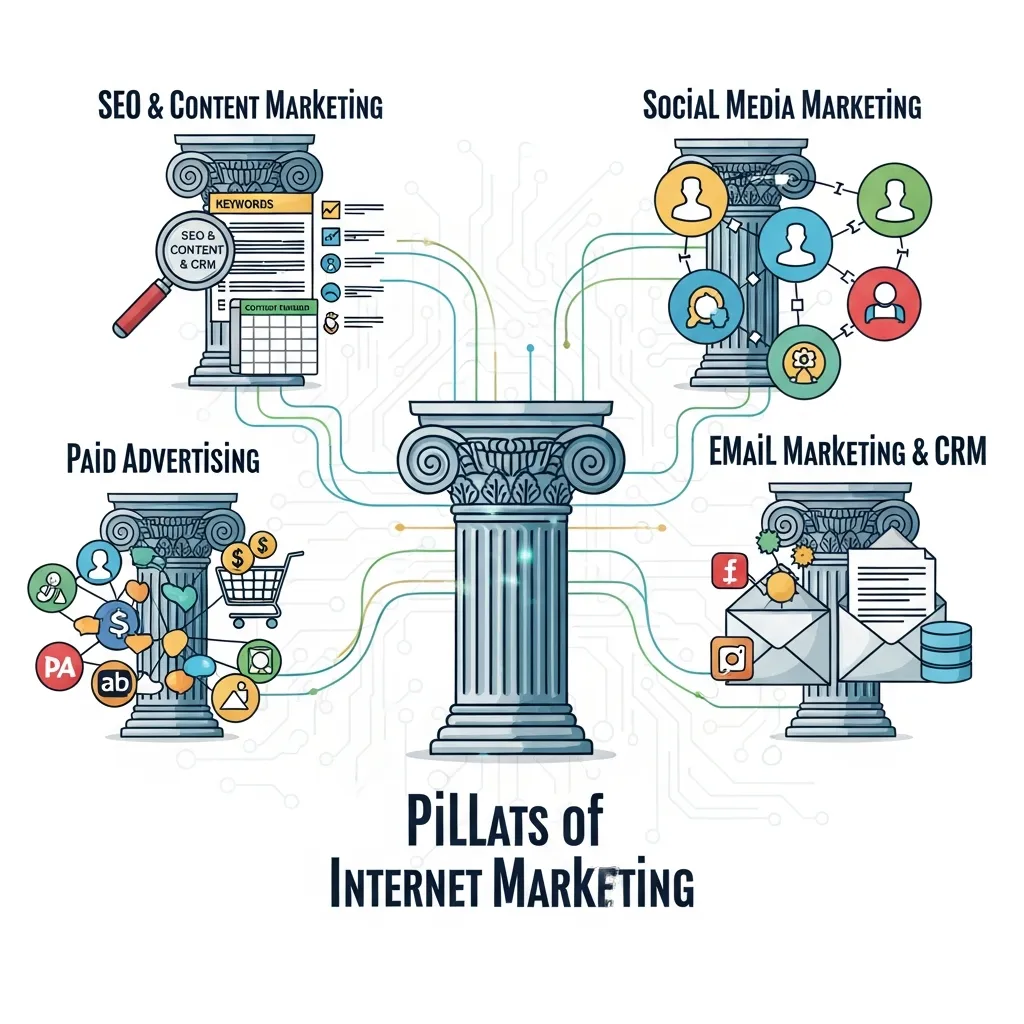
Internet Marketing isn’t a single tactic. It’s a collection of strategies that work best when combined. Here are the core pillars every E-Commerce business should understand.
How Does SEO Help E-Commerce Stores Rank Higher?
Search Engine Optimization (SEO) helps your store appear when people search for products you sell. Higher rankings mean more free, qualified traffic. SEO breaks into three main areas.
On-Page SEO covers the elements you control on your pages—product titles, descriptions, headings, images, and keywords. Clear, keyword-rich product pages help search engines understand what you sell.
Off-Page SEO focuses on building authority through backlinks from other reputable websites. When trusted sites link to yours, search engines view your store as more credible.
Technical SEO ensures your site loads fast, works on mobile, and can be crawled easily. A slow or broken site hurts rankings no matter how good your products are.
What Role Does Content Marketing Play?
Content marketing attracts and educates shoppers before they’re ready to buy. It builds trust and supports SEO at the same time.
Blog posts and articles answer customer questions and target search keywords. A skincare store might publish guides on building a routine, drawing in readers who later become buyers.
Product descriptions do double duty—they inform shoppers and feed SEO. Strong descriptions highlight benefits, address objections, and include relevant search terms.
Video marketing shows products in action. Demos, tutorials, and reviews help shoppers feel confident, which lifts conversions.
Which Social Media Strategy Works Best for E-Commerce?
Social media marketing puts your brand in front of people where they already spend time. Success starts with the right approach.
Platform selection matters because each network attracts a different audience. A visual brand may thrive on Instagram and TikTok, while a B2B seller might focus on LinkedIn.
Organic vs. paid social is a balance. Organic posts build community and loyalty over time. Paid social delivers faster reach and precise targeting. Most brands use both.
How Does Paid Advertising (PPC) Drive Sales?
Pay-per-click (PPC) advertising lets you pay only when someone clicks your ad. It delivers fast, measurable traffic.
- Search ads appear at the top of search results when people look for specific products.
- Display ads show banners across websites to build awareness and retarget past visitors.
- Social media ads use detailed audience data to reach people likely to buy.
Why Is Email Marketing Still Effective?
Email marketing remains one of the highest-returning channels in Internet Marketing because it reaches customers directly.
List building strategies grow your audience through signup forms, discounts, and gated content. A larger, engaged list means more potential sales.
Segmentation and personalization send the right message to the right person. A first-time buyer and a loyal customer should not receive identical emails.
Automation and campaigns keep customers engaged without constant manual work. Welcome sequences, abandoned cart reminders, and post-purchase follow-ups all run on autopilot.
How Do Affiliate and Influencer Marketing Work?
Affiliate marketing rewards partners for driving sales. Affiliates promote your products and earn a commission on each purchase they generate. It’s a low-risk way to expand reach because you pay only for results.
Influencer marketing partners your brand with creators who have engaged audiences. A recommendation from a trusted influencer can introduce your products to thousands of potential buyers and build instant credibility.
Measuring Success: Digital Marketing Reporting and Performance Metrics
You can’t improve what you don’t measure. Strong Digital Marketing Reporting turns raw data into clear decisions, and tracking the right Digital Marketing Performance Metrics shows what’s working.
What Are the Key E-Commerce Metrics to Track?
These numbers reveal the health of your store:
- Conversion Rate: The percentage of visitors who make a purchase.
- Average Order Value (AOV): The average amount spent per order.
- Lifetime Value (LTV): The total revenue a customer generates over time.
- Churn: The rate at which customers stop buying from you.
What Are the Key Internet Marketing Metrics?
These Digital Marketing Performance Metrics show how well your campaigns attract and engage people:
- Traffic: The number of visitors reaching your site.
- Engagement: How users interact with your content.
- Click-Through Rate (CTR): The percentage of people who click an ad or link.
- Return on Ad Spend (ROAS): The revenue earned for every dollar spent on ads.
Which Tools Support Digital Marketing Reporting?
Tools like Google Analytics, Google Search Console, and platform dashboards from Meta and Google Ads pull your data into one place. They power Digital Marketing Reporting by showing trends, spotting problems, and proving return on investment. Consistent Digital Marketing Reporting keeps teams focused on the metrics that actually move revenue.
Challenges and Opportunities in E-Commerce and Internet Marketing

Selling online offers huge potential, but it comes with real hurdles. Smart businesses treat each challenge as a chance to stand out.
How Do You Compete in a Crowded Market?
Competition is fierce. Standing out requires a clear brand, a strong value proposition, and an experience customers can’t get elsewhere. Niche focus often beats trying to please everyone.
Why Do Data Privacy and Security Matter?
Shoppers share personal and payment details with every order. Protecting that data builds trust and keeps you compliant with regulations like GDPR. A single breach can damage a brand for years.
Can You Personalize at Scale?
Customers expect experiences tailored to them, yet doing this for thousands of people is hard. Personalization tools and smart segmentation make it possible to deliver relevant offers without manual effort.
How Are Emerging Technologies Changing Things?
Artificial intelligence (AI) powers product recommendations, chatbots, and predictive analytics. Augmented and virtual reality (AR/VR) let shoppers preview products—like trying on glasses or placing furniture in a room—before they buy.
Future Trends in E-Commerce and Internet Marketing
The pace of change shows no sign of slowing. These trends are shaping the next chapter of online retail.
What Is Hyper-Personalization?
Hyper-personalization uses AI and real-time data to tailor every touchpoint—product suggestions, emails, and even pricing—to the individual shopper. It moves beyond basic segmentation toward true one-to-one marketing.
How Will Voice Commerce Grow?
Voice commerce lets people shop using smart speakers and voice assistants. As voice recognition improves, more shoppers will reorder products and search by speaking instead of typing.
Why Is Live Shopping Taking Off?
Live shopping blends entertainment and retail. Hosts demonstrate products in real time while viewers buy instantly. The format creates urgency and mirrors the energy of in-person sales.
What Does Sustainable E-Commerce Look Like?
Shoppers increasingly favor brands that act responsibly. Sustainable E-Commerce focuses on eco-friendly packaging, ethical sourcing, and transparent supply chains. Doing good is becoming good business.
Bringing E-Commerce and Internet Marketing Together
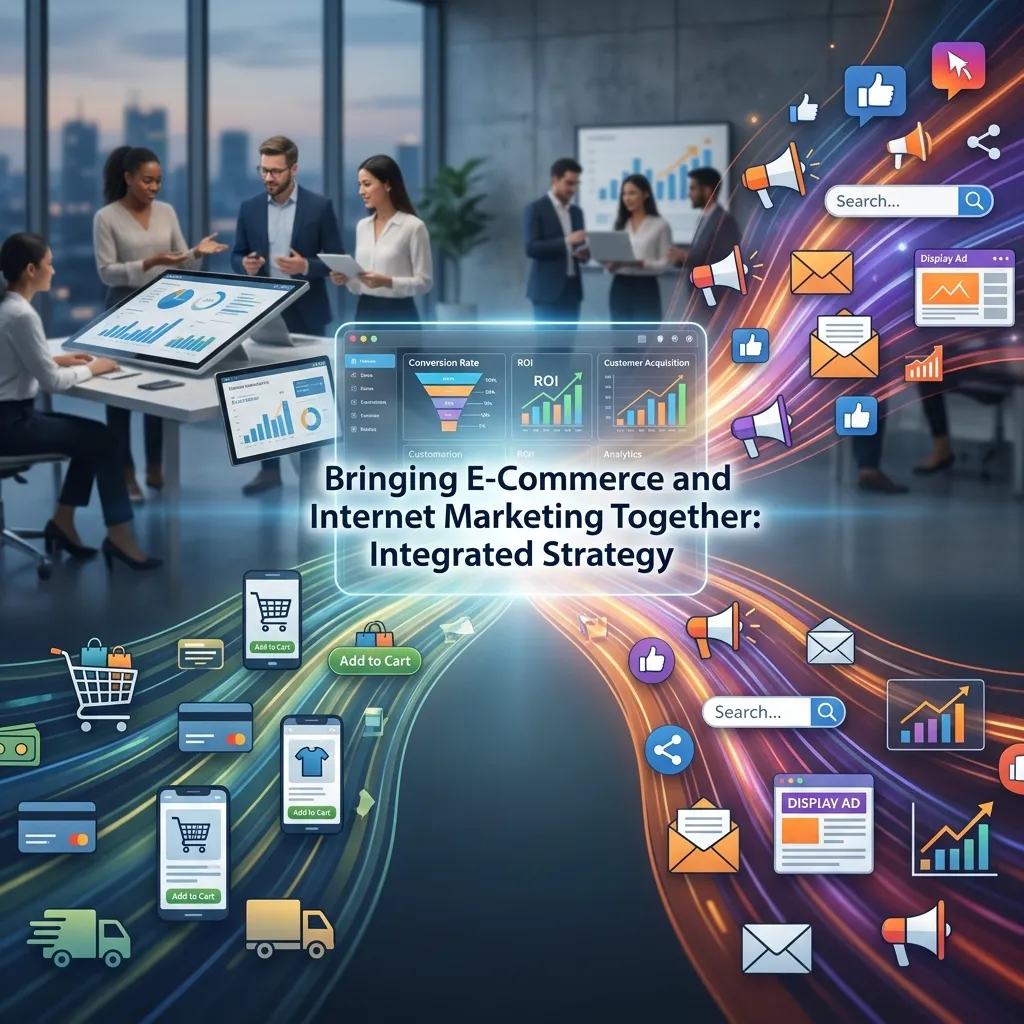
E-Commerce and Internet Marketing are two halves of the same machine. One creates the space to sell. The other brings the customers and keeps them engaged. Neither reaches its full potential alone.
The businesses that win online are the ones that treat both as a single, connected system—driving traffic with SEO, content, social, and ads, then converting that traffic into loyal customers and learning from every sale.
Start small. Pick one or two marketing pillars, set clear goals, and track your Digital Marketing Performance Metrics closely. Use Digital Marketing Reporting to see what works, then double down. Over time, these small, data-driven steps compound into real growth. The tools are within reach—your next move is to put them to work.
Frequently Asked Questions (FAQs)
What is E-Commerce?
E-Commerce is the buying and selling of products or services over the internet. It includes the online storefront, shopping cart, payment processing, and order fulfillment—everything needed to complete a sale online.
What is Internet Marketing?
Internet Marketing, also called digital marketing, is the practice of promoting products and brands through online channels such as search engines, social media, email, and paid ads. Its goal is to attract visitors and turn them into customers.
How are E-Commerce and Internet Marketing related?
E-Commerce provides the platform to sell, while Internet Marketing drives traffic to that platform and converts visitors into buyers. They work as a connected loop: marketing attracts shoppers, the store converts them, and sales data improves future marketing.
What are the main types of E-Commerce?
The four main models are B2C (business to consumer), B2B (business to business), C2C (consumer to consumer), and D2C (direct to consumer). Each describes a different relationship between the seller and the buyer.
Why is SEO important for E-Commerce?
SEO helps your store appear in search results when shoppers look for products you sell. Higher rankings bring free, qualified traffic, which lowers customer acquisition costs and increases sales over time.
What role does content play in Internet Marketing for E-Commerce?
Content marketing attracts and educates shoppers through blog posts, product descriptions, and videos. It builds trust, answers questions, and supports SEO, helping move visitors closer to a purchase.
How can social media boost E-Commerce sales?
Social media puts your brand in front of engaged audiences, drives traffic to your store, and enables direct purchases through social commerce features. It also builds community and loyalty over time.
What are common Digital Marketing Performance Metrics?
Common Digital Marketing Performance Metrics include traffic, engagement, click-through rate (CTR), return on ad spend (ROAS), conversion rate, average order value (AOV), and customer lifetime value (LTV).
How can I measure the success of my E-Commerce and Internet Marketing efforts?
Track both store metrics (conversion rate, AOV, LTV, churn) and campaign metrics (traffic, CTR, ROAS). Use Digital Marketing Reporting tools like Google Analytics to combine this data and judge overall performance.
What are some challenges in E-Commerce and Internet Marketing?
Common challenges include fierce competition, protecting customer data, personalizing experiences at scale, and keeping up with emerging technologies like AI and AR/VR.
What is Digital Marketing Reporting?
Digital Marketing Reporting is the process of collecting, organizing, and analyzing marketing data to measure performance. It turns raw numbers into clear insights that guide better decisions and prove return on investment.
What are the future trends in E-Commerce and Internet Marketing?
Key trends include hyper-personalization powered by AI, voice commerce through smart assistants, live shopping events, and a growing focus on sustainable, ethical E-Commerce.