What is Online Marketing in E-Commerce? A Detailed Guide for Beginners
Online marketing in e-commerce is the use of digital channels like search engines, social media, email, and ads to promote products, attract customers, increase website traffic, and drive online sales.
E-commerce is built on online marketing, which serves to attract, convert and retain customers in this digital world. Do you ever wonder how on earth all the people behind miles of data and numbers making up E-commerce stores are able to grow their lists? As digital marketers? Or how the websites always know just what to show you next in advertisements: Again? Buy a grill brush for the winter weather of Chicago this year, and then after 6 months come back and tell us: Nah my apartment doesn’t have any outdoor space so I can’t really use it? That’s the magic of online marketing.
This guide will include all of the things you need to understand about online marketing in e-commerce. From its definition to basic strategies and why we must learn it as well as understand that mastery is critical for your business’s success online today.
What is Online Marketing in E-Commerce?
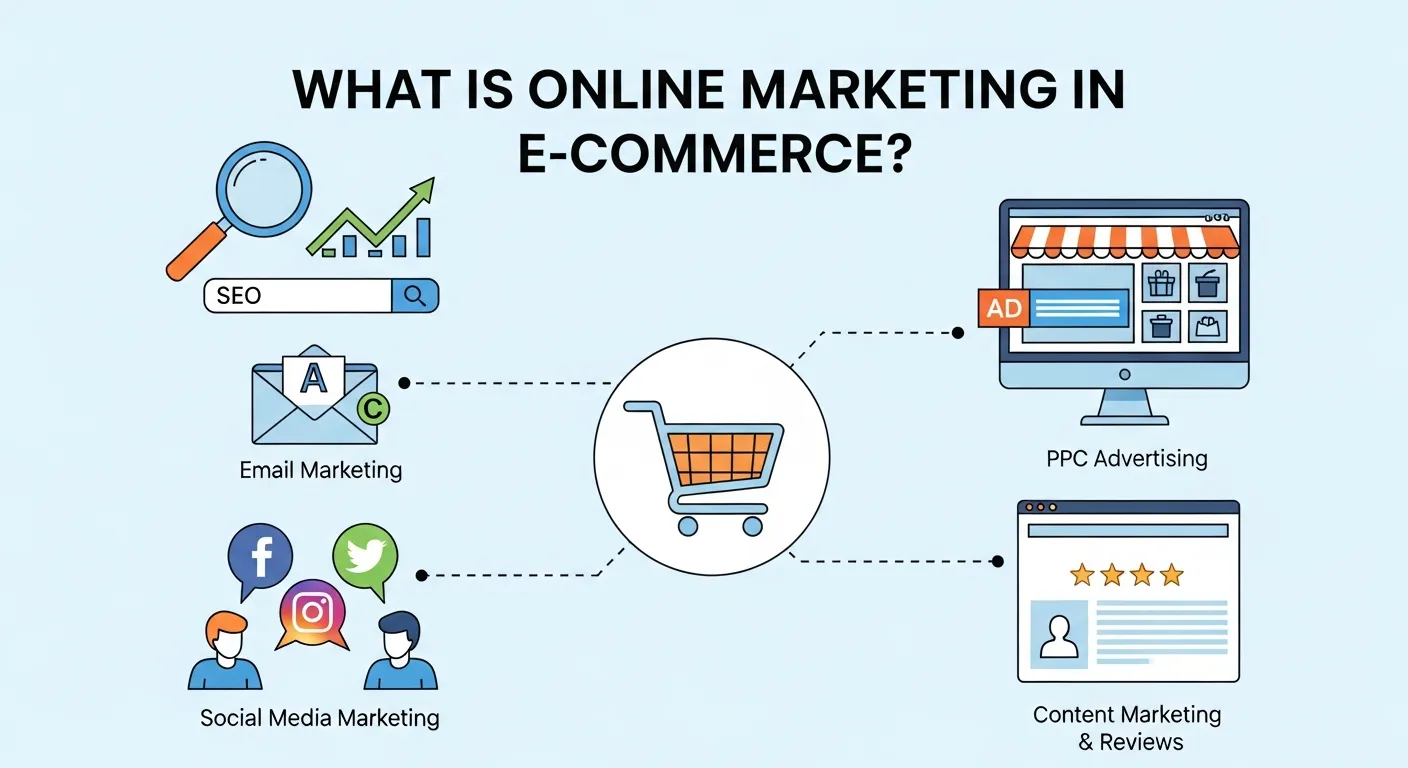
Online marketing, also called digital marketing, refers to the strategies and tools businesses use to promote products or services on the internet. For e-commerce businesses, it involves attracting customers to digital storefronts (websites or apps), engaging them with compelling content, and driving them to make purchases.
It’s more than just creating ads or posting on social media. Online marketing in e-commerce spans a variety of strategies, including email campaigns, search engine optimization (SEO), paid advertising, social platforms, and more. Every interaction is crafted with the goal of improving visibility, building relationships, and increasing sales.
Why is Online Marketing Important for E-Commerce?
- Boosts Visibility: With millions of online stores, online marketing helps ensure your brand stands out.
- Drives Traffic: Effective strategies direct potential customers to your e-commerce store.
- Encourages Conversions: Persuasive messaging and targeting help turn browsing into buying.
- Builds Trust: Consistent, valuable messaging builds confidence in your brand.
- Drives customer retention: Personalized campaigns keep your audience coming back for repeat purchases.
Core Strategies of Online Marketing in E-Commerce
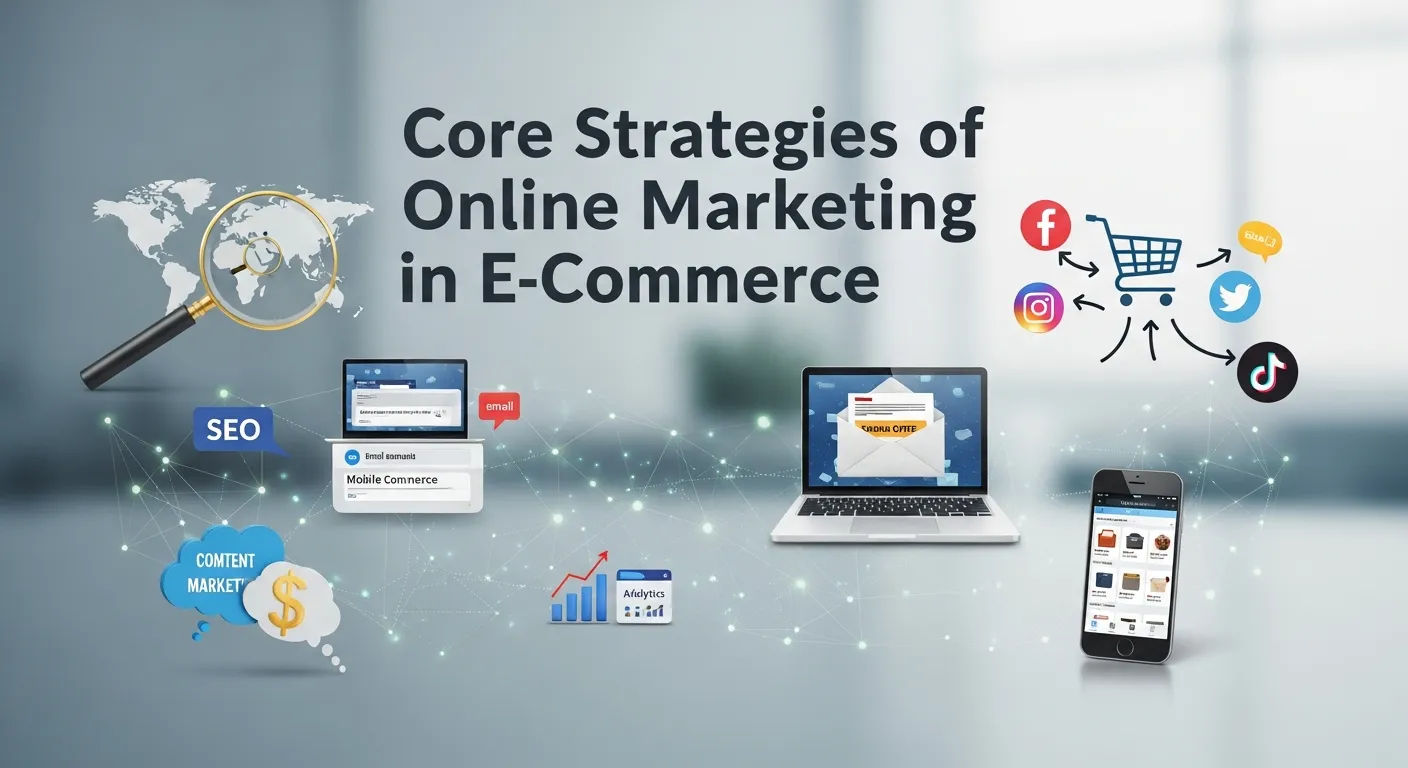
1. Search Engine Optimization (SEO)
SEO is the art of ensuring your e-commerce website ranks high on search engines like Google when potential customers search for products. Strong SEO means more organic visibility and traffic.
Key SEO Tactics for E-Commerce:
- Optimize product descriptions with relevant keywords.
- Use alt text for product images to improve searchability.
- Create a blog to drive organic traffic through helpful content.
- Optimize website structure and loading speed for better user experience.
For example, if your store sells eco-friendly candles, strategic SEO would ensure your site appears when someone searches “best sustainable candles” or “eco-friendly candle stores.”
2. Content Marketing
Content marketing involves creating valuable and engaging content to attract and inform your target audience. This could be blog articles, videos, guides, or infographics that align with your product or niche.
How Content Marketing Can Help:
- Showcase expertise in your niche (e.g., “How to Choose the Right Running Shoes” for a shoe retailer).
- Generate brand loyalty through relatable storytelling.
- Drive traffic to product pages by linking content to your store.
3. Pay-Per-Click Advertising (PPC)
PPC for -ecommerce allows you to pay for visibility, displaying your ads to people searching for products similar to yours. Platforms like Google Ads, Facebook Ads, and Instagram Ads are popular PPC cha
Why PPC is Crucial:
- Highly targeted. Reach potential customers based on location, interests, or behavior.
- Instant traffic. Unlike organic strategies, ads deliver immediate results.
- Great ROI. With tools like retargeting, you can display ads to visitors who didn’t convert on their first visit.
4. Social Media Marketing
Social media is an invaluable tool for e-commerce stores, offering both a platform for engagement and a channel for promotion. Platforms such as Instagram, Facebook, Pinterest, and TikTok are hubs for consumer discovery and interaction.
Best Practices:
- Post high-quality visuals showcasing your products.
- Leverage influencers for brand collaborations.
- Host giveaways and contests to grow your follower base.
- Use Instagram’s “Shop Now” feature for direct sales.
5. Email Marketing
Despite being one of the older digital marketing strategies, email marketing remains a powerhouse. It allows e-commerce businesses to connect directly with customers in a personalized way.
6. Influencer Marketing
Influencer collaboration can drum up massive attention for your e-commerce business. Influencers build trust and showcase your products to niche audiences that align with your brand.
7. Affiliate Marketing
Affiliate marketing uses a network of partners who promote your products in exchange for a commission. Affiliates share your product through blogs, websites, or social media and earn money when their audience buys from you.
8. Conversion Rate Optimization (CRO)
All the traffic in the world won’t help e-commerce businesses if visitors don’t convert into buyers. That’s where CRO comes in.
Tactics to Increase Conversions:
- Simplify the checkout process.
- Offer multiple payment options.
- Add real customer reviews to instill trust.
Data Analytics & Performance Tracking in Online Marketing in E-Commerce
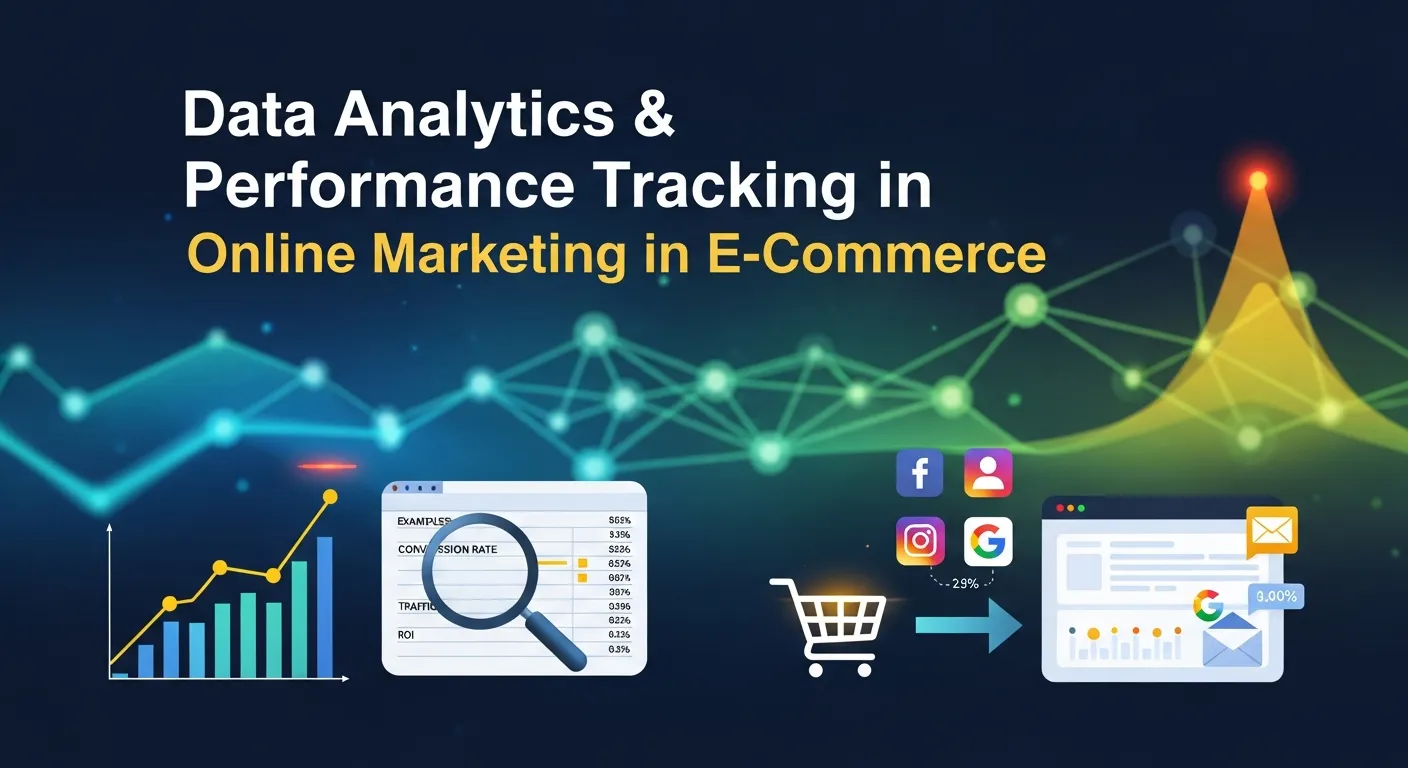
One of the biggest advantages of Online Marketing in E-Commerce is the ability to track everything. Unlike traditional marketing, digital campaigns provide measurable data that helps businesses optimize their commerce-strategy for better results.
Data analytics allows you to understand:
- Where your traffic comes from
- Which products perform best
- Which campaigns generate the highest ROI
- Customer behavior patterns
- Drop-off points in the buying journey
Why Data Analytics Matters
Strong marketing-ecommerce decisions are data-driven. Instead of guessing what works, businesses rely on metrics to refine their services-strategies and scale profitable campaigns.
Key Metrics to Track
| Metric | What It Measures | Why It Matters |
|---|---|---|
| Conversion Rate | % of visitors who buy | Indicates website effectiveness |
| Customer Acquisition Cost (CAC) | Cost to acquire one customer | Helps control ad spend |
| Average Order Value (AOV) | Average purchase amount | Boosts revenue without more traffic |
| Return on Ad Spend (ROAS) | Revenue from paid ads | Measures shopping campaigns performance |
| Customer Lifetime Value (CLV) | Total value per customer | Supports long-term growth strategy |
Tools Commonly Used
- Google Analytics
- Shopify Analytics
- Meta Ads Manager
- Hotjar
Tracking performance ensures your online-marketing-in-e-commerce strategy continues evolving with the e-commerce-market.
Customer Loyalty Programs & Retention Marketing
Acquiring customers is expensive. Retaining them is profitable. A powerful Customer Loyalty Programs strategy ensures repeat purchases and long-term brand advocacy.
Retention marketing focuses on keeping customers engaged after their first purchase — especially important in competitive niches like personal-care-product markets.
Benefits of Customer Loyalty Programs
- Increases repeat purchases
- Builds emotional brand connection
- Encourages referrals
- Improves Customer Lifetime Value
Popular Loyalty Program Models
- Points-based rewards
- Tier-based VIP systems
- Cashback programs
- Referral incentives
- Subscription-based perks
When integrated with email-marketing-for-e-commerce, loyalty programs become even more powerful. For example:
- Automated reward reminders
- Birthday discount emails
- Exclusive early-access product launches
- Re-engagement campaigns for inactive customers
Retention-focused email-marketing-ecommerce strategies significantly reduce churn and stabilize revenue.
Automation & AI in Online Marketing in E-Commerce
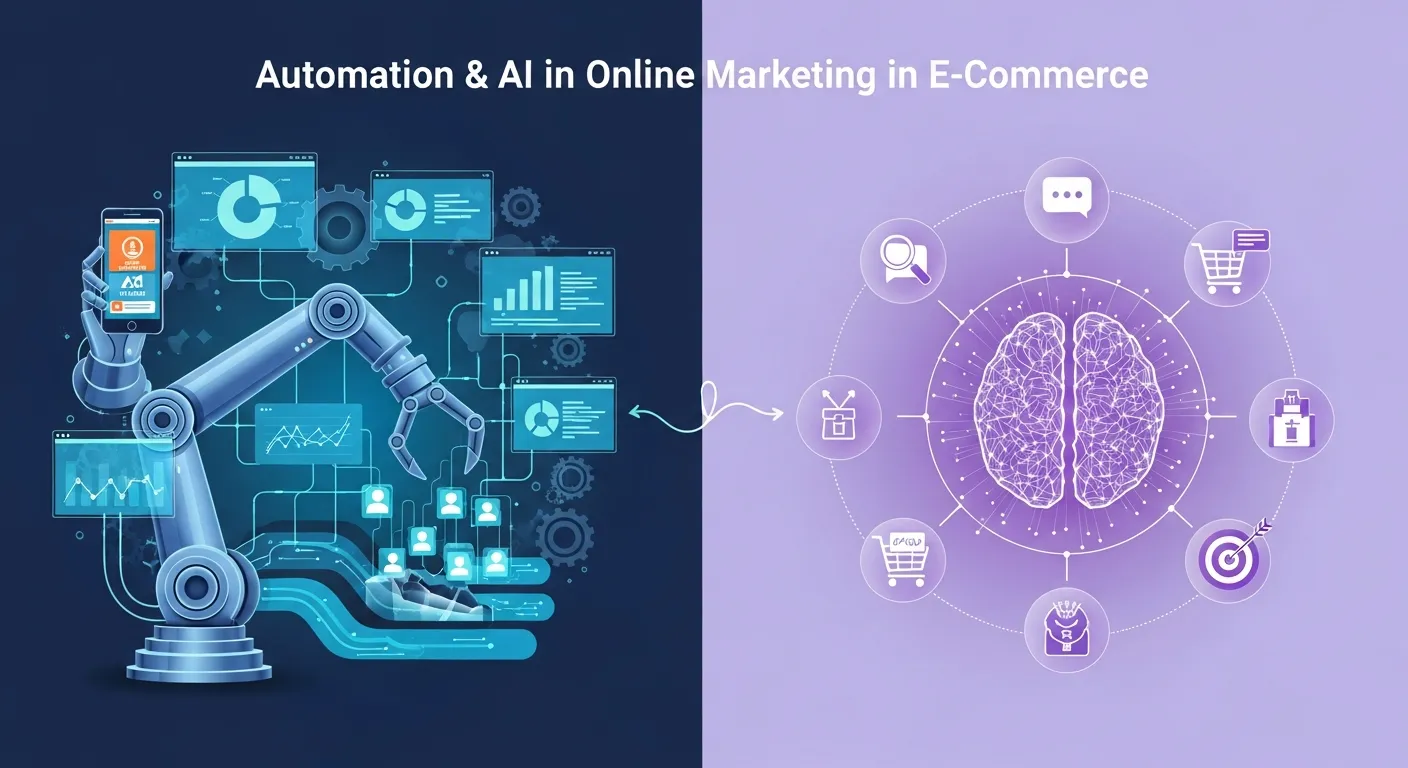
Automation is transforming Online Marketing in E-Commerce. Businesses now use AI-powered tools to personalize experiences at scale.
From product recommendations to predictive shopping campaigns, automation improves efficiency and customer satisfaction simultaneously.
How Automation Enhances Marketing-Ecommerce
- Smart product recommendations
- Automated abandoned cart recovery
- AI-powered chatbots
- Dynamic email-marketing-strategies
- Predictive inventory planning
For example, platforms like:
- Klaviyo
- Mailchimp
- HubSpot
allow businesses to create automated email-marketing-for-e-commerce workflows that send personalized messages based on browsing behavior.
Automation Impact Comparison
| Manual Marketing | Automated Marketing |
|---|---|
| Generic campaigns | Personalized campaigns |
| Time-intensive | Time-efficient |
| Higher human error | Data-driven precision |
| Limited scalability | Easily scalable |
AI-driven online-marketing-in-e-commerce strategies allow even small businesses to compete in the global e-commerce-market.
Why Online Marketing is Changing the Game for E-Commerce
Online marketing provides a level playing field: small companies can compete with large ones.
The Internet renders geography increasingly irrelevant: any e-commerce company with a good strategy can attract a global clientele.
If you can combine SEO efforts, social media, and content marketing as well as paid advertising, you are creating a synergy- where growth of customer numbers, engagement levels soar upwards for your company, as a direct result, is profits.
Start Growing Through Online Marketing
E-commerce growth cannot happen without a well-planned and executed online marketing strategy. It’s the foundation that transforms casual visitors into loyal customers and ensures your business thrives in a competitive digital marketplace. From attracting your first site visitors to nurturing repeat buyers, online marketing offers unparalleled leverage, allowing small and large businesses alike to compete on a global scale.
The first step is understanding your target audience and identifying the channels they use most, whether it’s social media platforms like Instagram and Facebook, email campaigns, or search engines. Once you know where your audience is, you can craft personalized campaigns that speak directly to their needs and interests. Combining strategies such as SEO, content marketing, paid advertising, and social media engagement creates a synergy that drives consistent traffic, boosts conversions, and strengthens customer loyalty.
Automation tools and data analytics further amplify your efforts by helping you track performance, optimize campaigns, and scale your marketing-ecommerce initiatives efficiently. Even small adjustments, like optimizing email workflows or running retargeting ads, can have a significant impact on revenue.
The key is consistency and experimentation. Test new strategies, monitor results, and refine your approach. With determination, creativity, and a solid online marketing plan, your e-commerce business can not only grow but also dominate its niche, turning prospects into lifelong customers.
Frequently Asked Questions About Online Marketing in E-Commerce
1. What is Online Marketing in E-Commerce and why is it important?
Online Marketing in E-Commerce refers to the strategies and techniques businesses use to promote their products or services online. It is important because it drives website traffic, attracts potential customers, boosts conversions, and builds long-term customer relationships, making it essential for sustainable growth in the competitive digital marketplace.
2. How does email marketing help e-commerce businesses grow?
Email marketing allows e-commerce businesses to communicate directly with their customers in a personalized way. It helps increase repeat purchases, nurture leads, recover abandoned carts, and keep customers engaged through promotions, updates, and loyalty programs. Many e-commerce businesses consider email marketing strategies as one of their most effective growth channels.
3. What is the difference between SMS marketing and email marketing for e-commerce?
SMS marketing delivers short, time-sensitive messages directly to customers’ phones, which ensures instant attention and high open rates. Email marketing, on the other hand, allows for longer content, storytelling, and detailed product promotions. Both can be used together in a combined strategy to maximize engagement and sales for e-commerce businesses.
4. How can affiliate marketing boost e-commerce sales?
Affiliate marketing enables e-commerce brands to partner with influencers, bloggers, and other businesses who promote their products in exchange for a commission. This approach expands brand reach, drives traffic from trusted sources, and increases conversions without upfront advertising costs, making it a highly efficient marketing strategy.
5. What are some effective email marketing strategies for e-commerce?
Effective email marketing strategies include sending welcome emails to new subscribers, following up on abandoned carts, recommending products based on customer behavior, offering post-purchase follow-ups, and sending personalized loyalty rewards. These strategies help retain customers, increase average order value, and enhance overall engagement with the brand.
6. How can a Facebook strategy improve e-commerce performance?
A Facebook strategy for e-commerce involves running targeted ads, building retargeting audiences, sharing engaging visual content, and leveraging Facebook Shops for direct sales. By using tools like Meta Ads Manager, businesses can reach specific audiences based on interests, demographics, and behavior, ensuring better ROI on marketing campaigns.
7. Can WhatsApp be used as a marketing channel for e-commerce?
Yes, WhatsApp can be an effective marketing channel for e-commerce by enabling direct communication with customers. Brands can send order confirmations, personalized recommendations, promotional messages, and abandoned cart reminders. WhatsApp strategies help create a more personal connection with customers, increasing engagement and sales.
8. What is a customer loyalty program and why is it important?
A customer loyalty program rewards repeat customers through points, discounts, or exclusive offers. It encourages long-term engagement, strengthens brand relationships, increases repeat purchases, and improves customer lifetime value, making it a crucial element of any e-commerce marketing strategy.
9. How long does it take to see results from online marketing in e-commerce?
The timeline varies depending on the strategy. Paid ads and SMS campaigns can generate almost immediate results, email marketing can take days or weeks to show significant effects, and SEO efforts may take several months to impact organic traffic. A balanced marketing strategy combining short-term and long-term tactics usually delivers the best results.
10. Is online marketing in e-commerce suitable for small businesses?
Absolutely. Online Marketing in E-Commerce provides a level playing field where even small businesses can compete with larger brands. Through careful targeting, automation, personalized campaigns, and smart budget allocation, small businesses can attract customers, increase conversions, and grow globally without needing massive resources.