The Ultimate Guide to SEO for Dropshipping Success
Starting an e-commerce business has never been easier, but getting people to actually visit your store remains a major hurdle. You set up your shop, import products, and wait for the sales to roll in. But without a steady stream of organic traffic, your store might remain virtually invisible. This is where mastering SEO for dropshipping becomes an absolute necessity.
Dropshipping is a retail fulfillment method where a store doesn’t keep the products it sells in stock. Instead, when a store sells a product using the dropshipping model, it purchases the item from a third party and has it shipped directly to the customer. As a result, the merchant never sees or handles the product. It is a highly accessible business model with low overhead costs.
Because the barrier to entry is so low, competition is incredibly high. Paid advertising costs are rising across the board, making profit margins razor-thin for many store owners. SEO for dropshipping offers a sustainable, long-term solution. By ranking high on search engines like Google, you can attract thousands of potential buyers to your store without paying for every single click. However, SEO for dropshipping presents unique challenges, such as dealing with duplicate product descriptions provided by suppliers and managing thin content on product pages. Overcoming these hurdles is exactly what separates successful dropshipping stores from the rest.
Understanding Your Niche and Keywords

The foundation of any successful SEO campaign starts long before you write a single product description. It begins with choosing the right market and understanding exactly what your potential customers are typing into search engines.
Niche selection and its impact on SEO for dropshipping
Choosing a highly specific niche makes SEO for dropshipping much more manageable. If you try to sell everything from dog toys to kitchen gadgets, you will be competing against massive retailers like Amazon and Walmart. Instead, drill down into a specific sub-category. Selling “ergonomic left-handed gaming mice” is much easier to rank for than simply selling “electronics.” A focused niche allows you to build targeted authority around a specific topic, which search engines reward.
Keyword research strategies for product-based businesses
Keyword research dictates the structure and content of your entire website. Start by brainstorming the core terms associated with your products. Then, use tools like Google Keyword Planner, Ahrefs, or Ubersuggest to find related search terms. Look for keywords that have a decent search volume but low keyword difficulty. In SEO for dropshipping, your goal is to find the exact phrases buyers use when they have their credit cards ready.
Long-tail keywords vs. short-tail keywords
Short-tail keywords (like “shoes”) have massive search volume but are nearly impossible for a new dropshipping store to rank for. Long-tail keywords (like “waterproof hiking shoes for wide feet”) have lower search volume but much higher conversion rates. Implementing a strategy focused on long-tail keywords is the most effective approach to SEO for dropshipping because it targets users who know exactly what they want to buy.
On-Page SEO for Dropshipping Success
Once you have your target keywords, it is time to optimize the actual pages on your website. On-page optimization ensures search engines understand what you are selling and why your page is the best result for a user’s query.
Optimizing product pages: titles, descriptions, and images
Never use the default product titles and descriptions provided by your dropshipping supplier. Hundreds of other stores are likely using the exact same text, which creates duplicate content issues. Write unique, compelling titles that include your target keywords. Craft original product descriptions that highlight the benefits of the product, not just the features. Additionally, optimize your product images by compressing the file sizes and adding descriptive alt text that includes your keywords.
Creating compelling content for category pages and blog posts
Category pages are often neglected in dropshipping stores, but they are prime real estate for SEO. Add a few paragraphs of optimized text to your category pages explaining what types of products are found there. Furthermore, publishing relevant blog posts helps capture informational search queries, naturally drawing in an audience that might eventually make a purchase.
Technical SEO basics: site speed, mobile-friendliness, and structured data
Search engines prioritize websites that provide a great user experience. Your store must load quickly; otherwise, users will bounce back to the search results. Compress images and use a lightweight theme. Ensure your site is completely mobile-friendly, as a massive portion of e-commerce traffic comes from smartphones. Finally, implement structured data (schema markup) to help search engines display rich snippets, like star ratings and prices, directly in the search results.
Off-Page SEO Strategies for Dropshipping
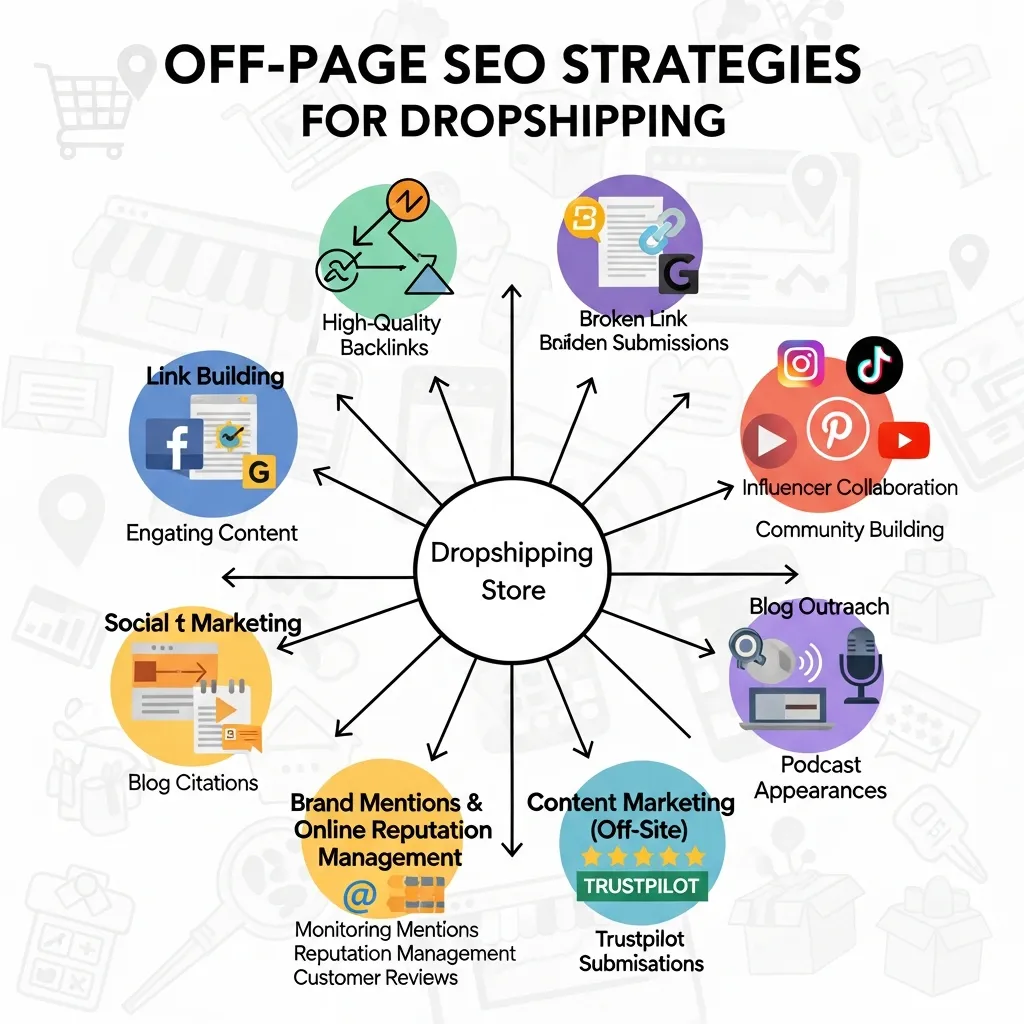
Off-page SEO involves actions taken outside of your own website to impact your rankings within search engine results pages (SERPs). For a dropshipping business, this primarily revolves around building trust and authority.
Building high-quality backlinks
Backlinks are links from other websites pointing to your store. Google views these as votes of confidence. Focus on acquiring high-quality backlinks from reputable websites in your niche. You can achieve this by guest posting on relevant industry blogs, collaborating with influencers who link back to your products, or creating highly shareable content that other sites naturally want to reference.
Social media marketing and its indirect SEO benefits
While social media links do not directly boost your search rankings, a strong social presence supports your SEO for dropshipping efforts. Social media drives traffic to your site, increases brand awareness, and encourages people to search for your brand name on Google. This increased engagement sends positive signals to search engines about the quality and relevance of your store.
Local SEO considerations for dropshipping
Dropshipping is generally a global or national business model, but local SEO can occasionally play a role. If you are targeting a specific country or region, ensure your store’s currency, language, and shipping information align with that location. You can also target location-based keywords if you sell products specific to certain climates or regional activities.
Technical SEO for Dropshipping Platforms
The platform you use to build your store has a significant impact on your technical SEO capabilities. You need to ensure your underlying infrastructure supports your growth.
SEO considerations for Shopify, WooCommerce, and other platforms
Shopify is incredibly popular for dropshipping and offers solid built-in SEO features, but it has limitations regarding URL structures. WooCommerce (built on WordPress) offers much more flexibility and control over technical SEO, though it requires more manual maintenance. Whichever platform you choose, ensure you are utilizing SEO plugins or apps (like Yoast for WooCommerce or plug-in equivalents for Shopify) to easily manage meta titles, descriptions, and sitemaps.
Managing duplicate content issues
Duplicate content is the biggest enemy of SEO for dropshipping. Search engines get confused when they see the exact same content on multiple pages or across multiple domains. Always write original content for your product pages. If you have similar products (like the same shirt in different colors), use canonical tags to tell Google which version is the primary page that should be ranked.
Implementing schema markup for product visibility
Schema markup is a form of microdata that helps search engines parse and interpret the information on your pages more effectively. For e-commerce stores, product schema is essential. It allows search engines to pull the price, availability, and review ratings of your products directly into the search results, dramatically increasing your click-through rates.
Content Marketing for Dropshipping
Content marketing is a powerful engine that drives SEO for dropshipping. It allows you to target a much wider array of keywords than product pages alone.
Blogging to attract organic traffic and build authority
Maintain a regular blog on your dropshipping store. Write articles that answer the common questions your target audience is asking. If you sell camping gear, write a comprehensive guide on “How to Choose the Right Tent for Winter Camping.” This captures users in the research phase of the buying cycle and establishes your store as an authority in the niche.
Creating valuable guides, tutorials, and comparison content
Buyers love comparison content. Create detailed posts comparing two popular types of products in your niche. Provide step-by-step tutorials on how to use the items you sell. This type of valuable content attracts backlinks naturally, keeps users on your site longer, and pushes them further down the sales funnel.
Video marketing and its role in SEO
YouTube is the second largest search engine in the world. Creating video reviews, unboxings, or tutorials for your dropshipping products can capture massive amounts of traffic. Embed these videos on your product pages and blog posts. Videos increase the average time users spend on your page, which is a strong positive signal for your search rankings.
Measuring and Analyzing Your SEO Performance
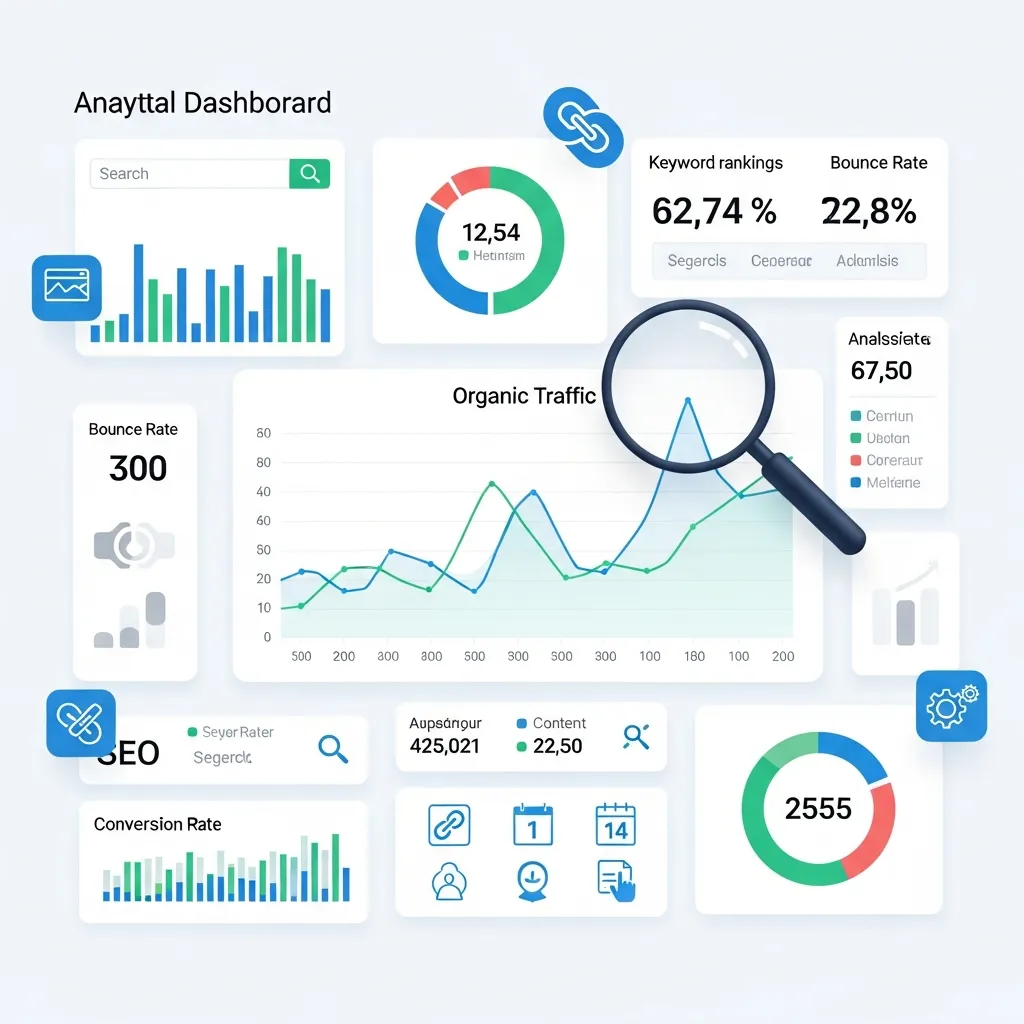
You cannot improve what you do not measure. Tracking your data is crucial for refining your SEO strategy over time.
Key SEO metrics for dropshipping businesses
Pay close attention to organic traffic (how many people visit from search engines), keyword rankings (where you sit in the search results for your target phrases), bounce rate (how many people leave after viewing one page), and your organic conversion rate (how many search visitors actually buy something).
Using Google Analytics and Search Console
Set up Google Analytics and Google Search Console immediately. Google Analytics tracks user behavior on your site, showing you where traffic comes from and how users interact with your pages. Search Console shows you exactly which search terms users typed in to find your site, your average ranking position, and any technical errors Google encountered while crawling your store.
Adapting your strategy based on data
Review your analytics data monthly. If a specific blog post is driving a lot of traffic but no sales, consider adding stronger calls-to-action or product links. If a product page is ranking well but has a high bounce rate, you might need to improve the product description or image quality. SEO for dropshipping requires constant testing and tweaking.
Advanced SEO for Dropshipping Tips
Once you have mastered the basics, you can look into advanced tactics to get an edge over your competitors.
Voice search optimization
More people are using voice assistants like Siri and Alexa to search the web. Voice searches are typically longer and more conversational than typed searches. Incorporate natural, question-based phrases into your product FAQs and blog posts to capture this growing segment of search traffic.
International SEO considerations
If you ship internationally, you can optimize your store for different countries and languages. Implementing hreflang tags tells Google which version of a page to show users based on their location and language settings. This prevents your own localized pages from competing with each other in the search results.
Staying updated with Google algorithm changes
Search engines update their algorithms constantly. What worked in SEO for dropshipping two years ago might not work today. Follow reputable SEO blogs and forums to stay informed about major updates, ensuring your store always adheres to current best practices and avoids any sudden ranking drops.
Mastering SEO for dropshipping is the most effective way to build a profitable, sustainable e-commerce business. By focusing on niche selection, finding profitable long-tail keywords, optimizing your on-page elements, and creating valuable content, you can drive free, high-converting organic traffic to your store. Avoid duplicate content, prioritize user experience, and consistently measure your results to adapt and grow.
Elevate Your E-commerce Store Today
Search engine optimization is not a quick fix; it is a long-term investment in the future of your business. The best time to start optimizing your store was yesterday, but the second best time is right now. Start by rewriting just five product descriptions using your target keywords, and begin mapping out a content plan for your blog. Consistent, incremental improvements to your site’s structure and content will eventually compound, leading to higher rankings, more traffic, and increased revenue.
FAQs
1. How long does it take to see results from SEO for dropshipping?
SEO is a long-term strategy. It typically takes anywhere from three to six months to start seeing significant organic traffic, depending on the competitiveness of your niche and the quality of your optimization efforts.
2. Is SEO better than paid ads for a dropshipping store?
Paid ads offer immediate traffic, but you pay for every click. SEO takes time to build but provides free, consistent traffic over the long term. A healthy dropshipping business usually benefits from a combination of both.
3. How do I avoid duplicate content in dropshipping?
Never copy and paste product descriptions or titles directly from your supplier (like AliExpress or Oberlo). Always write unique, engaging copy for every product you list on your website.
4. What are the best keywords for a dropshipping site?
The best keywords are long-tail keywords. They have lower search volume but show high buying intent, meaning the user is closer to making a purchase (e.g., “men’s polarized aviator sunglasses” instead of just “sunglasses”).
5. Do I need a blog for my dropshipping store?
Yes. A blog is one of the best ways to target informational keywords, attract organic traffic, build authority in your niche, and naturally acquire backlinks to your site.
6. Which platform is best for dropshipping SEO?
Both Shopify and WooCommerce are excellent choices. WooCommerce offers more deep-level technical SEO control, while Shopify is generally easier to use out of the box and handles hosting and security for you.
7. How important is site speed for dropshipping SEO?
Site speed is a critical ranking factor. If your store takes more than a few seconds to load, users will leave, which signals to Google that your site provides a poor user experience, thereby lowering your rankings.
8. Can I do SEO for dropshipping myself, or do I need to hire an expert?
You can absolutely learn and implement the basics of SEO yourself using online resources and guides. As your store grows and becomes more complex, you might eventually want to hire an expert to handle technical optimizations and backlink building.
9. What is schema markup, and do I need it?
Schema markup is code added to your site that helps search engines understand your content. For dropshipping, product schema is vital because it allows your prices and reviews to show up directly in Google search results.
10. Does social media affect my SEO rankings?
Social media does not directly impact your Google rankings. However, it drives traffic, increases brand awareness, and can lead to natural backlinks, all of which indirectly support your overall SEO strategy.
11. How do I get backlinks to my dropshipping store?
You can earn backlinks by creating high-quality, shareable blog content, guest posting on other blogs in your industry, and collaborating with influencers or reviewers in your specific niche.
12. Why did my dropshipping store suddenly drop in search rankings?
A sudden drop could be due to a recent Google algorithm update, an influx of technical errors on your site, an increase in page load time, or competitors simply out-optimizing your pages. Always monitor your Google Search Console for alerts.