Facebook Ads for E-commerce: A Complete Guide to Driving Online Sales
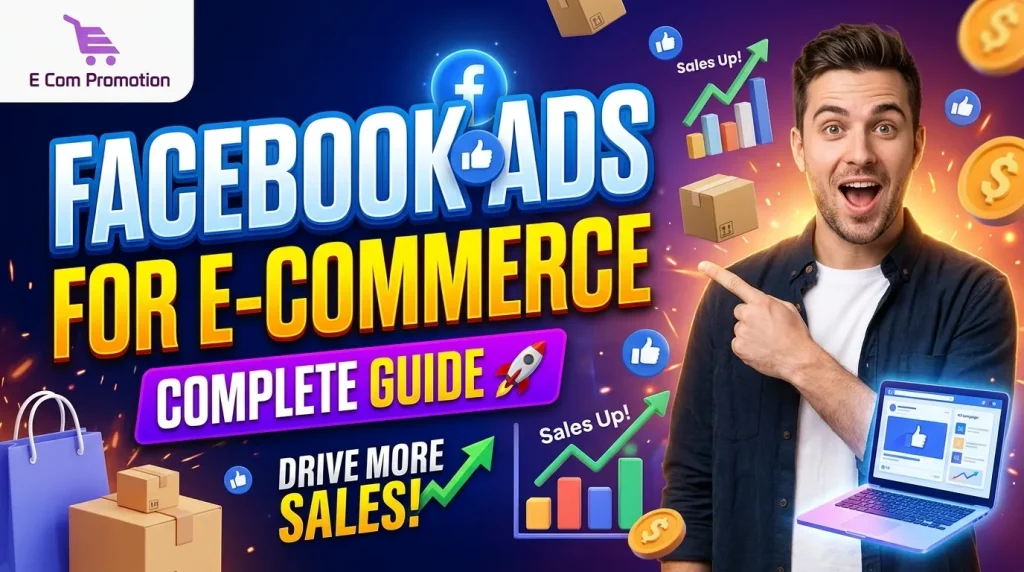
Facebook Ads for e-commerce is an effective way for online businesses to reach potential customers, promote products, increase website traffic, and generate sales. With the right targeting, engaging creatives, conversion tracking, and continuous optimization, businesses can turn advertising budgets into measurable growth. This guide explains how to build successful campaigns, improve return on ad spend, reach online shoppers, and use retargeting to convert interested visitors into loyal customers.
Facebook Advertising for Online Stores
Facebook advertising for online stores allows businesses to showcase products to audiences who are likely to be interested in their offerings. Through Facebook and Instagram placements managed in Meta Ads Manager, e-commerce brands can use images, videos, carousel ads, and product catalogs to introduce their products to potential buyers. Facebook Ads for e-commerce can support different business goals, from increasing brand awareness to generating purchases.
One of the biggest advantages of Facebook advertising is its ability to reach customers based on their interests, behaviors, demographics, and previous interactions. For example, a clothing store can promote seasonal collections to fashion enthusiasts, while a skincare brand can showcase its products to people interested in beauty and personal care.
However, successful advertising requires more than publishing an attractive ad. Businesses should create compelling product pages, provide clear pricing, display customer reviews, and simplify the checkout process. Combining paid advertising with a broader e-commerce marketing strategy can help online stores create a consistent customer journey and build sustainable sales.
Facebook Ads Strategy for E-commerce
A successful Facebook Ads strategy for e-commerce begins with clear business objectives. Before launching a campaign, determine whether the primary goal is to generate purchases, attract new customers, recover abandoned carts, or increase repeat sales. Establishing these objectives helps businesses select appropriate campaign settings and measure meaningful results.
Facebook Ads for e-commerce campaigns should also be designed around the customer journey. New audiences may need educational content or product demonstrations before making a purchase, whereas returning visitors may respond better to customer testimonials, limited-time offers, or product reminders.
Budget allocation is another important consideration. Businesses can start with a manageable daily budget, test different audiences and creatives, and gradually increase spending on campaigns that produce profitable results. Avoid making frequent changes before collecting enough performance data.
Advertising works best when it supports the wider business plan. Exploring business growth strategies can help online retailers connect customer acquisition, retention, brand positioning, and revenue goals into a unified approach.
E-commerce Facebook Marketing
E-commerce Facebook marketing involves using paid advertisements and organic content to attract potential customers and encourage purchases. A strong marketing approach combines promotional campaigns with helpful content that explains product benefits, demonstrates how products work, and builds trust in the brand.
Facebook Ads for e-commerce can be particularly effective when advertisements answer real customer questions. Product demonstration videos, comparison creatives, customer reviews, and lifestyle images can help shoppers understand why a product may suit their needs. Rather than focusing exclusively on discounts, emphasize product quality, convenience, unique features, and customer satisfaction.
Consistency across marketing channels also matters. A shopper might discover a product through Facebook, visit the website, subscribe to an email list, and purchase several days later. Connecting paid advertising with email marketing automation allows businesses to follow up with interested subscribers, send relevant product recommendations, and encourage repeat purchases.
Businesses can also explore additional acquisition channels when their budgets and audiences justify it. For example, profitable online business ideas can help entrepreneurs consider different business models and opportunities alongside their paid social marketing efforts.
Facebook Ads Conversion Optimization
Conversion optimization focuses on turning ad clicks into meaningful actions, such as purchases, registrations, or inquiries. Facebook Ads for e-commerce may generate considerable traffic, but if visitors leave without buying, the advertising campaign may not be delivering its intended value.
Start by examining the entire shopping experience. Your landing page should match the message and offer shown in the advertisement. Product images should be clear, descriptions should answer common questions, and shipping costs should be transparent. A fast, mobile-friendly website and a simple checkout process can reduce unnecessary friction.
Testing different creative formats, headlines, product offers, and landing pages can reveal which combinations perform best. Change one major variable at a time whenever practical so that you can understand what influences results.
Monitor conversion rate, cost per purchase, average order value, and return on ad spend rather than judging campaigns by clicks alone. These measurements help identify whether customers are purchasing and whether the revenue justifies the advertising expense.
Facebook Ads Targeting for Online Shoppers
Audience targeting helps advertisers connect their products with people who are most likely to purchase them. Facebook Ads for e-commerce can reach potential customers through broad audiences, geographic and demographic settings, relevant interests where available, and custom audiences built from permitted customer or website data.
For new customer acquisition, businesses can test broad targeting alongside relevant interest-based audiences. Broad targeting gives Meta’s delivery system more flexibility to identify potential buyers, while interest-based tests can provide useful comparisons when the advertiser has a clear understanding of the target market.
Customer data can improve targeting when it is collected and used lawfully. With appropriate permissions, businesses may create custom audiences from customer lists, website activity, or people who have engaged with their content. Lookalike audiences, where available, can help identify people with characteristics similar to an existing audience.
Successful Facebook Ads for e-commerce depend on matching the message to the audience. First-time visitors may respond to product education, while previous customers may be more interested in complementary products, new collections, or loyalty incentives. Regularly review performance to determine which audiences produce valuable customers rather than simply generating inexpensive clicks.
Facebook Retargeting Ads for E-commerce
Retargeting allows businesses to reconnect with people who have already interacted with their brand. These audiences might include website visitors, product viewers, people who added items to their carts, or previous customers who could be interested in another purchase.
Facebook Ads for e-commerce can use retargeting to remind shoppers about products they viewed and address reasons they may have delayed buying. Dynamic product advertisements can display relevant items from a product catalog, helping shoppers return to products that match their previous interests.
The message should reflect the customer’s level of engagement. Someone who viewed a product once may benefit from a demonstration or customer review, while someone who abandoned a cart may respond to a reminder about the checkout process or shipping information.
Avoid showing the same advertisement indefinitely. Use appropriate audience exclusions, reasonable campaign durations, and frequency monitoring to reduce ad fatigue. Where possible, exclude recent purchasers from campaigns promoting the exact product they already bought and create separate campaigns for cross-selling or repeat purchases.
Facebook Ad Campaigns for Online Sales
Facebook ad campaigns for online sales require a clear structure, relevant creative content, and reliable measurement. Depending on the campaign objective, advertisers can use sales-focused campaigns, product catalog advertising, video creatives, carousel formats, or collection-style experiences where available.
Facebook Ads for e-commerce should communicate the product’s main benefit quickly. An effective advertisement usually introduces a customer problem, demonstrates how the product helps, and presents a clear next step. High-quality images and authentic demonstrations can make products easier to understand, particularly when shoppers are unfamiliar with the brand.
Offers can also encourage customers to act. Free shipping thresholds, product bundles, seasonal promotions, and introductory discounts may improve conversion rates when the economics support them. Before launching an offer, calculate product costs, fulfillment expenses, payment fees, and advertising costs to ensure that the resulting sales can remain profitable.
Businesses should evaluate campaign performance over an appropriate period rather than reacting to every short-term fluctuation. If a campaign performs well, increase its budget gradually and monitor whether costs remain sustainable as spending grows.
Facebook Pixel for E-commerce Tracking
Accurate tracking helps advertisers understand how people interact with their websites after clicking an advertisement. The Meta Pixel is a browser-based tracking tool that can record configured website events, such as viewing a product, adding an item to a cart, beginning checkout, and completing a purchase, subject to consent requirements and applicable privacy rules.
Facebook Ads for e-commerce become easier to evaluate when important events are configured correctly. Businesses should verify that purchase events fire at the appropriate time and that transaction values and currencies are recorded accurately. Duplicate events, incorrect purchase values, and missing events can distort campaign reporting.
The Meta Conversions API can complement browser-based tracking by sending eligible event data directly from a server or supported integration. When both the Pixel and Conversions API report the same event, suitable deduplication settings are important to avoid counting it twice.
After implementation, test the setup using the available Meta event-testing and diagnostics tools. Review event quality, investigate discrepancies between advertising reports and store orders, and respect customer consent and applicable data protection requirements. Reliable measurement provides a stronger foundation for optimizing campaigns and making informed budget decisions.
Facebook Ads ROAS Optimization
Return on ad spend, commonly called ROAS, measures the revenue attributed to advertising relative to the amount spent on ads. It is calculated by dividing attributed advertising revenue by advertising spend. For example, if a campaign generates $2,000 in attributed revenue from $500 in ad spending, its ROAS is 4x.
However, a high ROAS does not automatically mean a business is profitable. Product costs, shipping, returns, taxes, and other expenses must also be considered. A store with thin margins may require a higher ROAS than a store selling high-margin products.
Facebook Ads for e-commerce can improve ROAS through creative testing, better landing pages, accurate conversion tracking, stronger product offers, and careful budget allocation. Review results by campaign, audience, product, and creative to identify where advertising delivers the greatest business value.
Avoid scaling campaigns solely because they have generated a few inexpensive purchases. Assess whether the results are consistent, whether new customers are being acquired, and whether the campaign can maintain acceptable margins at higher spending levels. Consider both immediate revenue and longer-term customer value when evaluating performance.
Facebook Ads Audience Targeting Strategies
Effective audience targeting strategies balance finding new customers with building stronger relationships with existing ones. Online stores can organize campaigns around prospecting, retargeting, and customer retention, ensuring that each group receives suitable messaging.
Facebook Ads for e-commerce can use broad prospecting to discover new potential buyers, while retargeting campaigns reconnect with engaged visitors. Existing customers can receive advertisements for complementary products, replenishment items, or relevant new releases. Exclusions help prevent unnecessary overlap between audiences and reduce wasted impressions.
Creative testing is equally important. Different customers respond to different benefits, formats, and messages. A product demonstration may appeal to someone who values practicality, while a lifestyle image may resonate with someone interested in appearance or convenience. Testing these approaches can reveal which messages attract customers who are more likely to purchase.
Businesses should also coordinate advertising with other promotional channels. Depending on their audience and budget, some brands may complement digital campaigns with traditional media. Resources explaining the benefits of TV advertising and national TV advertising can help marketers evaluate broader brand-awareness opportunities.
Ultimately, effective audience targeting is an ongoing process. Review campaign results, refresh creatives, test new customer segments, and focus on acquiring customers whose purchases contribute to sustainable business growth.
Conclusion
Facebook Ads for e-commerce can help online businesses increase sales, reach potential customers, and build long-term customer relationships. By developing a clear advertising strategy, targeting the right audiences, creating engaging advertisements, and using retargeting campaigns, businesses can improve their marketing performance and attract more buyers. Accurate Meta Pixel tracking and regular ROAS analysis also help advertisers understand which campaigns deliver the best results.
FAQ
1. What are Facebook Ads for e-commerce?
Facebook Ads for e-commerce are paid advertisements delivered through Meta’s advertising platforms to promote online store products, attract shoppers, and generate purchases. They can include image ads, video ads, carousel ads, and product catalog advertisements.
2. Are Facebook Ads effective for online stores?
Yes, they can be effective when campaigns target relevant audiences, use compelling creatives, direct shoppers to strong product pages, and measure actual purchases. Results vary according to product demand, competition, pricing, and campaign execution.
3. How much should an e-commerce business spend on Facebook Ads?
The appropriate budget depends on product margins, conversion rates, customer acquisition goals, and available cash flow. Start with an affordable testing budget, evaluate results, and increase spending when performance supports profitable growth.
4. What is a good ROAS for Facebook Ads?
There is no universal ideal ROAS. A suitable target depends on profit margins and operating expenses. Calculate the ROAS required to cover your costs before deciding whether a campaign is financially successful.
5. How can I target the right customers on Facebook?
Test broad audiences, relevant demographic settings, available interest-based audiences, and eligible custom audiences. Compare results based on purchases, acquisition costs, and customer value rather than relying exclusively on clicks or impressions.
6. What is the Meta Pixel used for?
The Meta Pixel measures configured website activity, including product views, cart additions, checkout activity, and purchases. It helps advertisers understand conversions and improve campaign measurement when implemented correctly and used in compliance with privacy requirements.
7. How does retargeting help increase sales?
Retargeting reconnects with people who previously visited a website, viewed products, or added items to their carts. Relevant reminders, product demonstrations, and customer reviews can encourage interested shoppers to return and complete a purchase.
8. How often should I change my Facebook ad creatives?
Refresh creatives when performance declines, audiences experience ad fatigue, or new product messages need testing. The ideal schedule depends on spending levels, audience size, frequency, and campaign performance.
9. Why are my Facebook Ads getting clicks but no sales?
Possible reasons include slow website loading, weak product pages, unexpected shipping costs, checkout difficulties, poor audience alignment, or tracking problems. Review the entire customer journey before increasing the advertising budget.
10. Can small businesses succeed with Facebook Ads?
Yes. Small businesses can begin with a focused product offering, a manageable budget, a clear target market, and a simple testing plan. Consistent measurement and gradual optimization can help them identify opportunities without committing excessive funds upfront.