
A Complete Guide to Creating a Successful Online Store

E-commerce has transformed the way businesses sell products and connect with customers. Today, consumers prefer convenient online shopping experiences where they can explore products, compare prices, and complete purchases from their smartphones or computers. This growing demand makes having a professional online store essential for businesses of all sizes. E-commerce website design plays an important role in creating an attractive, functional, and user-friendly shopping experience that encourages visitors to become customers.
A successful online store requires more than attractive colors and product images. It needs responsive layouts, easy navigation, secure payment options, fast loading speeds, and an effective checkout process. Whether you are launching a new business or improving an existing online store, understanding modern design principles can help you build a website that attracts customers, establishes trust, and increases sales. In this guide, we will explore essential design services, development strategies, UI/UX principles, mobile optimization, and the latest industry trends.
E-commerce Website Design Services
Professional E-commerce website design services help businesses establish a strong online presence through attractive and functional shopping platforms. These services cover different aspects of website creation, including layout planning, homepage design, product page development, shopping cart integration, payment gateway setup, and website optimization. The main objective is to create an online shopping environment that reflects the brand’s identity while making it easier for customers to find and purchase products.
A professional design process usually begins with understanding the business model, target audience, products, and marketing objectives. Designers then create a website structure that organizes products into relevant categories and provides visitors with straightforward navigation. High-quality product photography, informative descriptions, visible pricing, and clear shopping buttons are essential elements of an effective store.
Businesses should also consider technical functionality when choosing a design service. Features such as inventory management, customer accounts, order tracking, product filters, and secure payment processing contribute to a better shopping experience. Investing in professional services can help prevent common website problems and create a reliable foundation for long-term business growth.
Best E-commerce Website Design
The best E-commerce website design combines visual appeal, functionality, simplicity, and customer convenience. When visitors arrive at an online store, they should immediately understand what the business offers and how to explore its products. A clean homepage, organized product categories, attractive banners, and clearly visible navigation menus make the website easier to understand.
Product pages are particularly important because they influence purchasing decisions. Customers want to see clear product images, accurate descriptions, available sizes or colors, prices, and delivery information before placing an order. Providing customer reviews and product ratings can also increase confidence by allowing potential buyers to learn from previous customers.
Another important consideration is consistency. The website should maintain similar typography, colors, button styles, and visual elements across different pages. Consistent branding makes the business appear more professional and recognizable. The best online stores also avoid unnecessary distractions and focus on helping customers complete their shopping journey with minimal effort.
Responsive E-commerce Website Design
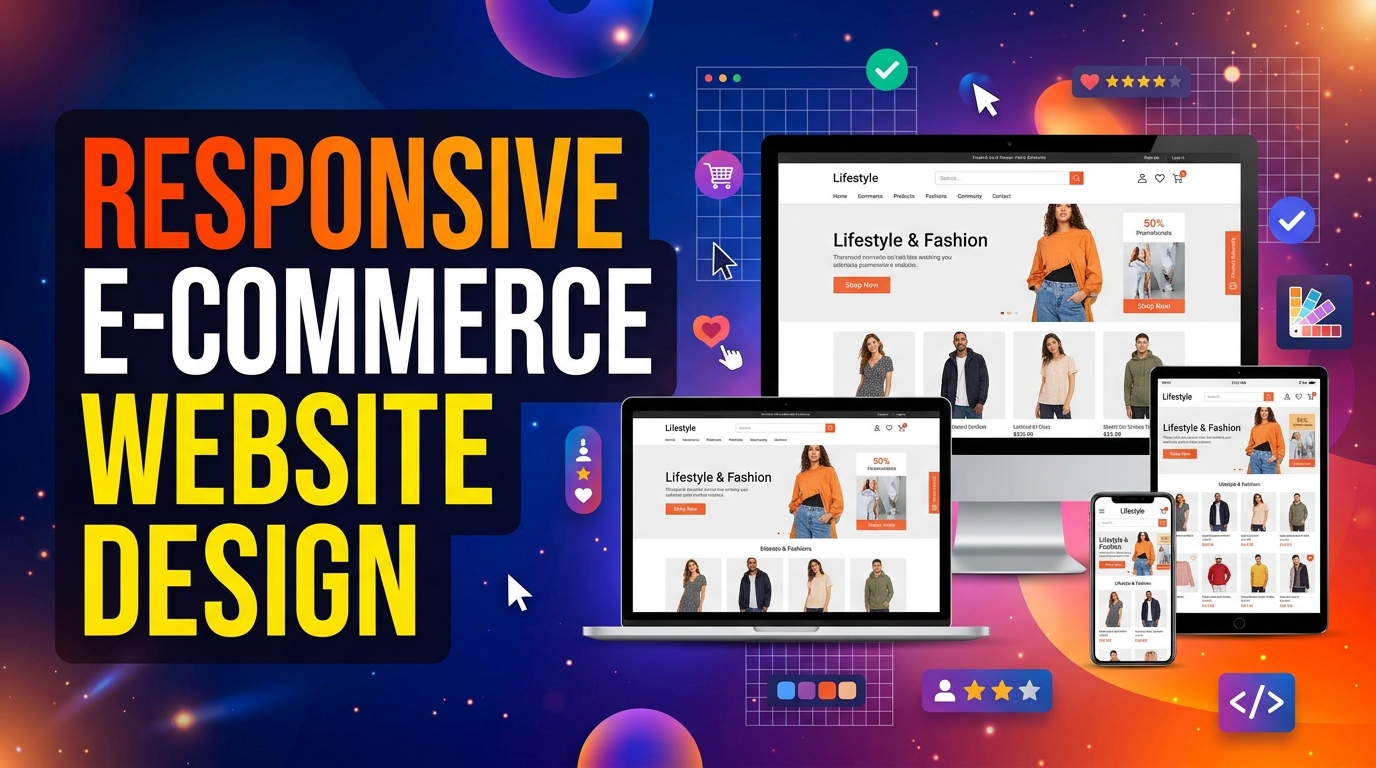 Responsive E-commerce website design ensures that an online store works properly across different screen sizes and devices. Customers may visit a website using desktop computers, laptops, tablets, or smartphones. A responsive layout automatically adjusts its structure to provide an appropriate viewing experience regardless of the device being used.
For example, a desktop website may display several product columns, while the same page on a smartphone may show one or two products per row. Navigation menus can also transform into mobile-friendly dropdown menus to save screen space. Images, text, buttons, and other website elements should resize appropriately without creating horizontal scrolling or overlapping content.
Responsive design is also important for search engine optimization and customer satisfaction. Visitors are more likely to remain on a website when its content is easy to read and its features work correctly. Businesses should test their websites on different devices and screen sizes to identify layout problems before launching. A responsive shopping experience allows customers to browse products comfortably and complete purchases whenever they want.
E-commerce Web Design Best Practices
Following established E-commerce web design best practices helps businesses create websites that are attractive, accessible, and easy to use. One of the most important practices is maintaining simple navigation. Product categories should be clearly organized so customers can find relevant items without visiting unnecessary pages.
Website speed is another essential factor. Large images, unnecessary scripts, and poorly optimized website elements can increase loading times. Compressing images, using reliable hosting, enabling browser caching, and reducing unnecessary plugins can improve overall performance. Faster websites provide a better experience and reduce the possibility of visitors leaving before exploring products.
Security should also remain a priority. Customers need confidence when sharing personal information and making online payments. Businesses should implement HTTPS encryption, reliable payment gateways, regular security updates, and appropriate data protection measures.
Clear calls to action are equally important. Buttons such as Add to Cart, Buy Now, and Continue Shopping should be easy to identify. An effective E-commerce website design also includes transparent shipping information, return policies, contact details, and customer support options. These elements help remove uncertainty and encourage customers to complete their purchases.
Custom E-commerce Website Development
Custom E-commerce website development allows businesses to build online stores according to their specific requirements. Unlike standard templates, custom development provides greater flexibility over website functionality, appearance, integrations, and customer experiences. This approach is particularly useful for businesses with unique products, specialized services, or complex shopping requirements.
For example, a clothing retailer may need advanced product filters, size guides, color variations, and personalized product recommendations. A wholesale business may require bulk ordering, customer-specific pricing, and account-based purchasing features. Custom development makes it possible to incorporate these functions into the website without depending entirely on pre-designed templates.
Businesses planning a new online store should also understand the technical side of development. This includes selecting a suitable platform, configuring hosting, integrating payment systems, organizing product databases, and implementing security features. You can explore our detailed guide on E-commerce Website Development to understand how development processes, functionality, and optimization contribute to a successful online store. A well-planned custom E-commerce website design can also support future expansion. As a company grows, it may need additional product categories, marketing integrations, automated inventory management, and advanced analytics. Building with scalability in mind makes these improvements easier to implement.
User-Friendly Online Store Design
 A user-friendly online store design focuses on making every stage of the shopping journey simple and convenient. Customers should be able to understand the website, discover products, compare available options, and complete purchases without confusion. A complicated interface can frustrate visitors and increase the likelihood of abandoned shopping carts.
An organized homepage is a good starting point. It should introduce the business, highlight important products, display relevant promotions, and provide access to major shopping categories. Search functionality is also valuable, particularly for stores with large product collections. Customers should be able to search by product name, category, brand, or other relevant characteristics.
The shopping cart and checkout process deserve special attention. Customers should be able to review selected products, change quantities, remove unwanted items, and understand the total cost before payment. Offering convenient checkout options, including guest checkout where appropriate, can reduce unnecessary barriers. A user-friendly E-commerce website design should also consider accessibility. Readable typography, sufficient color contrast, descriptive image text, and keyboard-friendly navigation help make the store usable for a wider audience. Providing clear error messages and helpful customer support options further improves the overall experience.
Mobile-Friendly E-commerce Website
Mobile shopping has become an important part of modern online retail. Many customers discover products, compare prices, and make purchases directly from their smartphones. A mobile-friendly website ensures that these activities remain convenient even when users have smaller screens and limited browsing space.
An effective mobile shopping experience begins with a responsive layout. Product images should remain clear, text should be readable, and buttons should be large enough to tap comfortably. Mobile navigation should also be simple, allowing customers to access product categories, search functions, shopping carts, and account information without difficulty.
The checkout process should be optimized for mobile users as well. Unnecessary form fields, complicated registration requirements, and confusing payment steps can discourage customers from completing orders. Offering suitable payment options and clearly displaying delivery costs can make the process more convenient. Mobile performance is another important consideration. Businesses should optimize images, reduce unnecessary animations, and avoid heavy website elements that slow down loading. An effective E-commerce website design prioritizes mobile usability because a large percentage of potential customers may interact with the store through mobile devices.
E-commerce Website UI/UX Design
E-commerce website UI/UX design focuses on the visual interface and overall experience customers have while interacting with an online store. UI, or user interface, refers to the visual elements, including buttons, menus, typography, icons, colors, and page layouts. UX, or user experience, focuses on how easily customers can navigate the website and complete their desired activities. Good UI design creates a visually consistent shopping environment. Designers should select colors and typography that match the brand while maintaining readability. Product images, banners, and promotional sections should be arranged carefully to guide visitors toward important information without overwhelming them.
UX design requires understanding customer behavior and identifying potential difficulties throughout the shopping journey. For example, if customers struggle to locate products, improving category navigation and adding search filters may solve the problem. If visitors frequently abandon their carts, simplifying the checkout process could improve conversions. Businesses can use website analytics, customer feedback, usability testing, and heatmaps to understand how visitors interact with their stores. This information helps designers make informed improvements instead of relying only on personal preferences. A successful E-commerce website design brings UI and UX together to create a shopping experience that feels natural, attractive, and convenient.
Professional Online Store Design
Professional online store design helps businesses establish credibility and create a positive impression among potential customers. Since customers cannot physically inspect products before purchasing online, they often rely on website quality, product information, reviews, and security indicators when deciding whether to trust a business. Brand consistency is an important part of professional presentation. A website should use recognizable colors, logos, typography, and visual elements that represent the company’s identity. Professional product photography and detailed descriptions also help customers understand what they are purchasing.
Businesses should provide essential information throughout the website. Dedicated pages for About Us, Contact Us, Shipping Policy, Return Policy, Privacy Policy, and Terms and Conditions make the store more transparent. Customer reviews, testimonials, and secure payment indicators can further strengthen credibility. A professional E-commerce website design should also connect with the company’s wider marketing strategy. For example, businesses selling downloadable products such as templates, guides, or educational resources can explore Digital Products for Beginners to understand how digital products can be presented and sold online.
Marketing activities also contribute to the success of an online store. Social platforms can introduce products to new audiences, while promotional videos can communicate product benefits. Businesses interested in video advertising can learn more about TV Commercial Editing and how professionally edited advertisements help communicate brand messages. Combining professional website presentation with effective marketing can create a stronger overall customer experience.
E-commerce Website Design Trends
 Modern E-commerce website design trends continue to evolve as customer expectations and digital technologies change. Businesses should understand these developments to keep their online stores competitive while ensuring that design decisions remain useful for their target audiences. Minimalist layouts are becoming increasingly popular because they reduce visual distractions and help customers focus on products. Clean backgrounds, simple navigation, consistent typography, and carefully selected product images can create an elegant shopping environment. This approach is especially useful for brands that want to communicate quality and professionalism.
Personalization is another important trend. Online stores can use customer preferences, browsing behavior, and purchase history to recommend relevant products. Personalized recommendations may help customers discover useful items while creating a more engaging shopping experience. Interactive product experiences are also becoming more common. Features such as product zoom, image galleries, product comparison tools, and virtual previews allow customers to explore products more effectively. For certain industries, augmented reality can help shoppers visualize how furniture, accessories, or other products may look in real-world settings.
Artificial intelligence is also influencing online retail through automated customer support, intelligent search, and personalized shopping recommendations. However, businesses should introduce these features carefully and ensure that they genuinely improve customer convenience. Social commerce is another growing opportunity. Companies can connect their online stores with social media platforms to promote products and direct interested audiences toward purchasing pages. Understanding How Social Media Marketing Helps Businesses Grow can help online retailers develop stronger promotional strategies and attract potential customers. A successful E-commerce website design should adopt relevant trends without sacrificing usability, performance, accessibility, or brand consistency. Rather than following every new development, businesses should select features that match their customers’ needs and long-term objectives.
Conclusion
Building a successful online store requires careful planning, attractive presentation, reliable functionality, and a strong understanding of customer expectations. From responsive layouts and mobile optimization to secure payment processing and user-friendly navigation, every element contributes to the overall shopping experience. E-commerce website design is not simply about creating an attractive website. It is about developing a convenient digital shopping environment that helps customers discover products, build trust, and complete purchases confidently. Businesses that prioritize usability, performance, security, and continuous improvement can create stronger relationships with customers and support long-term growth. Whether you are starting a new online business or upgrading an existing store, investing in the right design and development strategies can help establish a professional online presence and create more opportunities for success.
FAQ
1. What is E-commerce website design?
E-commerce website design is the process of creating an online store where customers can browse products, view descriptions, compare prices, add items to shopping carts, and make purchases. It includes visual design, navigation, product pages, payment functionality, and overall shopping experience.
2. Why is professional online store design important?
Professional online store design helps businesses establish credibility, attract potential customers, and provide a convenient shopping experience. A well-organized website makes it easier for visitors to find products, understand offers, and complete purchases, which can support better customer satisfaction and sales performance.
3. How much does E-commerce website design cost?
The cost depends on several factors, including website complexity, selected platform, number of products, custom features, payment integrations, and development requirements. A basic online store generally requires less investment than a fully customized platform with advanced functionality.
4. What features should a successful online store have?
A successful online store should include organized product categories, clear product descriptions, high-quality images, search functionality, shopping cart features, secure payment options, customer reviews, and a simple checkout process. It should also provide contact information and transparent shipping and return policies.
5. Why is responsive design important for an online store?
Responsive design allows an online store to adjust automatically to different screen sizes and devices. It improves mobile usability, makes website content easier to access, and provides a consistent shopping experience for customers using smartphones, tablets, and desktop computers.
6. What is the difference between UI and UX in online store design?
UI refers to the visual elements of a website, such as colors, buttons, typography, icons, and layouts. UX focuses on the overall experience customers have while using the website, including navigation, product discovery, checkout convenience, and accessibility. Both are essential for creating an effective online store.
7. Which platform is best for building an online store?
The best platform depends on business requirements, budget, technical experience, and future growth plans. Shopify, WooCommerce, Magento, and other e-commerce platforms offer different features. Businesses should compare customization options, payment integrations, scalability, management tools, and maintenance requirements before choosing a platform.
8. How can I improve my online store’s conversion rate?
You can improve conversions by simplifying navigation, optimizing product pages, using high-quality images, providing clear product descriptions, displaying customer reviews, improving website speed, and reducing unnecessary checkout steps. Testing different layouts and analyzing customer behavior can also help identify opportunities for improvement.
9. How often should an online store be updated?
An online store should be reviewed regularly to ensure that its content, products, security features, and technical functionality remain accurate and effective. Businesses should update product information when necessary, install security updates, monitor website performance, and improve the shopping experience based on customer feedback and analytics.
10. What are the latest trends in E-commerce website design?
Current design trends include minimalist layouts, personalized product recommendations, AI-powered customer support, interactive product displays, mobile-first experiences, social commerce, and improved checkout functionality. Businesses should adopt trends that provide genuine value to customers while maintaining website speed, accessibility, and usability.