Affiliate Marketing in E-commerce: Unlocking the Secret to Increased Revenue

Affiliate marketing is the dark horse of the e-commerce industry; which quietly works, that can form links between companies and audiences, drive up sales, and tap into revenue potential you never evening imagined before If you run an business but haven’t dabbled in affiliate marketing yet, then don’t blame anyone but yourself.
Affiliate marketing in e-commerce is a powerful performance-based strategy that helps businesses expand their reach, boost sales, and increase revenue with minimal upfront risk. Instead of relying solely on traditional advertising, brands partner with affiliates—such as bloggers, influencers, content creators, and niche website owners—who promote their products to targeted audiences. In return, affiliates earn a commission for every sale, lead, or action generated through their unique referral links.
One of the biggest advantages of affiliate marketing is its cost-effectiveness. Since businesses only pay commissions after a successful transaction, the financial risk is significantly lower compared to paid ads that require upfront investment without guaranteed results. This makes affiliate marketing especially attractive for small and medium-sized e-commerce businesses looking to scale efficiently.
Affiliate marketing also enhances brand visibility and credibility. Affiliates often have established trust with their audiences, and their recommendations can influence purchasing decisions more effectively than traditional advertisements. By leveraging these trusted relationships, e-commerce brands can access new customer segments and strengthen brand awareness.
Additionally, affiliate marketing supports data-driven growth. Businesses can track clicks, conversions, and customer behavior through affiliate dashboards and analytics tools. This allows companies to identify high-performing affiliates, optimize campaigns, and refine their marketing strategies for better results.
What Is Affiliate Marketing, and Why Does It Matter in E-commerce?
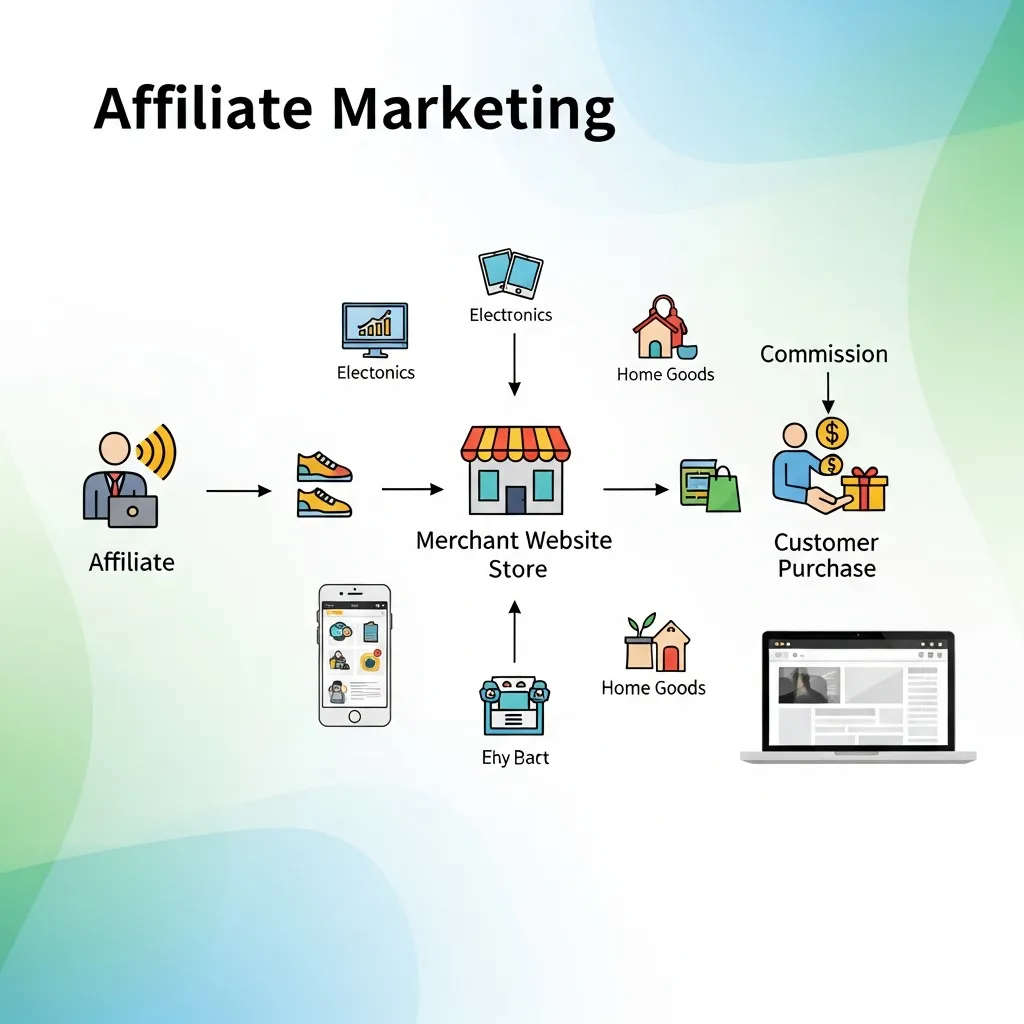
Affiliate marketing is a performance-based marketing strategy where businesses reward affiliates (partners) for driving traffic or sales. Affiliates promote your products or services through unique referral links, and in return, they earn a commission for every successful sale or lead.
For e-commerce businesses, affiliate marketing can:
- Extend brand reach without spending on direct advertising.
- Improve trust and credibility, as affiliates often act as trusted middlemen.
- Provide measurable ROI, as you only pay for actual results.
Fun fact? A 2022 Statista report showed that affiliate marketing accounts for 16% of global e-commerce sales. That number signals one thing: you can’t ignore the potential.
How Affiliate Marketing Works in E-commerce
Affiliate marketing’s niche mechanics are simple yet incredibly effective. Here’s how the process looks:
1. You Recruit Affiliates
Affiliates could be bloggers, influencers, niche websites, or even other businesses. The goal is to choose partners whose audience aligns with your target demographic.
2. Affiliates Promote Your E-commerce Products
Once on board, affiliates use strategies like writing blog posts, running YouTube reviews, or sharing product links through social media. Their promotion often includes referral links that track clicks, leads, or purchases.
3. You Complete the Sale and Track Results
When a customer completes a purchase via the affiliate’s referral link, the sale is tracked back to the affiliate.
4. Affiliates Earn a Commission
You pay affiliates a pre-agreed percentage (or a flat fee) for each completed sale or lead.
This win-win model makes affiliate marketing a cost-effective way to grow your business without upfront advertising costs.
Why Affiliate Marketing Is Key for E-commerce Growth
Still wondering if affiliate marketing e-commerce is worth the effort? Here are some reasons it should be part of your e-commerce strategy:
Cost-Effective Advertising
Unlike paid ad campaigns that consume your budget regardless of their success, affiliate marketing correlates costs directly to results. You only pay for actual conversions.
Expands Brand Reach
Affiliates connect you to new audiences. For instance, if a famous tech blogger promotes your smartwatch, their entire audience now knows your brand exists.
Builds Trust with Consumers
Customers trust recommendations from influencers and bloggers more than direct ads. A HubSpot survey found that 81% of consumers trust blogs and social media influencers for purchasing decisions.
Easy to Scale
With affiliate programs, scaling is as simple as onboarding more affiliates and providing them with tools to market your products. Growth becomes increasingly effortless.
Learn How Empathy Marketing Transforms Customer Relationships
Setting Up an Affiliate Marketing Program for Your E-commerce Store
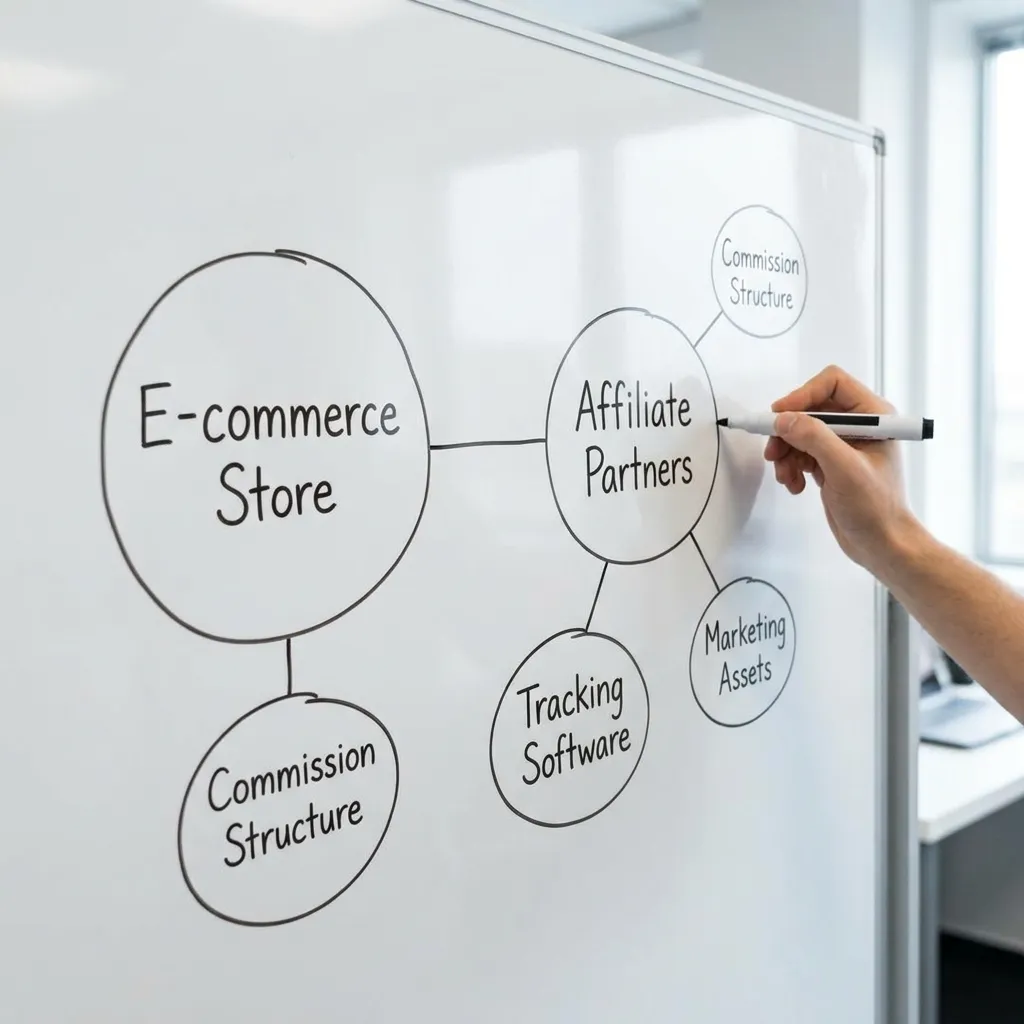
Now that you understand the value of affiliate marketing, it’s time to start building your program. Here’s a step-by-step guide:
Step 1. Define Your Goals
Are you looking to drive sales, increase website traffic, or improve brand awareness? Knowing your goals will shape your affiliate strategy.
Step 2. Choose the Right Affiliate Platform
Affiliate software is essential for tracking clicks, sales, and commissions. Popular platforms like ShareASale, CJ Affiliate, and PartnerStack can make setting up your program a breeze.
Step 3. Recruit the Right Affiliates
Focus on affiliates whose audience aligns with your niche. For example:
- If you sell fitness products, target fitness bloggers or YouTubers.
- If you sell tech gadgets, work with tech review websites.
Step 4. Offer Attractive Commissions
Your commission structure must incentivize affiliates. Common structures include:
- Percentage of Sale (e.g., 10-20% of product value)
- Flat Rate (e.g., $10 for every sale)
- Tiered Commissions (higher rates for high-performing affiliates)
Step 5. Provide Marketing Resources
Give your affiliates tools to succeed, such as:
- High-quality banners, images, and videos
- Pre-written email or social media templates
- Exclusive promo codes to attract customers
Step 6. Track and Optimize
Use affiliate platforms to monitor performance metrics such as:
- Click-through rates (CTR)
- Conversion rates
- Best-performing affiliates
Proven Strategies to Boost Your Affiliate Marketing Program
To maximize returns, here are actionable tips for managing a successful affiliate marketing program:
Segment Your Affiliates
Categorize your affiliates based on their niches and tailor specific campaigns for each group. For example, provide fitness affiliates with exclusive deals on protein shakes while offering gadget bloggers discounts on tech products.
Build Relationships
Affiliate success goes beyond one-time promotions. Build lasting partnerships with your affiliates by recognizing their efforts, inviting them to exclusive events, or offering bonuses for exceptional performance.
Host Contests
Organize contests to reward affiliates who bring in the most sales during a specific timeframe. This creates friendly competition and motivates affiliates to perform better.
Leverage Seasonal Promotions
During holidays or sale events, create seasonal promotions to encourage affiliates to push your products harder.
Monitor Fraud
Unfortunately, fraudulent activities (like cookie stuffing) exist in affiliate programs. Invest in affiliate tracking systems like Reversion or Post Affiliate Pro to mitigate risks.
Integrating Affiliate Marketing with Your Overall Commerce Strategy

Affiliate marketing in e-commerce works best when it is not treated as a standalone tactic but as part of a broader commerce-strategy. When aligned with your overall marketing-ecommerce ecosystem, affiliates can amplify existing campaigns instead of operating in isolation.
A well-integrated system ensures consistent messaging, optimized conversion funnels, and higher overall efficiency.
a) Align with Shopping Campaigns
If you are running Google Shopping or paid social ads, ensure affiliates promote the same best-selling or high-margin products. This creates consistent visibility across channels and strengthens brand recall.
b) Sync with Email Marketing
Combine email-marketing-for-e-commerce efforts with affiliate promotions. For example:
- Share affiliate-exclusive offers through your email list.
- Retarget affiliate-driven visitors using email-marketing-strategies.
- Use affiliate traffic data to personalize email flows.
c) Support Product Launches
When launching a new personal-care product or service, activate affiliates early. Giving them early access or pre-launch samples builds anticipation and maximizes first-day sales impact.
Example – Multi-Channel Integration Strategy
| Channel | How Affiliate Marketing Supports It | Efficiency Benefit |
|---|---|---|
| Shopping campaigns | Promotes same high-performing products | Higher conversion consistency |
| Email marketing e-commerce | Retarget affiliate traffic via automation | Increased lifetime value |
| Social media marketing | Influencers amplify campaign reach | Reduced ad dependency |
| Product launches | Early affiliate access drives momentum | Faster revenue acceleration |
When affiliate marketing aligns with your broader online-marketing-in-e-commerce strategy, it strengthens the entire sales ecosystem.
Is Affiliate Marketing Right for Your E-commerce Store?
You can boost profits of any size e-commerce company through affiliate marketing, an expansion method that is both low risk and highly remunerative. The benefits of doing this range from achieving trust and credibility to scaling on a very small budget.
If you want to grow by tapping into this channel, the time is ripe for taking this step. You need to know your business niche, enlist the right affiliates that suit it, and give those new partners all they must succeed.
What is the next step for you? Discover affiliate tracking platforms, and launch your program today.
Measuring Advanced Affiliate Performance Metrics
Beyond clicks and conversions, successful Affiliate Marketing in E-commerce depends on deeper performance analysis. To maximize long-term profitability, you must evaluate quality—not just volume.
a) Customer Lifetime Value (CLV) by Affiliate
Not all affiliates drive equally valuable customers. Track whether certain affiliates bring repeat buyers who engage with Customer Loyalty Programs or email-marketing-ecommerce funnels.
b) Average Order Value (AOV)
Some affiliates may drive higher-value customers. Monitoring AOV helps you identify premium traffic sources worth incentivizing.
c) Incremental Revenue Contribution
Measure whether affiliate-driven sales are incremental or simply replacing existing traffic sources. This helps avoid cannibalization of other marketing channels.
d) Attribution Models
Use multi-touch attribution instead of last-click models to fairly credit affiliates who influence earlier stages of the buyer journey.
Example – Advanced Affiliate KPIs
| Metric | Why It Matters | Optimization Action |
|---|---|---|
| Customer Lifetime Value (CLV) | Measures long-term profitability | Increase commission for high-CLV affiliates |
| Average Order Value (AOV) | Identifies premium traffic sources | Offer tiered commission incentives |
| Incremental Revenue | Prevents channel cannibalization | Adjust campaign targeting |
| Repeat Purchase Rate | Shows customer loyalty potential | Integrate loyalty rewards |
Tracking advanced metrics ensures your affiliate program strengthens overall e-commerce-market efficiency.
Affiliate Marketing for Niche and Service-Based E-commerce
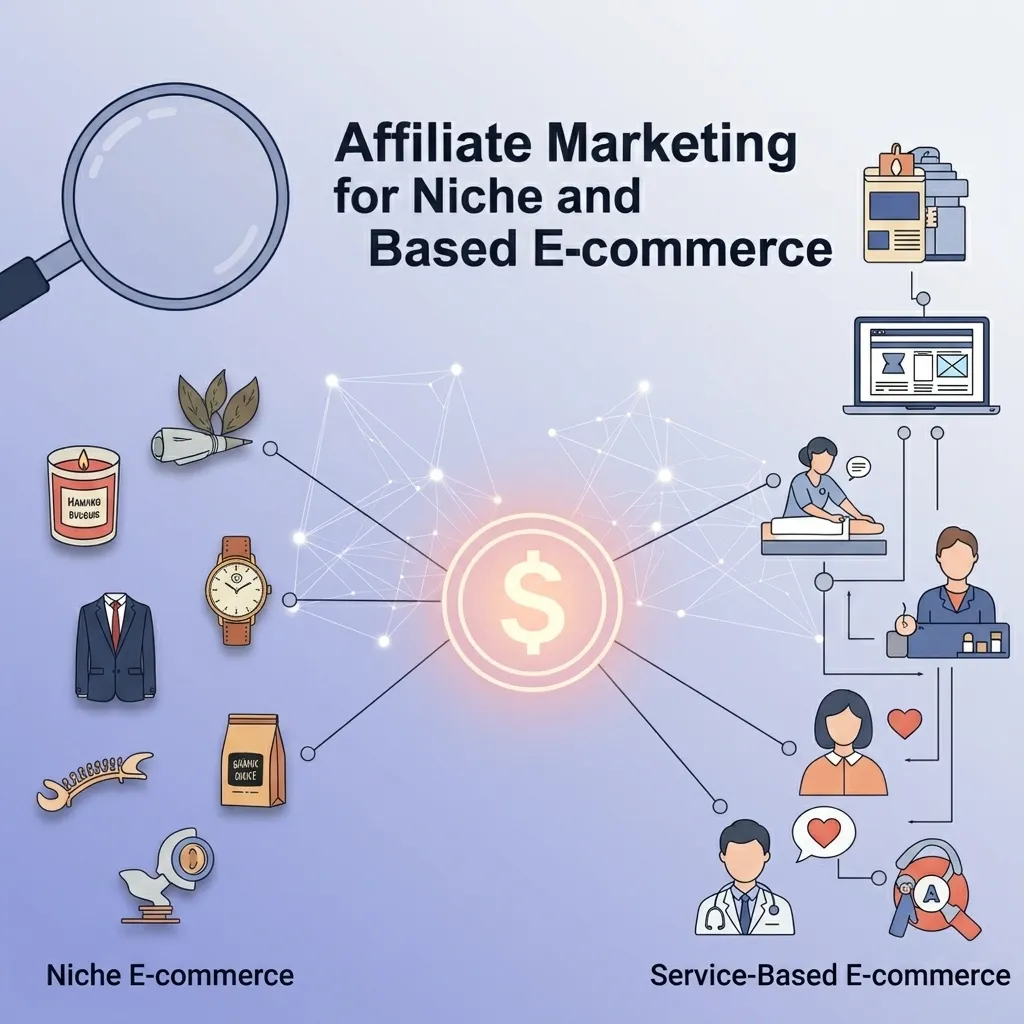
Affiliate Marketing in E-commerce is not limited to physical products. It can be highly effective for niche markets and services-strategies.
a) Personal Care and Lifestyle Brands
Personal-care-product businesses benefit greatly from influencer-driven affiliate models. Beauty bloggers and skincare reviewers often create trust-based content that significantly boosts conversions.
b) Digital Products and Services
If you sell software, online courses, or consulting services, affiliates can create tutorials, webinars, or in-depth reviews that educate audiences and increase purchase confidence.
c) Subscription Models
Affiliate marketing works exceptionally well with subscription-based models. Recurring commission structures motivate affiliates to bring high-quality, long-term customers.
d) Cross-Border Expansion
Affiliates in international markets can localize messaging and adapt promotions to cultural preferences, helping brands expand globally without large localization costs.
Example – Affiliate Strategy by Business Type
| Business Type | Recommended Affiliate Approach | Revenue Impact |
|---|---|---|
| Personal care products | Influencer reviews & tutorials | High trust & higher conversions |
| Digital services | Educational content & webinars | Improved buyer confidence |
| Subscription businesses | Recurring commission model | Long-term predictable revenue |
| International expansion | Local affiliate partnerships | Lower global expansion risk |
By adapting affiliate marketing strategies to niche markets, businesses can unlock untapped segments within the e-commerce market.
FAQ – Affiliate Marketing in E-commerce
1. What is affiliate marketing in e-commerce?
Affiliate marketing in e-commerce is a performance-based strategy where businesses reward affiliates for driving traffic or sales through unique referral links. It helps expand brand reach and increase revenue.
2. How does affiliate marketing benefit my online store?
It offers cost-effective advertising, builds consumer trust, drives measurable ROI, and allows you to scale easily without upfront marketing costs.
3. Who can become an affiliate for my e-commerce store?
Affiliates can include bloggers, social media influencers, niche websites, or even other businesses whose audiences align with your target market.
4. How do I track affiliate performance effectively?
Use affiliate platforms like ShareASale, CJ Affiliate, or PartnerStack to monitor click-through rates, conversions, and sales attributed to each affiliate. Advanced metrics include CLV and repeat purchases.
5. What commission structures work best?
Common options are percentage of sale (10–20%), flat-rate per sale, or tiered commissions that reward high-performing affiliates. The right structure motivates affiliates to drive more sales.
6. Can affiliate marketing work for services and digital products?
Yes! Affiliates can promote software, online courses, or subscriptions using tutorials, webinars, and influencer reviews, making it effective beyond physical products.
7. How do I prevent affiliate fraud?
Monitor for fraudulent activities like cookie stuffing and click manipulation. Utilize reliable affiliate tracking systems, enforce clear rules, and conduct regular audits of affiliate activities.
8. How can I integrate affiliate marketing with other strategies?
Align affiliate campaigns with shopping campaigns, email marketing strategies, and social media promotions to create a consistent commerce strategy and maximize conversions.
9. What’s the role of customer loyalty programs in affiliate marketing?
Loyalty programs encourage repeat purchases, enhance affiliate-driven customer retention, and reduce marketing costs, improving overall e-commerce-market efficiency.
10. How do I start an affiliate marketing program for my e-commerce store?
Define your goals, choose a tracking platform, recruit relevant affiliates, set attractive commissions, provide marketing resources, and continuously track and optimize results.