Email Marketing vs Marketing Automation: What’s the Difference?
The debate of email marketing vs marketing automation often confuses business owners and marketers alike. Email marketing involves sending direct messages to a targeted list of subscribers to build relationships and promote offers. Marketing automation, on the other hand, is a broader strategy that uses software to automate repetitive tasks across various channels, including email, social media, and CRM systems. Understanding the difference between email marketing vs marketing automation is essential for scaling your campaigns, personalizing your outreach, and ultimately driving better results for your bottom line.
The landscape of digital outreach changes rapidly. A decade ago, simply sending a monthly newsletter was enough to keep your brand top of mind. Now, consumers expect highly relevant, timely, and personalized communication at every touchpoint. Connecting with your audience requires a strategic blend of manual oversight and automated technology.
At the core of all digital marketing is the need to communicate effectively with your target audience. You need to deliver the right message to the right person at the exact right moment. Achieving this level of precision means upgrading your toolkit and understanding the nuances of the software you use.
This sets the stage for a critical comparison: email marketing vs marketing automation. While people often use the terms interchangeably, they serve distinct purposes. Choosing the right approach depends on your business goals, your audience size, and your desired level of personalization. In this guide, we will break down both concepts, explore how they work together, and help you determine which strategy makes the most sense for your business.
Deep Dive into Email Marketing: The Personal Touch

What is Email Marketing?
Email marketing is the practice of sending commercial messages to a group of people via email. It is an owned marketing channel, meaning you have complete control over your subscriber list and the content you send.
The key benefits of email marketing are numerous. It allows for direct communication with your audience, landing straight in their inboxes without relying on social media algorithms. It is highly cost-effective, often boasting an impressive return on investment. Furthermore, it excels at relationship building. By consistently delivering valuable content, you establish trust and authority with your subscribers.
Types of Email Marketing Campaigns
There are several core types of email marketing campaigns you can run:
- Promotional Emails: These highlight special offers, product launches, or seasonal sales aimed at driving immediate revenue.
- Newsletters: Regular updates sent to your subscribers featuring company news, educational content, or industry insights.
- Transactional Emails: Automated messages triggered by user actions, such as purchase receipts, password resets, or shipping confirmations.
- Customer Service Emails: Direct communications addressing customer inquiries, support tickets, or feedback requests.
Best Practices for Effective Email Marketing
To succeed, you must move beyond generic blasts. Segmentation and personalization are critical. Group your subscribers based on their interests or purchase history to ensure relevance. Next, focus on compelling subject lines and content. Your subject line is the gatekeeper; if it fails to grab attention, your email goes unread. Finally, always include clear Call to Actions (CTAs) so readers know exactly what steps to take next.
Unpacking Marketing Automation: The Power of Efficiency
What is Marketing Automation?
Marketing automation refers to software platforms designed to automate repetitive marketing tasks. While it includes email, it also extends to social media posting, ad campaigns, and customer relationship management.
The key benefits include scalability, efficiency, and data-driven decisions. Marketing automation allows small teams to execute complex, multi-channel campaigns that would be impossible to manage manually. It captures behavioral data at every touchpoint, allowing you to refine your strategy based on real user actions.
Key Features of Marketing Automation Platforms
Robust marketing automation platforms offer several distinct features:
- Workflow Automation: Visual builders that let you map out customer journeys based on specific triggers and conditions.
- Lead Nurturing: Sending a series of automated messages designed to move a prospect further down the sales funnel.
- CRM Integration: Syncing marketing data with your sales database to ensure a seamless handover of qualified leads.
- Analytics and Reporting: Deep dashboards that track conversions, engagement metrics, and campaign ROI.
Practical Applications of Marketing Automation
Automation shines in its practical applications. Onboarding sequences automatically guide new users through your software or service. Abandoned cart reminders prompt shoppers to complete a purchase they left behind. Re-engagement campaigns target inactive subscribers, offering them incentives to interact with your brand once again.
Email Marketing vs Marketing Automation: A Comparative Analysis
Core Differences: Manual vs. Automated, Scope, Strategy
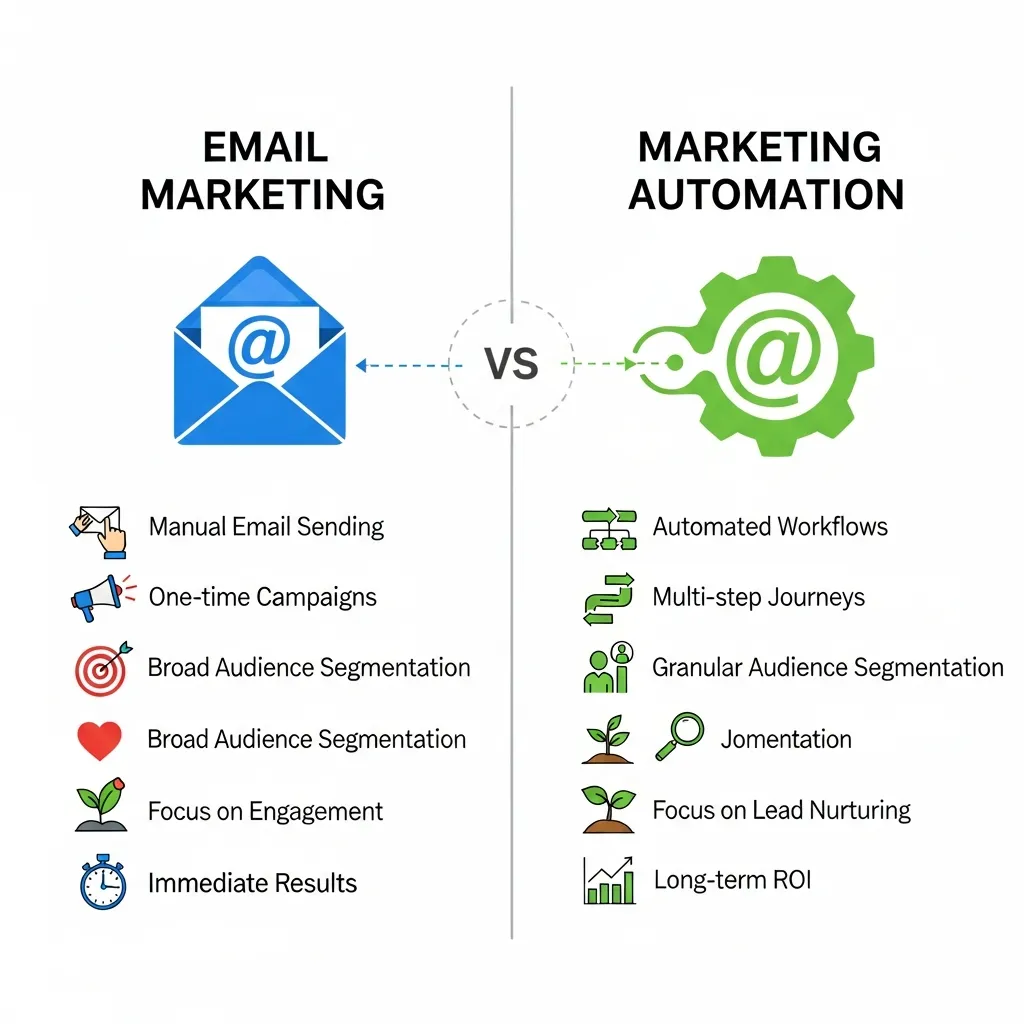
When evaluating email marketing vs marketing automation, the primary difference lies in scope and execution. Email marketing generally requires manual effort for individual campaigns. You write a newsletter, select a list, and hit send. Marketing automation operates in the background. You set up a workflow once, and the software executes it continuously based on user behavior. Email marketing focuses solely on the inbox, whereas marketing automation tracks the user across your website, social channels, and CRM.
Synergies: How They Work Together for Maximum Impact
You do not necessarily have to choose one over the other. The best digital strategies use both. You can use standard email marketing for your weekly newsletters and company announcements. Simultaneously, you can use marketing automation to handle welcome sequences, lead scoring, and post-purchase follow-ups.
When to Use Which: Tailoring Your Approach
If you run a small local business or a personal blog, a basic email marketing tool is likely sufficient. However, if you have a growing e-commerce store or a B2B sales team that requires lead scoring, the debate of email marketing vs marketing automation heavily favors investing in full automation software.
AI Personalization: Transforming Both Email Marketing and Marketing Automation
The Role of AI in Modern Marketing
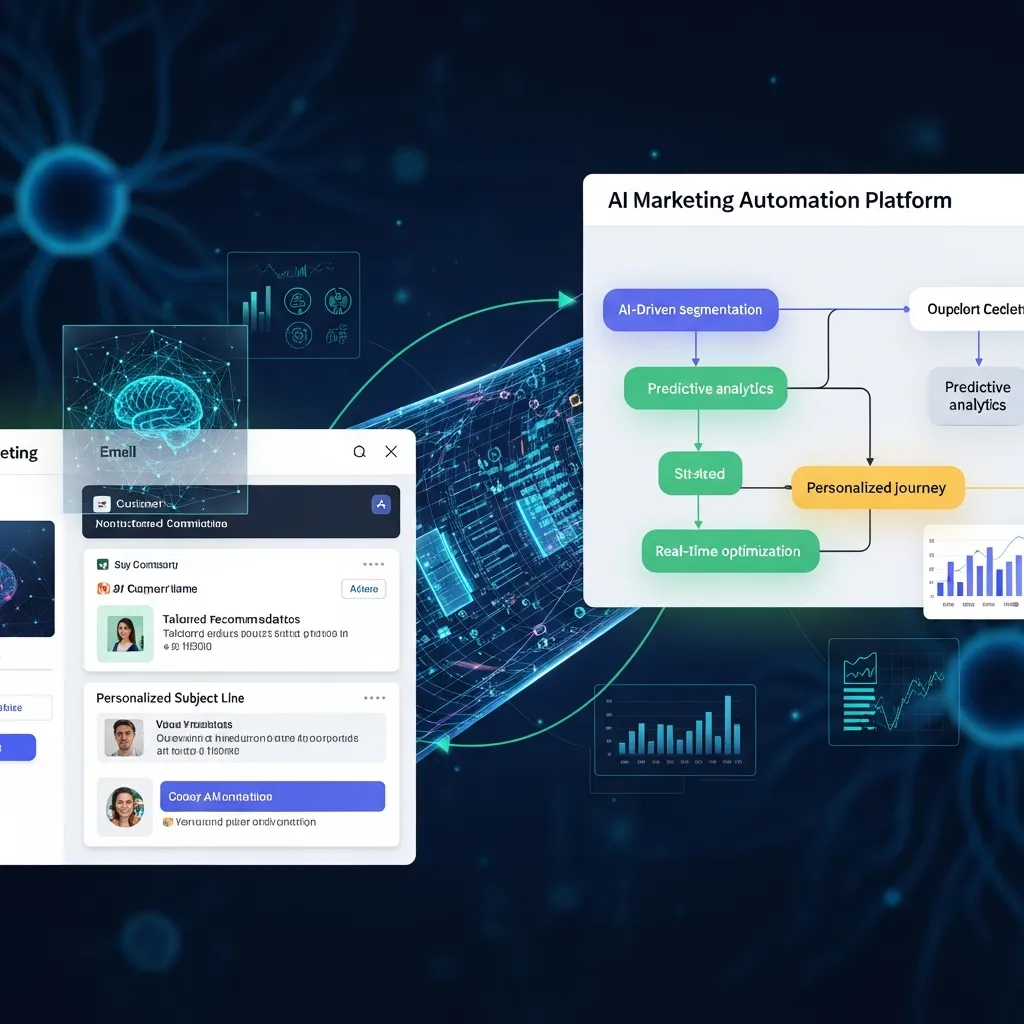
Artificial intelligence is fundamentally changing how we approach digital communication. Marketers now rely on AI to process massive datasets, predict consumer behavior, and generate dynamic content in real time.
How AI Enhances Email Marketing
For standard email campaigns, AI can optimize send times, predict which subject lines will generate the highest open rates, and dynamically alter email body content based on the recipient’s past behavior.
How AI Elevates Marketing Automation
When looking at AI Personalization: Transforming marketing automation, the impact is profound. AI algorithms can analyze a user’s browsing history on your website and automatically trigger highly specific product recommendations across email and SMS. It removes the guesswork from setting up manual triggers, allowing the system to learn and adapt to individual consumer habits autonomously.
Case Studies: Success Stories in Action
Example 1: E-commerce Business Leveraging Both
A mid-sized apparel brand struggled with shopping cart abandonment. By utilizing marketing automation, they set up an automated sequence that triggered one hour, one day, and three days after a cart was abandoned. Concurrently, they used traditional email marketing to send out manual weekly trend reports. This hybrid approach recovered 18% of abandoned carts while maintaining a steady stream of top-of-funnel engagement.
Example 2: SaaS Company Optimizing Lead Nurturing
A B2B software company found their sales team wasting time on unqualified leads. They implemented marketing automation to track how prospects interacted with their website. Users who downloaded whitepapers and attended webinars were automatically scored. Once a lead reached a certain score, the automation platform alerted the sales team. This reduced wasted sales calls by 40% and increased overall close rates.
Choosing the Right Tools: Factors to Consider
Business Size and Needs
Assess your current size. A solo entrepreneur has vastly different requirements than a fifty-person marketing department. Start simple if your list is small.
Budget and Resources
Email marketing tools are generally much cheaper than full marketing automation suites. Make sure your budget aligns with the expected ROI. Furthermore, consider your human resources. Marketing automation takes time and technical skill to configure properly.
Scalability and Integrations
Look for software that grows with you. Ensure the platform integrates smoothly with your existing website platform, e-commerce software, and CRM system.
Future Trends in Digital Marketing
Hyper-Personalization
Consumers ignore generic messaging. The future relies on hyper-personalization, where every communication reflects the user’s specific context, location, and preferences.
Predictive Analytics
Rather than reacting to what a customer did yesterday, predictive analytics will allow marketers to anticipate what a customer will do tomorrow, triggering proactive campaigns.
The Continued Convergence of AI and Automation
The lines between AI and traditional automation will continue to blur. Workflows will build themselves based on machine learning, requiring less manual input from marketing teams.
Harmonizing Your Digital Marketing Strategy

As you navigate the complexities of digital outreach, remember that the goal is always better communication. Email marketing gives you a direct line to your audience, perfect for newsletters and timely promotions. Marketing automation scales your efforts, ensuring no lead falls through the cracks.
Understanding email marketing vs marketing automation is not about declaring a single winner. It is about recognizing the strengths of each and harmonizing them to create a seamless, engaging customer journey. Evaluate your current processes, define your goals, and implement the tools that will empower your business to grow sustainably.
Frequently Asked Questions About Email Marketing vs Marketing Automation
1. What is the main difference between Email Marketing vs Marketing Automation?
The biggest difference between Email Marketing vs Marketing Automation is how campaigns are executed and managed. Email marketing mainly focuses on sending newsletters, promotions, or announcements manually to subscribers. Marketing automation, on the other hand, uses intelligent workflows and triggers to automatically send personalized messages based on customer actions, behaviors, and engagement patterns across multiple channels.
2. Can businesses use email marketing without marketing automation?
Yes, many businesses start with simple email campaigns before moving into automation. Small companies often use basic email marketing tools to send weekly updates, promotional offers, or product announcements without creating automated workflows. However, as audiences grow, combining email marketing with automation improves efficiency and personalization.
3. Is marketing automation only useful for large companies?
No. Modern platforms have made marketing automation accessible for businesses of all sizes. Today, startups and small businesses can use affordable automation tools to build customer journeys, automate follow-ups, and nurture leads without needing a large marketing team.
4. How does AI improve Email Marketing vs Marketing Automation strategies?
AI-powered systems analyze customer behavior, browsing patterns, purchase history, and engagement data in real time. In the debate of Email Marketing vs Marketing Automation, AI helps automation platforms deliver personalized recommendations, optimize send times, predict customer interests, and improve conversion rates through smarter targeting.
5. What are the benefits of combining email marketing and marketing automation?
Using both strategies together creates a balanced communication system. Email marketing helps brands share direct updates, announcements, and promotions, while automation manages repetitive tasks like welcome sequences, abandoned cart reminders, lead nurturing, and re-engagement campaigns automatically.
6. How do I choose the best marketing automation platform?
When selecting a platform, evaluate your budget, scalability needs, integrations, analytics features, and ease of use. The ideal solution should connect smoothly with your CRM, website, ecommerce store, and customer data systems to support long-term growth.
7. What are the most common email marketing mistakes?
Some of the most common mistakes include sending too many emails, ignoring audience segmentation, writing misleading subject lines, failing to optimize for mobile devices, and not personalizing content. These issues can reduce engagement and increase unsubscribe rates.
8. How often should automated emails be sent?
The frequency depends on the customer journey and campaign purpose. A welcome automation may send several emails within the first few days, while educational nurture campaigns may only send one message weekly. Monitoring open rates and engagement metrics helps determine the ideal sending frequency.
9. What is lead nurturing in marketing automation?
Lead nurturing is the process of building trust and guiding potential customers toward a purchase decision over time. Marketing automation platforms help businesses send personalized educational content, offers, and reminders based on user behavior and interest levels.
10. How can businesses measure the success of email marketing and automation?
To evaluate performance, track metrics such as open rates, click-through rates, conversions, bounce rates, subscriber growth, and revenue generated from campaigns. Comparing these metrics against software and advertising costs helps determine overall ROI.
11. Why is customer data important for marketing automation?
Customer data powers automation workflows. Behavioral information such as clicks, website visits, purchase history, and email interactions helps automation systems trigger highly relevant messages and create personalized customer experiences.
12. How does Email Marketing vs Marketing Automation affect customer relationships?
Both approaches strengthen customer relationships in different ways. Email marketing helps brands maintain regular communication and build community engagement, while marketing automation improves personalization by delivering timely, relevant messages tailored to each customer’s unique journey and preferences.