How to Build an Affiliate Marketing Funnel That Actually Converts
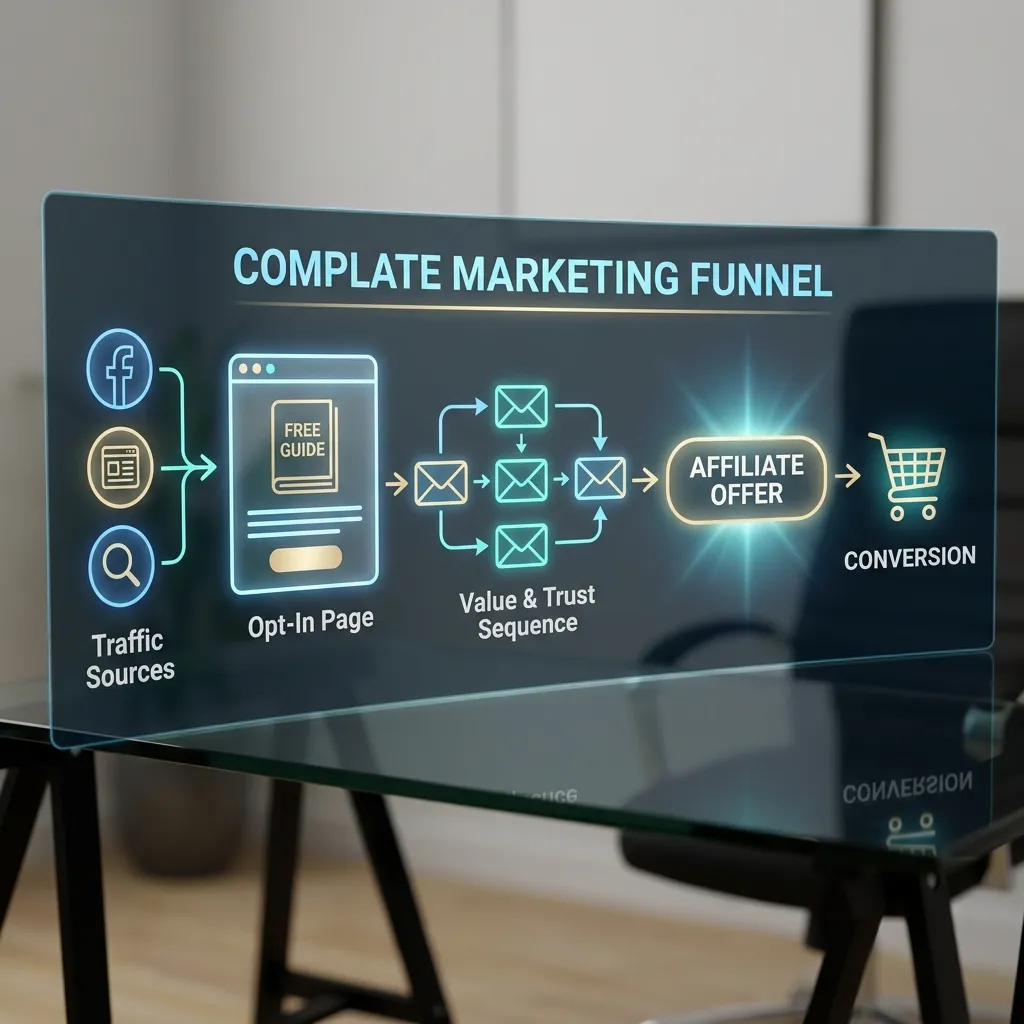
An affiliate marketing funnel is a structured pathway that guides potential customers from first discovery to final purchase—and beyond. Building one effectively requires the right content strategy, traffic sources, email automation, and continuous data-driven optimization across every stage.
Affiliate marketing generates over $8 billion in annual revenue in the U.S. alone (Statista, 2023), yet most affiliates never see consistent results. The gap between those who earn sporadically and those who build sustainable income almost always comes down to one thing: structure.
An affiliate marketing funnel gives you that structure. Rather than sending traffic directly to a product page and hoping for the best, a well-built funnel nurtures your audience through a deliberate journey—from first impression to loyal customer. Every touchpoint is intentional. Every piece of content has a job to do.
This guide covers everything you need to build, optimize, and scale your affiliate marketing funnel. You’ll learn the key stages, essential components, performance metrics to watch, and the best practices that separate high-converting affiliates from the rest. Whether you’re just starting out or looking to improve an existing setup, you’ll walk away with a clear, actionable framework.
What Is an Affiliate Marketing Funnel?
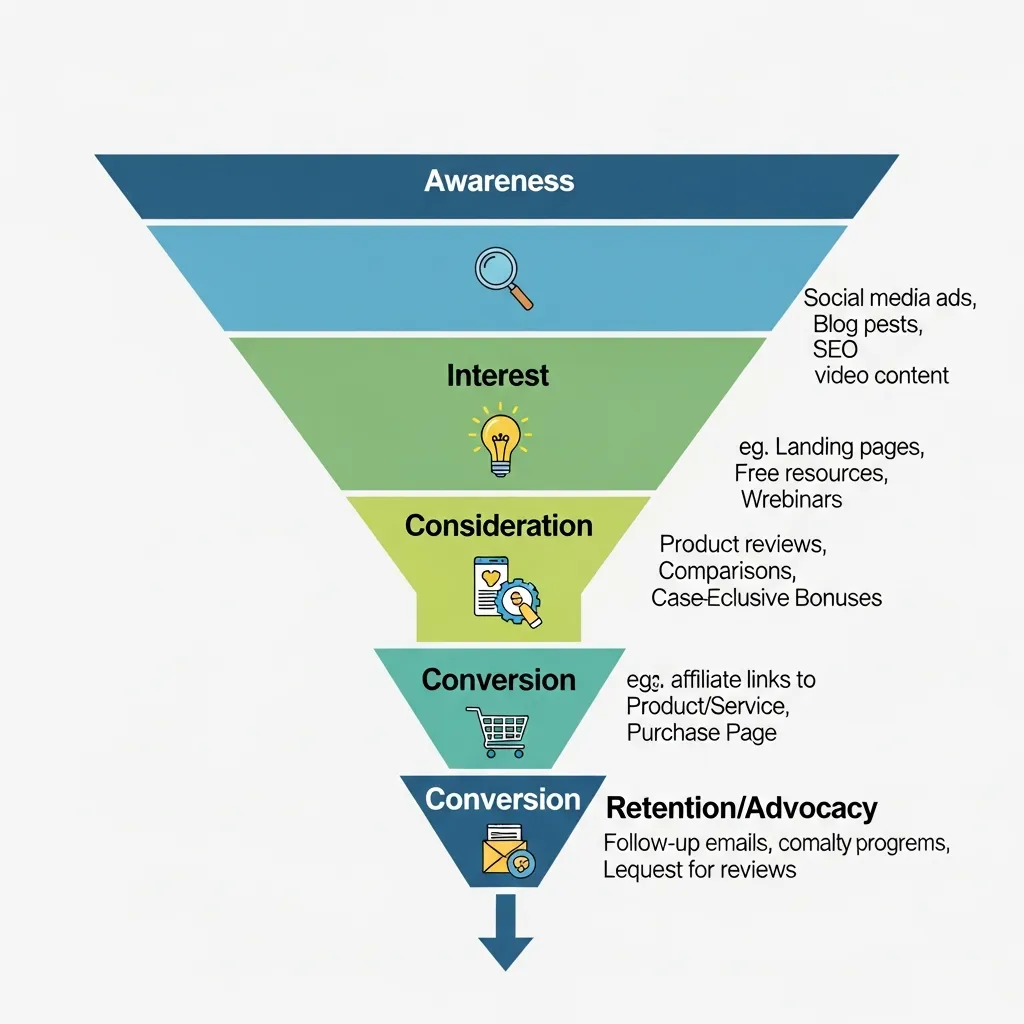
An affiliate marketing funnel is a step-by-step system that moves a prospect through the customer journey—from awareness to purchase—using affiliate links, content, and targeted marketing strategies.
Unlike a direct sales funnel, the affiliate marketing funnel doesn’t typically involve selling your own product. Instead, you earn a commission by promoting someone else’s product or service. Your funnel is designed to attract the right audience, build trust, and drive conversions through affiliate links embedded in your content, emails, or landing pages.
The funnel concept matters because people rarely buy on their first interaction with a brand. Studies show that it takes an average of 6–8 touchpoints before a prospect converts (Salesforce, 2023). A structured affiliate marketing funnel ensures those touchpoints are consistent, relevant, and persuasive.
Why Is an Affiliate Marketing Funnel Essential for Online Businesses?
Without a funnel, affiliate marketing is largely a numbers game—high traffic, low conversions, and unpredictable income. With a funnel, you control the narrative. You determine how your audience discovers you, what information they receive, and when they’re presented with an offer.
For anyone operating in E-Commerce and Internet Marketing, this is especially critical. The online marketplace is saturated. Attention spans are short. A funnel lets you stand out by delivering value first and pitching second—building the kind of trust that actually drives sales.
The Four Stages of a Successful Affiliate Marketing Funnel
Stage 1: Awareness (Top of Funnel) — How Do You Attract New Visitors to Your Affiliate Offer?
The top of the funnel is all about visibility. At this stage, your audience doesn’t know you or the products you promote. Your goal is to create content that solves a problem or sparks curiosity.
Effective awareness-stage tactics include:
- Blog content: SEO-optimized articles targeting high-intent keywords related to your niche
- Social media content: Short-form videos, carousel posts, and reels on platforms like Instagram, TikTok, and YouTube
- Paid advertising: Google Ads or Meta Ads to accelerate reach beyond organic growth
SEO is the backbone of sustainable top-of-funnel traffic. Targeting keywords tied to E-Commerce and Internet Marketing can significantly expand your discoverability among audiences actively searching for product recommendations, reviews, and comparisons. Focus on long-tail keywords that reflect user intent—these convert better and face less competition.
Stage 2: Interest and Engagement (Middle of Funnel) — How Do You Build Trust With Your Audience?
Once someone enters your world, your job is to keep them there. The middle of the funnel is where relationships are built. This is where most affiliate marketers lose potential customers—by rushing the pitch before establishing credibility.
The most effective middle-of-funnel strategies include:
- Lead magnets: Free resources (guides, templates, checklists) that capture email addresses
- Email sequences: Automated follow-up campaigns that nurture subscribers over days or weeks
- Product reviews and comparisons: Honest, detailed content that helps users make informed decisions
Trust is currency in affiliate marketing. Audiences that trust your recommendations are far more likely to click your affiliate links and complete a purchase. Authentic product demonstrations and transparent reviews consistently outperform generic promotional content.
Stage 3: Decision (Bottom of Funnel) — How Do You Convert Interested Prospects into Buyers?
At this stage, your audience is ready to buy—they just need the final nudge. The decision stage of the affiliate marketing funnel focuses on removing friction and reinforcing confidence.
Proven bottom-of-funnel conversion tactics:
- Clear calls to action (CTAs): Specific, benefit-driven CTAs outperform vague ones like “click here”
- Limited-time offers: Urgency created through time-sensitive discounts or bonuses
- Social proof: Testimonials, user reviews, and case studies that validate the purchase decision
- Objection handling: Proactively addressing concerns (pricing, reliability, compatibility) in your content
A high-converting landing page at this stage can make or break your affiliate marketing funnel. Design it with a single goal in mind, minimize distractions, and ensure the messaging aligns with whatever brought the visitor there in the first place.
Stage 4: Action and Retention (Post-Conversion) — How Do You Maximize the Value of Each Customer?
The funnel doesn’t end at the sale. Post-conversion strategies are where serious affiliates separate themselves from casual ones. Affiliate Marketing in E-commerce is increasingly focused on lifetime value, not just one-time commissions.
Post-conversion tactics worth implementing:
- Follow-up email sequences: Check in with buyers, offer additional value, and introduce complementary products
- Upselling and cross-selling: Recommend higher-tier products or related items that enhance the original purchase
- Loyalty content: Exclusive tips, tutorials, or community access that keeps your audience engaged long-term
Retention is especially valuable when you’re operating within a recurring commission model. Keeping customers engaged means keeping your commissions flowing.
Key Components of an Optimized Affiliate Marketing Funnel
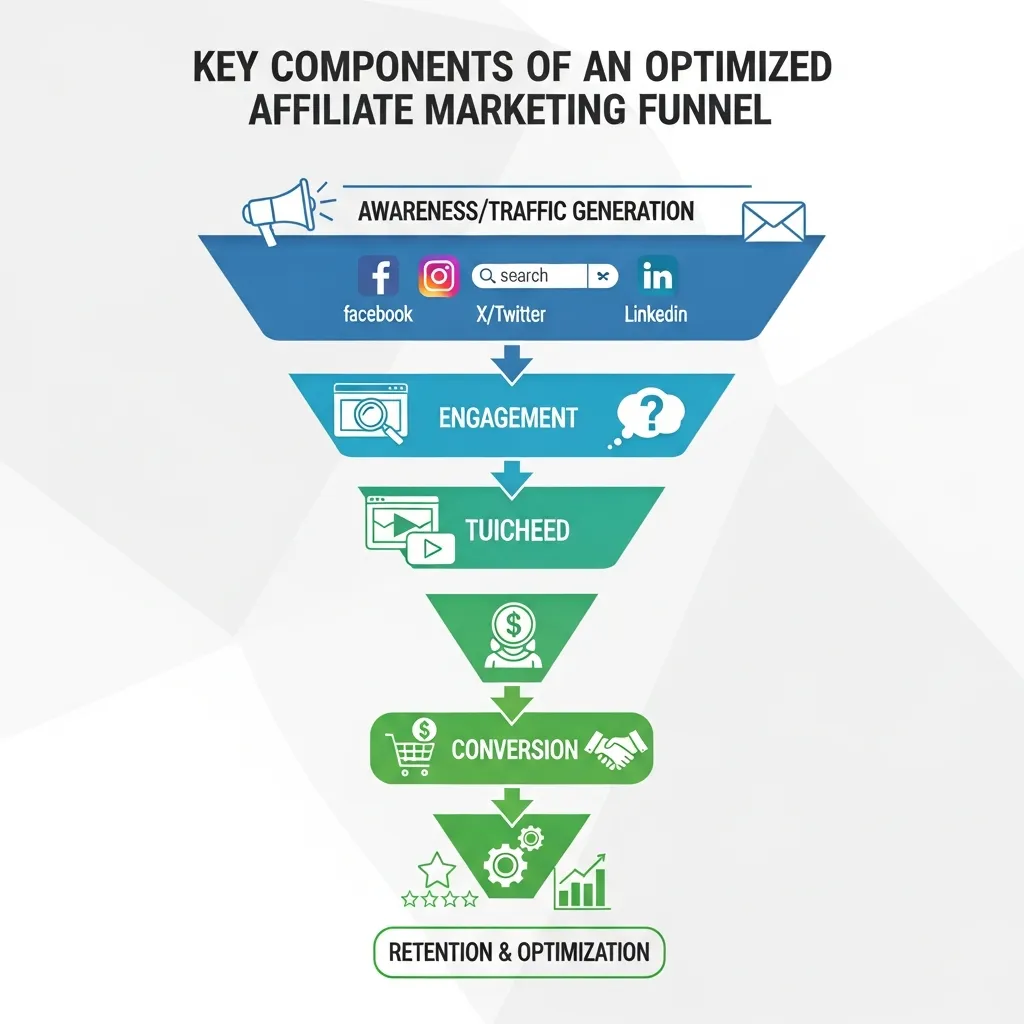
Traffic Generation: Paid vs. Organic — Which Strategy Is Right for Your Funnel?
Both paid and organic traffic have a role to play in a mature affiliate marketing funnel.
Organic traffic (SEO, content marketing, social media) takes longer to build but delivers sustainable, low-cost results over time. Paid traffic (Google Ads, Facebook Ads, native advertising) can generate immediate results but requires ongoing investment and careful ROI tracking.
Influencer collaborations occupy a middle ground—they can drive highly targeted traffic quickly, especially when the influencer’s audience closely matches your niche. For those exploring Affiliate Marketing in E-commerce, micro-influencers (10,000–100,000 followers) often deliver better engagement rates than large-scale influencers at a fraction of the cost.
Landing Page Optimization: What Makes a Landing Page Convert?
Your landing page is the conversion engine of your affiliate marketing funnel. Key elements of a high-converting landing page include:
- A clear, benefit-focused headline
- A concise value proposition above the fold
- Social proof (testimonials, ratings, trust badges)
- A single, prominent CTA
- Full mobile responsiveness
With over 60% of web traffic now coming from mobile devices (Statista, 2024), a landing page that isn’t optimized for mobile is actively losing conversions.
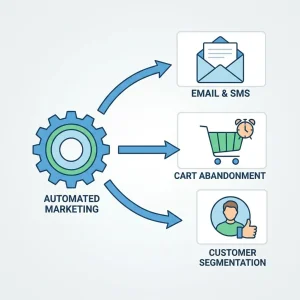
Email Marketing Automation: How Do You Personalize Email Campaigns at Scale?
Email remains one of the highest-ROI channels in digital marketing, returning an average of $36 for every $1 spent (Litmus, 2023). Effective email automation within your affiliate marketing funnel involves:
- Audience segmentation: Grouping subscribers by behavior, interests, or stage in the funnel
- Personalized campaigns: Tailoring content and offers based on subscriber data
- Performance tracking: Monitoring open rates, click-through rates, and conversion rates to identify drop-off points
Content Strategy: What Content Types Work Best for an Affiliate Marketing Funnel?
A diverse content strategy keeps your audience engaged at every stage. The most effective formats for affiliate marketing funnels include:
- Long-form blog posts: In-depth reviews, how-to guides, and comparison articles
- Video content: Tutorials, unboxings, and product demonstrations
- Infographics: Visual breakdowns of complex topics that earn backlinks and shares
- Email newsletters: Regular value-driven updates that keep subscribers engaged between purchases
Measuring and Optimizing Your Affiliate Marketing Funnel
What KPIs Should You Track in an Affiliate Marketing Funnel?
Tracking the right metrics is essential to improving your affiliate marketing funnel over time. The most important KPIs include:
- Conversion rate: The percentage of visitors who complete the desired action
- Click-through rate (CTR): How often users click your affiliate links relative to total impressions
- Return on investment (ROI): Revenue generated versus money spent on traffic and tools
- Customer Lifetime Value (LTV): Total revenue generated from a customer over their relationship with the brand
LTV is particularly relevant for Affiliate Marketing in E-commerce, where recurring purchases or subscription-based products can dramatically increase total commissions earned.
How Does A/B Testing Improve Affiliate Funnel Performance?
A/B testing (split testing) is the practice of comparing two versions of a funnel element to determine which performs better. Common elements to test include:
- Headlines and subheadings
- CTA button copy, color, and placement
- Landing page layouts
- Email subject lines
Even small improvements add up significantly at scale. A 1% increase in conversion rate across high-traffic pages can translate to meaningful revenue gains.
How Do Data Reporting Tools Help Optimize an Affiliate Marketing Funnel?
Data Reporting is the backbone of continuous funnel improvement. Tools like Google Analytics 4, ClickFunnels, Voluum, and affiliate-specific dashboards provide granular insights into user behavior, traffic sources, and conversion paths.
Effective Data Reporting practices include:
- Setting up goal tracking to monitor funnel completions
- Using heatmaps (e.g., Hotjar) to understand where users drop off on landing pages
- Building regular reporting dashboards to identify trends and anomalies
- Iterating on underperforming funnel stages based on data, not assumptions
Affiliate Marketing Funnel Best Practices
Choosing the Right Niche and Products
Niche selection determines the ceiling of your affiliate marketing funnel. A profitable niche balances audience size, purchase intent, and commission potential. Avoid spreading your funnel across too many unrelated products—depth beats breadth in affiliate marketing.
Understanding the Difference Between a Marketplace vs eCommerce Website
This distinction matters when choosing which affiliate programs to join. A marketplace (like Amazon or eBay) aggregates products from multiple sellers, offering breadth and familiarity but typically lower commission rates. An eCommerce website (a brand’s own online store) usually offers higher commissions and more promotional support but requires more effort to build audience trust around a less recognizable brand.
In a Marketplace vs eCommerce Website context, the right choice depends on your niche, your audience’s familiarity with the brand, and the commission structure. Many successful affiliates use both—marketplace programs for volume, direct eCommerce programs for margin.
Building Strong Merchant Relationships
Direct relationships with merchants unlock better commission rates, exclusive deals, and early access to new products. Reach out proactively to affiliate managers, share your traffic data, and demonstrate the quality of your audience. Strong relationships often translate into custom landing pages and higher-converting promotional materials.
Staying Compliant With Regulations
The FTC requires affiliates to disclose their relationships with merchants clearly. Non-compliance can result in penalties and audience trust damage. Always include clear affiliate disclosure statements on your content.
Common Affiliate Marketing Funnel Challenges—and How to Solve Them
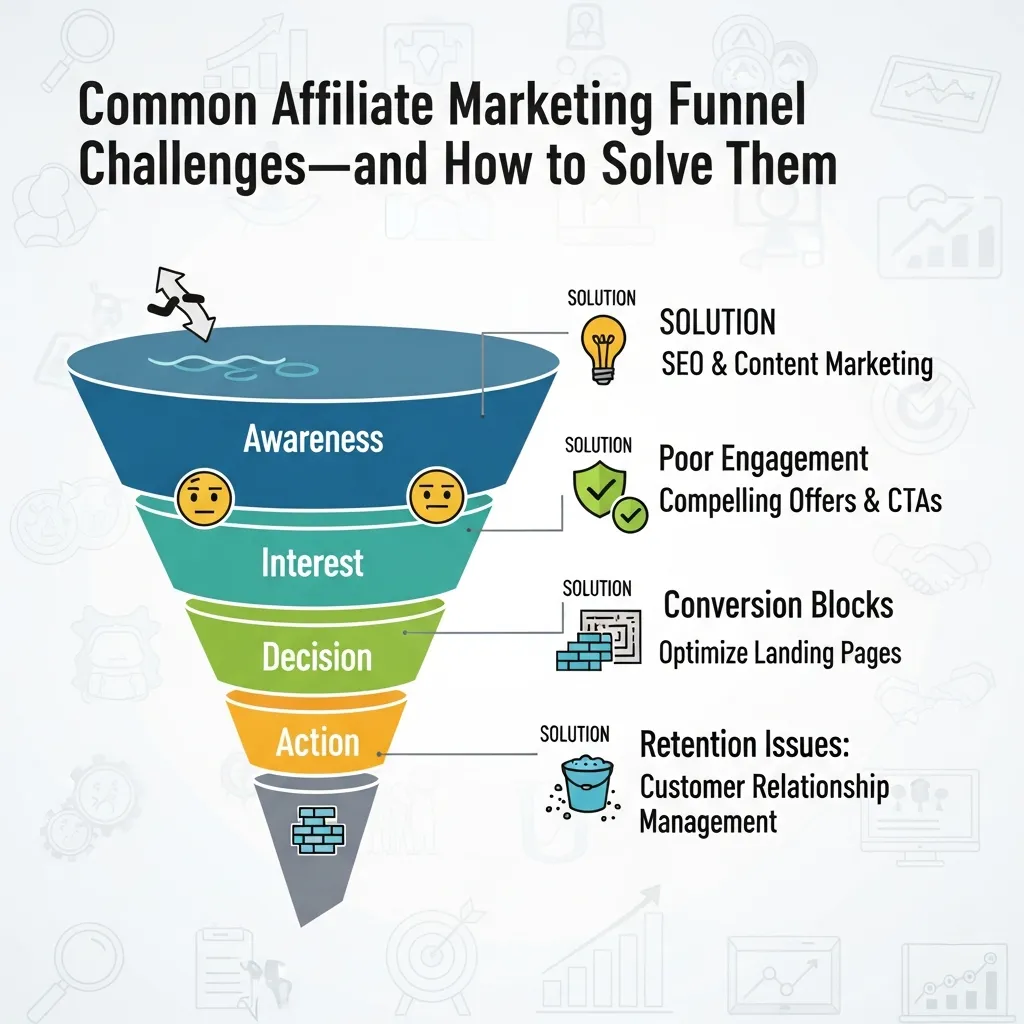
Low Conversion Rates
Low conversions usually point to a mismatch between your traffic and your offer, or a poorly optimized landing page. Audit each stage of your affiliate marketing funnel, test your landing page elements, and ensure your offer aligns with the specific problem your audience is trying to solve.
Attracting Quality Traffic
High traffic volume means nothing without quality. Focus on targeting keywords and audience segments with strong purchase intent. Use Data Reporting tools to identify which traffic sources deliver the highest conversion rates, then double down on those channels.
Adapting to Algorithm Changes
Search engine and social media algorithms change frequently. Affiliates who rely exclusively on one traffic source are vulnerable. Diversify your traffic strategy across SEO, email, paid, and social channels to build resilience into your affiliate marketing funnel.
Conclusion
An affiliate marketing funnel isn’t a single tactic—it’s a system. Each stage builds on the last, and every component plays a role in moving prospects closer to conversion. The affiliates who consistently generate income are those who treat their funnel as an evolving asset: tracking performance through Data Reporting, testing consistently, and adapting as the market shifts.
The fundamentals remain constant: attract the right audience, earn their trust, present the right offer at the right time, and retain them after the sale. Apply those principles across every stage of your affiliate marketing funnel, and the results will follow.
Start by auditing your current funnel against the framework in this guide. Identify the weakest stage, prioritize fixing it, and measure the impact before moving on. Small, data-driven improvements compound quickly—and that’s how sustainable affiliate income is built.
Frequently Asked Questions
1. What is an affiliate marketing funnel?
An affiliate marketing funnel is a structured marketing system that guides potential customers through a series of steps—from first discovering your content to clicking your affiliate link and completing a purchase. It typically includes awareness, engagement, decision, and retention stages.
2. Why does an affiliate marketing funnel matter for online income?
An affiliate marketing funnel increases consistency and predictability in your earnings. Rather than relying on random traffic, a funnel nurtures prospects deliberately, resulting in higher conversion rates and more stable commissions over time.
3. How many stages does an affiliate marketing funnel have?
Most affiliate marketing funnels have four stages: Awareness (top of funnel), Interest/Engagement (middle of funnel), Decision (bottom of funnel), and Action/Retention (post-conversion). Each stage requires different content and strategies.
4. What is the best traffic source for an affiliate marketing funnel?
There’s no single best source—it depends on your niche, budget, and goals. SEO-driven blog content offers sustainable long-term traffic, while paid ads provide faster results. Most successful affiliates combine organic and paid strategies for maximum reach and efficiency.
5. How does email marketing fit into an affiliate marketing funnel?
Email marketing powers the middle and bottom stages of the funnel. Once a prospect joins your email list via a lead magnet, automated sequences deliver value, build trust, and present affiliate offers at the right moment—resulting in significantly higher conversion rates than cold traffic.
6. What is the role of Data Reporting in affiliate funnel optimization?
Data Reporting tools allow you to track which funnel stages are underperforming, where users are dropping off, and which traffic sources are generating the highest ROI. This data enables targeted improvements rather than guesswork-based optimization.
7. What’s the difference between a Marketplace vs eCommerce Website in affiliate marketing?
A marketplace (like Amazon) aggregates many sellers and offers built-in trust but lower commissions. An eCommerce website is a brand’s standalone store, typically offering higher commission rates but requiring more effort to build trust with your audience. Many affiliates use both to balance volume and margin.
8. How does affiliate marketing work in e-commerce specifically?
Affiliate Marketing in E-commerce involves promoting physical or digital products sold through online stores. Affiliates earn a commission on each sale driven through their unique link. E-commerce affiliate programs often offer recurring revenue potential, especially for subscription-based products.
9. How do I improve low conversion rates in my affiliate marketing funnel?
Low conversion rates are usually caused by a traffic-offer mismatch, weak CTAs, or a poorly optimized landing page. Audit each funnel stage, A/B test your landing page elements, and ensure your offer directly addresses your audience’s pain points.
10. How do I choose the right products for my affiliate marketing funnel?
Choose products that are relevant to your audience’s needs, have a proven track record of converting, and offer competitive commission rates. Prioritize products you’ve used personally or can honestly recommend—authenticity significantly impacts conversion rates.
11. How important is mobile optimization for an affiliate marketing funnel?
Extremely important. Over 60% of web traffic comes from mobile devices (Statista, 2024). A landing page or email sequence that doesn’t render properly on mobile will lose a significant portion of potential conversions at every funnel stage.
12. How do I stay compliant while running an affiliate marketing funnel?
The FTC requires clear disclosure of affiliate relationships in the U.S. Always include an affiliate disclosure statement at the top of relevant blog posts, in email campaigns, and on landing pages. Staying compliant protects both your audience’s trust and your business’s legal standing.