Mastering Email Marketing for Dropshipping Growth
Email marketing for dropshipping is a highly effective way to build customer relationships, recover lost sales, and drive repeat purchases. By implementing targeted campaigns, automation, and smart list-building strategies, dropshippers can significantly increase their revenue without relying solely on expensive paid advertisements.
Running a successful dropshipping store requires more than just finding winning products and running social media ads. You need a reliable way to communicate with your audience, build trust, and encourage repeat purchases. This is where email marketing for dropshipping becomes an absolute necessity for long-term growth.
Dropshipping is an e-commerce model where you sell products without holding any physical inventory. When a customer places an order, you purchase the item from a third-party supplier who ships it directly to the buyer. Because the barrier to entry is low, the market is highly competitive. Standing out requires building a loyal customer base, and direct communication is the best way to achieve that.
In the broader scope of digital marketing for e-commerce, email remains a powerhouse. While algorithms change and ad costs fluctuate, your email list is an asset you completely own. It allows you to reach your customers directly in their inboxes, providing a stable foundation for sales.
Email marketing for dropshipping is particularly crucial because profit margins can sometimes be slim. Paying to acquire a customer once through ads is standard, but getting them to buy a second or third time for nearly zero additional marketing cost is how you build a profitable business. Establishing a solid email strategy will help you maximize the lifetime value of every customer you acquire.
Building Your Email List for Dropshipping
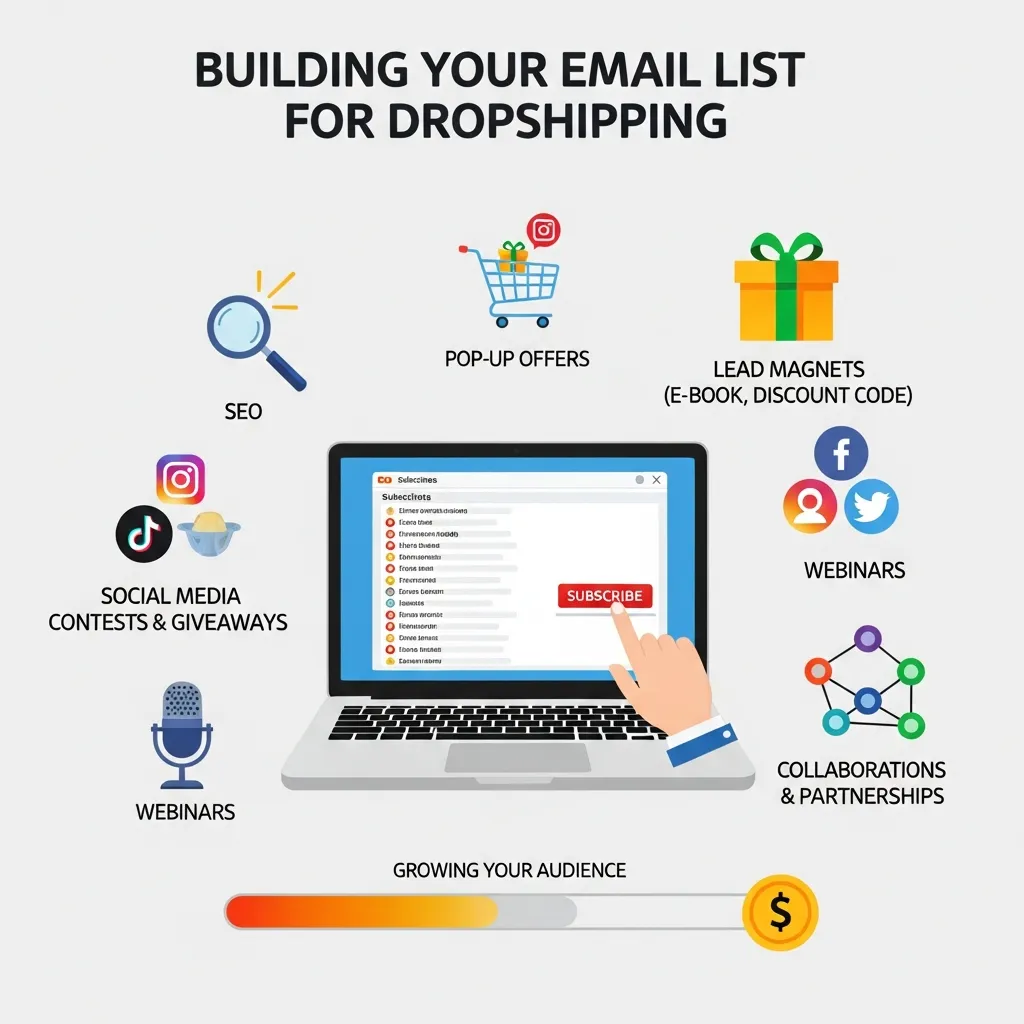
Before you can send high-converting emails, you need a list of engaged subscribers. Growing your list requires offering value in exchange for a visitor’s contact information.
Lead Magnets and Opt-in Strategies
A lead magnet is a free incentive you offer potential customers in exchange for their email addresses.
Discounts and Promotions
The most common and effective lead magnet in e-commerce is a discount code. Offering 10% off a first order or free shipping provides immediate value and encourages hesitant shoppers to complete their purchases.
Exclusive Content and Guides
Depending on your niche, educational content can be a great draw. If you sell fitness gear, a free workout guide can attract your ideal audience. This helps build brand authority and trust right from the start.
Contests and Giveaways
Running a contest where visitors enter by providing their email address can rapidly grow your list. Offer one of your popular products as the prize. Just be sure to nurture these leads carefully, as contest entrants are sometimes less motivated to buy than standard shoppers.
Website Pop-ups and Banners
Pop-ups are highly effective when timed correctly. Use exit-intent pop-ups to capture visitors right as they attempt to leave your site. You can also use non-intrusive banner bars at the top or bottom of your website to constantly promote your email newsletter.
Social Media Integration
Leverage your social media following to grow your list. Add links to your email sign-up page in your Instagram or TikTok bio. You can also run lead-generation ads on platforms like Facebook to collect emails directly within the app.
Utilizing Order Confirmation Pages
Once a customer completes a purchase, they are highly engaged. Use the order confirmation page to encourage them to opt into your newsletter for future updates, VIP discounts, or product care tips.
Crafting Effective Email Campaigns for Dropshipping
The core of email marketing for dropshipping involves sending the right message at the right time. Creating specific campaigns will help you guide customers through the buying journey.
Welcome Series
Your welcome series is the first impression a new subscriber gets of your brand.
Introduction to your brand
Start by thanking them for joining and sharing your brand’s story. Explain what makes your store unique and why they should trust your product selection.
Highlighting best sellers
Point new subscribers toward your most popular products. Since these items already have proven demand, they are excellent entry points for new buyers.
Setting expectations
Let subscribers know how often you will email them and what kind of content they will receive. This reduces spam complaints and keeps your audience engaged.
Abandoned Cart Recovery
Shoppers abandon carts for many reasons. An abandoned cart flow is a crucial part of email marketing for dropshipping.
Timely reminders
Send the first reminder email within a few hours of the cart being abandoned. A simple “Did you forget something?” message often does the trick.
Incentives for completion
If the first email doesn’t work, follow up a day later with a small discount or free shipping offer to sweeten the deal.
Addressing common concerns
Sometimes customers leave because they are unsure about shipping times or return policies. Include brief FAQs or customer reviews in your recovery emails to build confidence.
Post-Purchase Follow-ups
The relationship doesn’t end after the sale. Post-purchase emails reduce buyer’s remorse and build loyalty.
Order confirmation and shipping updates
Keep customers informed about their order status. Since dropshipping shipping times can sometimes be longer, clear communication prevents customer service headaches.
Product reviews and testimonials
A few weeks after the product arrives, ask the customer for a review. User-generated content is incredibly valuable for social proof.
Upselling and cross-selling
Recommend products related to their recent purchase. If they bought a camera, send an email suggesting a tripod or a protective case.
Promotional Campaigns
Regular promotional broadcasts keep your store top-of-mind.
New product announcements
Whenever you add exciting new items to your store, let your list know. Provide high-quality images and compelling descriptions.
Seasonal sales and holidays
Capitalize on shopping holidays like Black Friday, Cyber Monday, and Valentine’s Day. Create themed email campaigns to drive massive traffic.
Flash sales and limited-time offers
Create a sense of urgency with 24-hour flash sales. Urgency forces subscribers to make quick buying decisions.
Re-engagement Campaigns
Over time, some subscribers will stop opening your emails.
Identifying inactive subscribers
Use your email software to segment users who haven’t opened an email in the last 90 days.
Offering special incentives
Send a “We miss you” email featuring a steep discount to tempt them back into purchasing.
Surveying for feedback
If they still don’t engage, send a quick survey asking how you can improve. If they remain inactive, remove them from your list to protect your deliverability rates.
Advanced Email Marketing Strategies for Dropshipping
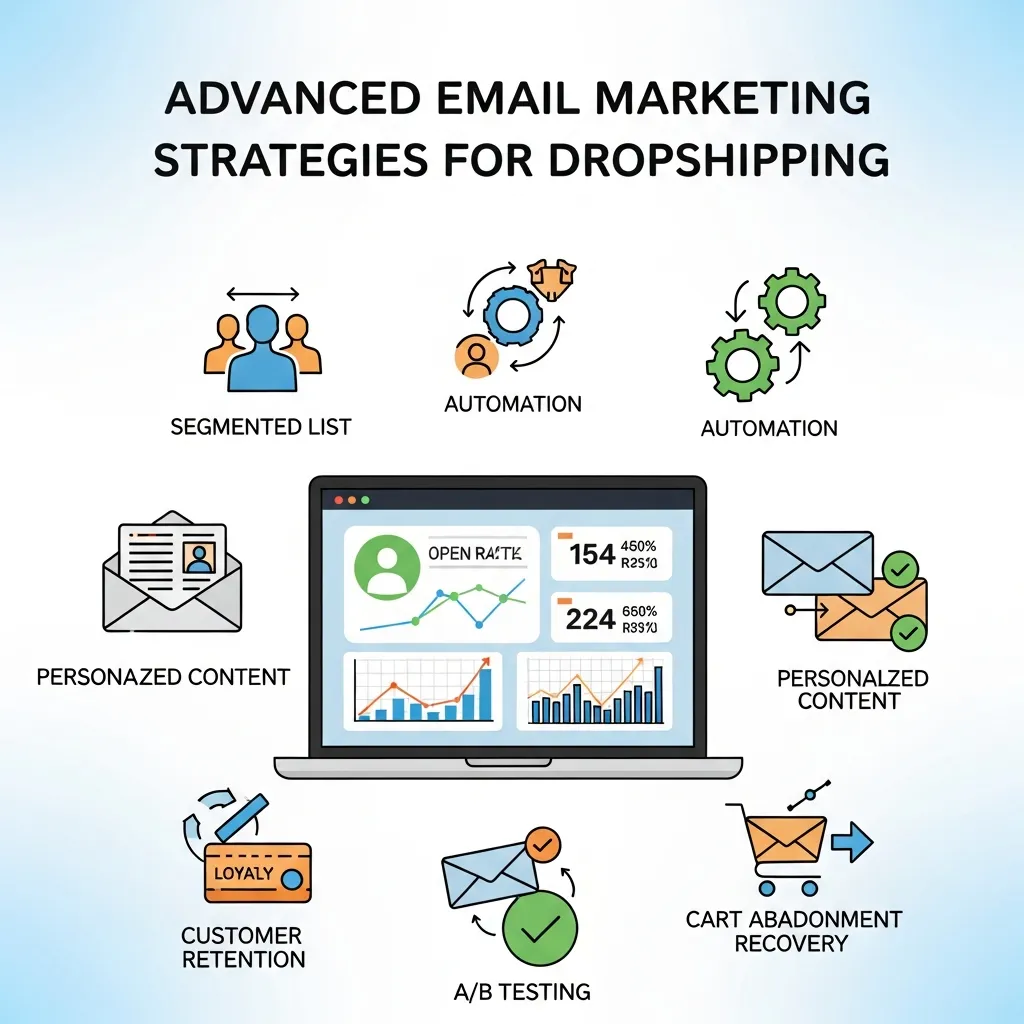
Once you master the basics, you can elevate your revenue by utilizing more sophisticated tactics.
Segmentation and Personalization
Treating every subscriber identically leads to lower conversion rates.
Demographics and purchase history
Group your audience based on past purchases. You can send highly relevant offers to people who have specifically bought women’s apparel versus home goods.
Browsing behavior
Segment users based on the specific pages they browse on your site. If they constantly look at watches but never buy, send them a watch-specific email.
Email engagement
Reward your most active subscribers with VIP early access to sales or special loyalty programs.
A/B Testing for Optimization
Never guess what works; let the data tell you.
Subject lines
Test two different subject lines to see which generates a higher open rate. Try testing a question against a bold statement.
Call-to-actions
Experiment with the text on your buttons. “Shop Now” might perform differently than “Claim Your Discount.”
Email content and design
Test plain-text emails against highly designed, image-heavy emails to see what your specific audience prefers.
Marketing Automation
Automation allows you to make money while you sleep.
Workflow setup
Map out automated sequences for your welcome series, cart abandonment, and post-purchase flows.
Trigger-based emails
Set up emails that trigger based on specific actions, such as clicking a specific link or celebrating a birthday.
Integrating with Digital Marketing for E-commerce
Email marketing for dropshipping should not exist in a vacuum. Coordinate your email efforts with your paid social ads, SMS marketing, and organic social media content to create a cohesive digital marketing for e-commerce ecosystem.
Measuring Success and Analytics in Email Marketing for Dropshipping
To improve your campaigns, you must track your performance data meticulously.
Key Performance Indicators (KPIs)
Open Rate
This measures the percentage of people who open your email. It indicates how effective your subject lines are.
Click-Through Rate (CTR)
This tracks how many people clicked a link inside your email. A high CTR means your content and offers are compelling.
Conversion Rate
The percentage of email recipients who actually completed a purchase. This is the ultimate metric for success.
Unsubscribe Rate
Keep an eye on how many people leave your list after a campaign. A high rate indicates you might be sending irrelevant content or mailing too frequently.
Return on Investment (ROI)
Calculate the revenue generated from email marketing against the cost of your email software to ensure profitability.
Utilizing Analytics Tools
Most modern email service providers have built-in dashboards. Connect your email platform directly to Google Analytics to track exactly how email traffic navigates your dropshipping website.
SEO for Dropshipping Success: How Email Marketing Contributes
While email and search engine optimization seem separate, they actually work together to boost your store’s overall performance.
Driving Traffic to Your Store
Search engines notice when a website receives consistent, high-quality traffic. Sending regular emails drives bursts of visitors to your site, signaling to search engines that your store is active and popular.
Enhancing User Engagement
Visitors arriving from an email usually spend more time on your site and view more pages than cold traffic. This lower bounce rate and higher time-on-page sends positive ranking signals, heavily supporting SEO for dropshipping success.
Building Brand Authority
Regularly distributing valuable content via email encourages users to share your links or mention your brand online. This organic brand building can lead to natural backlinks, a major factor in search engine rankings.
Challenges and Solutions in Email Marketing for Dropshipping
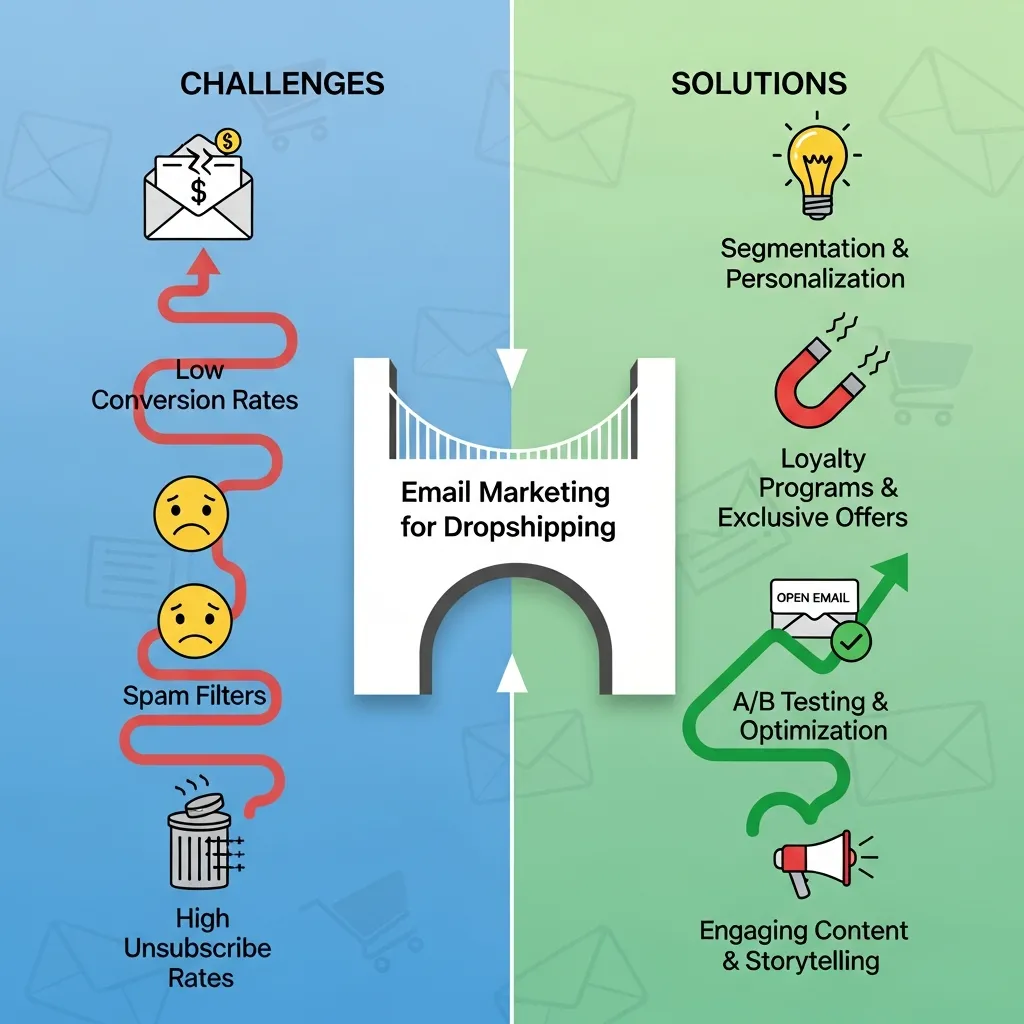
Implementing an email strategy comes with a few hurdles you must navigate.
Spam Filters
If your emails end up in the spam folder, nobody will read them. Avoid using overly promotional language in all caps, authenticate your sending domain, and regularly clean your list of inactive subscribers.
Email Fatigue
Sending too many emails will annoy your audience and lead to unsubscribes. Find a balanced sending cadence. Typically, 1-3 high-quality emails per week is optimal for e-commerce.
Data Privacy Regulations
Ensure you are compliant with laws like GDPR and CAN-SPAM. Always get explicit consent before adding someone to your list, and make sure every email includes a clear and easy way to unsubscribe.
Elevate Your Dropshipping Store Today
Email marketing for dropshipping is not just a secondary task; it is the backbone of a profitable and sustainable online business. By capturing leads, automating key flows, and sending relevant promotional campaigns, you turn one-time visitors into lifelong buyers. Start by optimizing your website to capture emails today, and watch your dropshipping revenue grow steadily over time.
FAQ
1. What is email marketing for dropshipping?
It is the process of collecting email addresses from your store visitors and sending them targeted messages, promotions, and automated flows to encourage sales and build brand loyalty.
2. Why do dropshippers need an email list?
An email list provides a direct, low-cost way to reach customers. It helps recover abandoned carts, drives repeat purchases, and reduces reliance on expensive paid advertising.
3. What is the best email marketing platform for dropshipping?
Popular choices include Klaviyo, Mailchimp, and Omnisend. Klaviyo is highly recommended for e-commerce due to its robust integration with platforms like Shopify.
4. How often should I send emails to my list?
Aim for 1 to 3 times a week. Sending too often can cause email fatigue, while sending too rarely makes subscribers forget about your brand.
5. What is a good open rate for e-commerce emails?
A healthy open rate for dropshipping and e-commerce generally falls between 15% and 25%.
6. How do I stop my dropshipping emails from going to spam?
Authenticate your domain, ask subscribers to whitelist your email address, avoid spam trigger words, and regularly remove inactive users from your list.
7. What is an abandoned cart email?
It is an automated email sent to a user who added items to their shopping cart but left your website without completing the purchase.
8. Can email marketing help with SEO for dropshipping success?
Yes. Email marketing drives engaged traffic to your website, lowering bounce rates and increasing time-on-page, which are positive signals for search engine rankings.
9. How do I get people to sign up for my email list?
Offer a lead magnet, such as a 10% discount code, free shipping, or a digital guide, in exchange for their email address.
10. What is a welcome series?
It is an automated sequence of emails sent to new subscribers to introduce your brand, set expectations, and highlight your best-selling products.
11. How can I personalize my dropshipping emails?
Use segmentation to group users based on their browsing behavior or purchase history. You can then send specific product recommendations tailored to their interests.
12. How does email fit into overall digital marketing for e-commerce?
Email works alongside social media, paid ads, and SEO. Ads bring in new traffic, while email captures that traffic and nurtures it into long-term profitability.