The Ultimate Guide to the Best Marketing Strategies for Dropshipping
Dropshipping offers an exciting pathway to start an online business with minimal upfront inventory costs. You set up a storefront, partner with suppliers, and sell products directly to consumers. However, because the barrier to entry is so low, competition is fierce. Building a beautiful website and sourcing great items is only the first step. To generate consistent sales, you need to understand and apply the best marketing strategies for dropshipping.
Without a physical storefront to attract foot traffic, your online marketing efforts act as your digital storefront window. A solid marketing plan determines whether your store thrives or gets lost in the noise. You have to actively pull customers to your site, convince them to buy, and encourage them to return.
This guide covers everything you need to know to scale your business. We will explore the best marketing strategies for dropshipping, from social media advertising to search engine optimization, email marketing, and advanced customer retention tactics. By the end of this post, you will have a clear roadmap to boost your store’s visibility and drive profitable sales.
Essential Marketing Strategies for Dropshipping Success
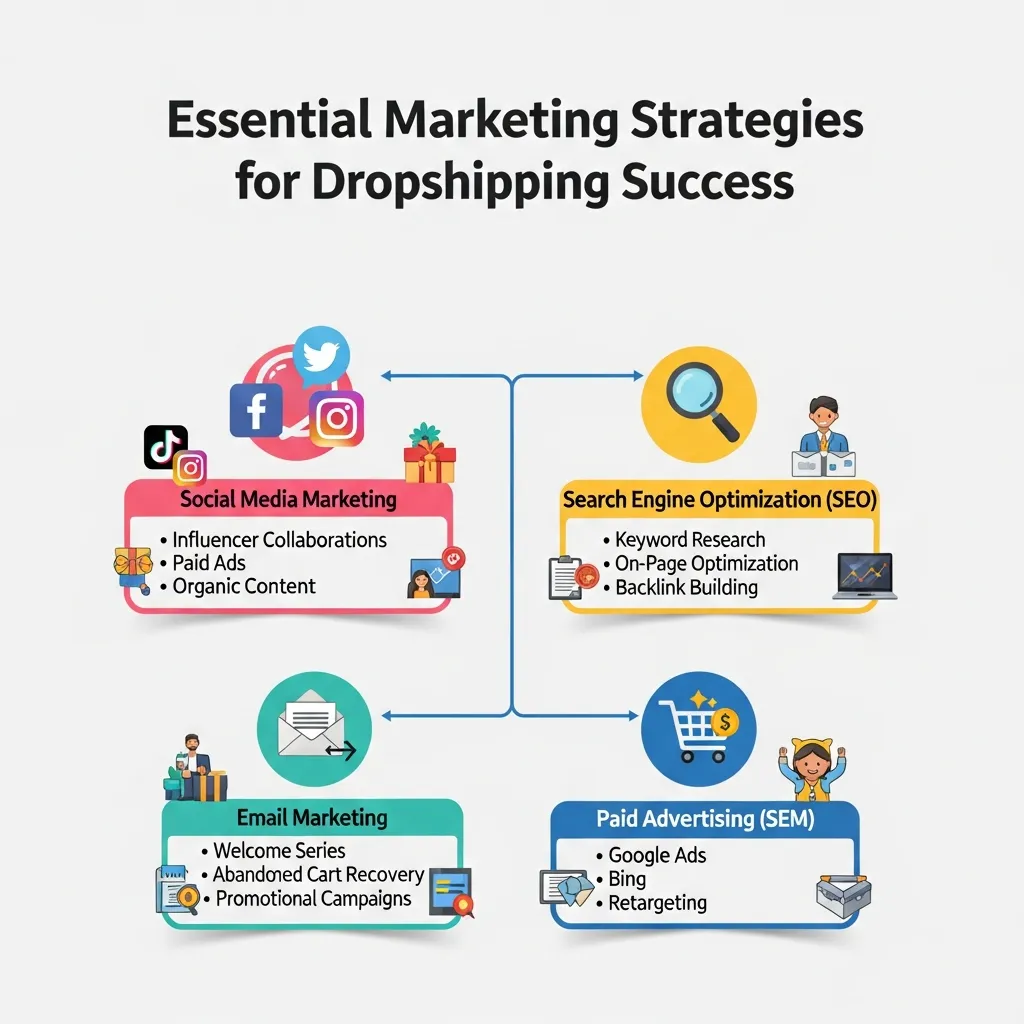
To build a profitable online store, you need a multi-channel approach. Relying on just one source of traffic is risky. Here are the most effective marketing channels you should prioritize.
Leveraging Social Media Marketing
Social media platforms are absolute goldmines for dropshipping stores. They allow you to reach highly targeted audiences based on their interests, behaviors, and demographics.
Facebook and Instagram Ads: Targeting and Retargeting
Paid advertising on Meta (Facebook and Instagram) remains one of the best marketing strategies for dropshipping. You can create visually appealing video ads that demonstrate how your product solves a problem. Use detailed interest targeting to find buyers likely to purchase your Best Dropshipping Products. Additionally, set up retargeting pixels. When someone visits your store but leaves without buying, retargeting ads will follow them across social media, reminding them to complete their purchase.
Influencer Marketing: Collaborations and ROI
Partnering with influencer marketing allows you to tap into existing, highly engaged communities. Send your products to micro-influencers (those with 10,000 to 50,000 followers) in your specific niche. They charge less than massive celebrities and often boast higher engagement rates. Track your return on investment (ROI) by giving each influencer a unique discount code to share with their audience.
Organic Social Media Engagement and Content
You do not always have to pay to play. Building an organic presence on platforms like TikTok and Instagram Reels can drive massive traffic. Post behind-the-scenes content, user-generated videos, and styling or usage tips. Engaging with your followers in the comments builds trust and brand loyalty.
Search Engine Optimization (SEO) for Dropshipping Stores
SEO is the process of improving your website so it ranks higher on search engines like Google. While ads stop working the moment you stop paying, SEO provides long-term, free traffic.
Keyword Research
Identify what your potential customers are searching for. Use tools like Google Keyword Planner or Ahrefs to find terms related to your niche. You should target broad terms as well as specific product queries. Creating content around the “best marketing strategies for dropshipping” or specific product guides will bring educated buyers to your site.
On-Page SEO: Product Descriptions, Meta Tags, and Blog Content
Do not copy and paste the generic descriptions provided by Free Dropshipping Suppliers. Search engines penalize duplicate content. Write unique, compelling product descriptions that include your target keywords naturally. Optimize your meta titles and descriptions to improve click-through rates from the search results page.
Off-Page SEO: Backlinks and Authority Building
Search engines view backlinks (links from other websites to yours) as votes of confidence. Reach out to bloggers in your niche and offer to write guest posts. Earning links from reputable sites boosts your store’s domain authority, helping all your pages rank higher.
Paid Advertising (PPC) Campaigns
Pay-per-click (PPC) advertising places your store right at the top of search results when users have high purchasing intent.
Google Ads: Search and Shopping Campaigns
Google Shopping campaigns are essential for dropshippers. They display a photo of your product, the price, and your store name directly in the search results. Because users see exactly what they are clicking on, the conversion rates tend to be very high. Standard search campaigns are also effective for capturing users searching for specific brand names or solutions.
Bing Ads: Niche Opportunities
Many dropshippers ignore Bing, focusing entirely on Google. This creates a massive opportunity. Bing Ads generally have lower costs-per-click (CPC) and less competition. If your target demographic skews slightly older, Bing can be a highly profitable channel.
Analyzing and Optimizing Ad Spend
Never set and forget your ad campaigns. Review your data weekly. Identify which keywords and demographics are driving sales and which are wasting money. Reallocate your budget to the highest-performing ads to maximize your profit margins.
Email Marketing: Building Customer Relationships
Email marketing consistently delivers one of the highest ROIs in ecommerce. It allows you to communicate directly with people who have already shown interest in your brand.
List Building Strategies: Pop-ups, Lead Magnets
You cannot send emails if you do not have a list. Offer visitors a reason to subscribe. Use exit-intent pop-ups offering a 10% discount on their first order. You can also create lead magnets, such as a free downloadable guide related to your niche, to capture email addresses.
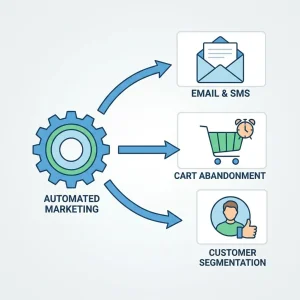
Automation: Welcome Sequences, Abandoned Carts, Promotions
Set up automated email flows to generate passive income. A welcome sequence introduces new subscribers to your brand story. An abandoned cart flow reminds shoppers of the items they left behind, recovering otherwise lost sales.
Segmentation and Personalization
Do not send the exact same email to everyone. Segment your list based on customer behavior. Send exclusive VIP discounts to repeat buyers, and send different product recommendations based on what a customer has previously purchased.
Content Marketing: Providing Value and Attracting Traffic
Content marketing involves creating valuable media to attract and engage a clearly defined audience. It is undoubtedly one of the best marketing strategies for dropshipping over the long term.
Blog Posts: Guides, Reviews, Comparisons
Start a blog on your store. If you sell outdoor gear, write guides on the best camping spots or review the Best Dropshipping Products in your inventory. This content ranks on Google, drives free traffic, and positions your brand as an authority.
Video Marketing: Product Demos, Unboxings, Tutorials
Video is highly engaging. Create unboxing videos or tutorials showing exactly how your product works. Upload these to YouTube and embed them on your product pages to increase conversion rates.
Infographics and Visual Content
People process visual information much faster than text. Create shareable infographics related to your niche. When people share your graphics on Pinterest or their own blogs, it drives referral traffic back to your store.
Advanced Marketing Tactics for Dropshipping
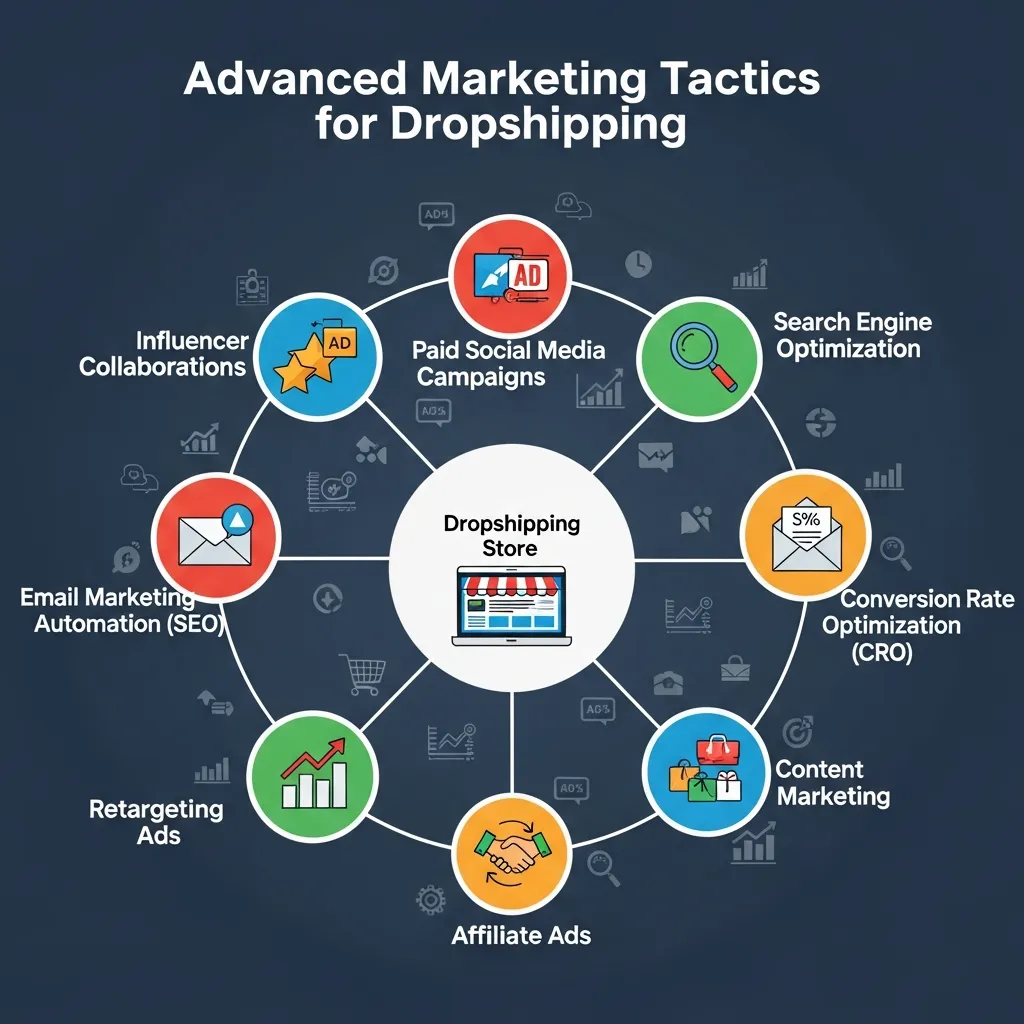
Once you have mastered the basics, it is time to implement advanced tactics to scale your revenue.
Affiliate Marketing Programs
Turn your satisfied customers and industry bloggers into a sales force. Start an affiliate program where partners earn a commission for every sale they generate through their unique tracking link. You only pay when a sale is made, making it a low-risk strategy.
Utilizing Marketplaces
Do not limit yourself to just your Shopify or WooCommerce store. List your products on marketplaces like eBay or Etsy (if applicable). This exposes your brand to millions of buyers who are already browsing these platforms with credit cards in hand.
Customer Retention Strategies: Loyalty Programs, Excellent Service
Acquiring a new customer costs significantly more than retaining an existing one. Implement loyalty programs where customers earn points for purchases, social shares, and birthdays. Combine this with exceptionally fast customer service to build a base of raving fans who buy from you repeatedly.
Finding and Working with Suppliers
Your marketing efforts will fail if your products are low quality or take months to arrive. Choosing the right partners is vital.
Identifying Free Dropshipping Suppliers
Many platforms charge hefty monthly fees just to access their supplier directories. However, you can find highly reliable Free Dropshipping Suppliers on platforms like AliExpress, CJ Dropshipping, and Zendrop. Look for suppliers offering ePacket or local warehouse shipping to ensure faster delivery times.
Evaluating Supplier Reliability and Product Quality
Never sell a product you haven’t seen yourself. Always order samples from potential suppliers. Check the shipping times, the packaging quality, and the actual product. Read reviews from other merchants to verify the supplier’s communication and reliability.
Managing Inventory and Shipping Logistics
Use inventory management software to sync your store with your suppliers in real-time. This prevents customers from ordering out-of-stock items. Be transparent about your shipping times on your website to manage customer expectations and reduce support tickets.
Best Marketing Strategies for Dropshipping
Success in dropshipping requires a diversified marketing portfolio. Relying on a single traffic source leaves your business vulnerable. The best marketing strategies for dropshipping combine short-term wins (like Facebook Ads and Google Shopping) with long-term assets (like SEO, content marketing, and email list building). By continuously testing new creatives, optimizing your website for conversions, and prioritizing customer retention, you can build a highly profitable online business.
Sustaining Growth in the Dropshipping Ecosystem
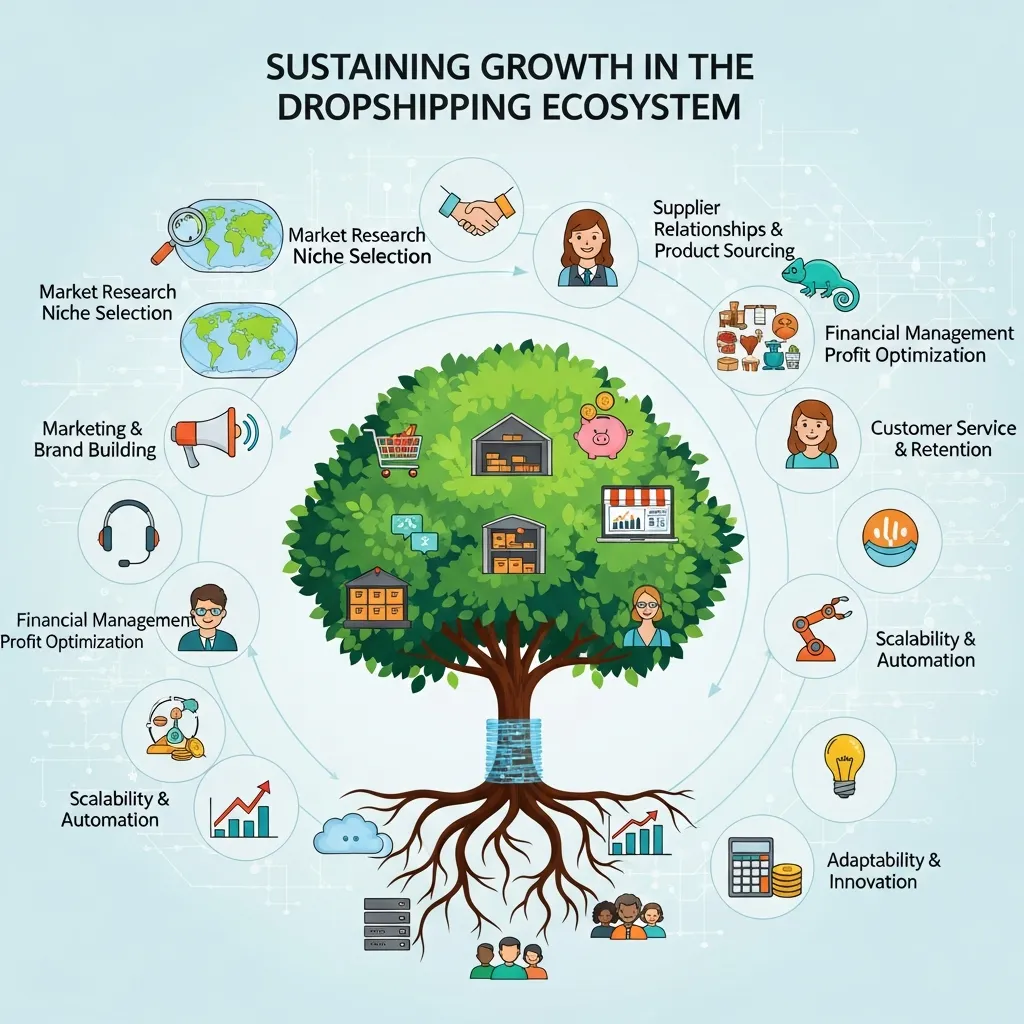
The ecommerce landscape changes rapidly. Ad costs fluctuate, and new social media platforms emerge. To sustain growth, you must remain adaptable. Keep a close eye on your analytics to understand exactly where your customers are coming from and what they are buying. Always be testing new products, fresh ad creatives, and different email subject lines. By staying committed to learning and refining your approach, you will ensure your dropshipping store remains competitive and profitable for years to come.