What Is a Loyalty Program? Benefits, Types, and Real-World Examples
In today’s highly competitive business environment, it’s not enough to attract new customers — keeping existing ones is equally vital. Companies are increasingly turning to loyalty programs as a way to encourage customer retention, boost brand engagement, and increase repeat purchases. If you’ve ever received points after shopping or been offered a discount for your next visit, you’ve likely been part of a loyalty program.
But what is a loyalty program, really? How does it work, and why is it so effective for modern businesses? This article covers everything you need to know about loyalty programs — including their meaning, different types, benefits, implementation tips, and examples of successful strategies.
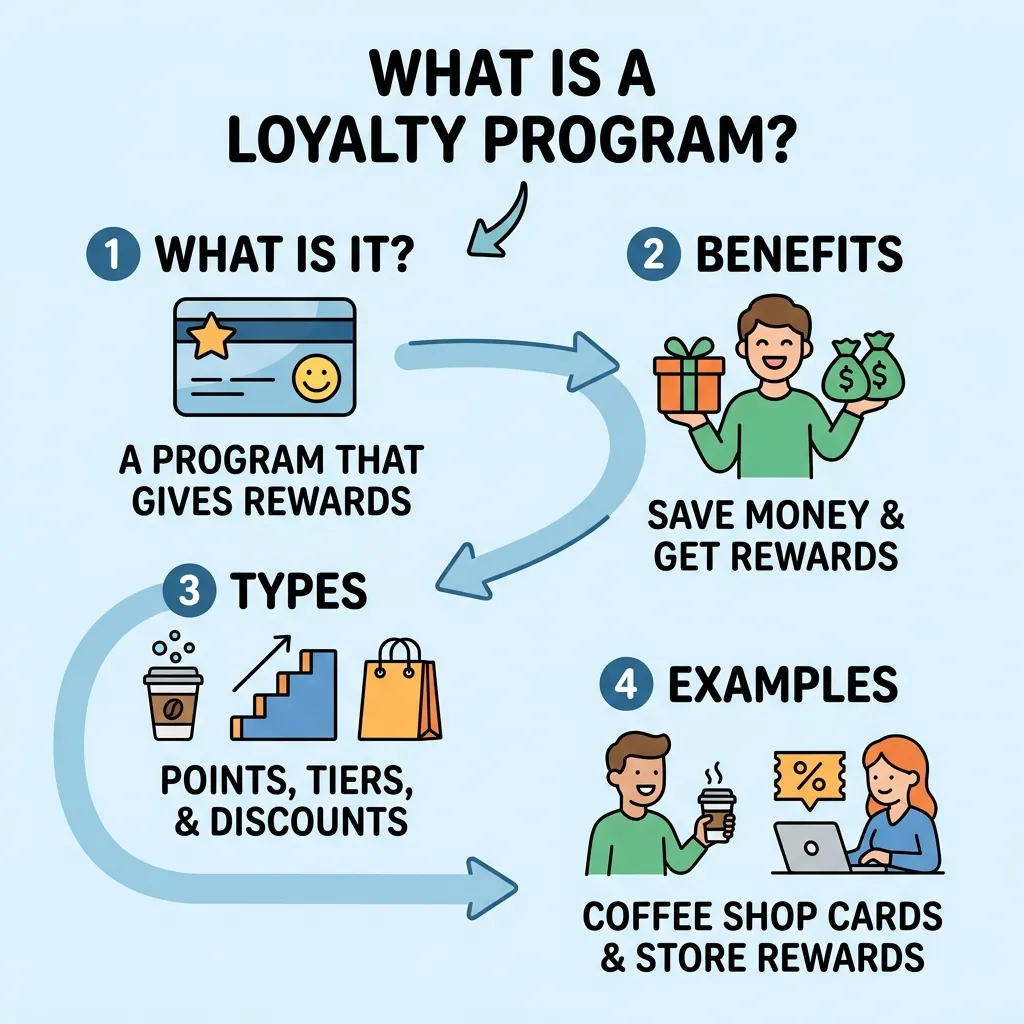
What Is a Loyalty Program?
A loyalty program is a structured marketing strategy designed to reward customers for their repeat business, engagement, and continued relationship with a brand. These programs encourage customers to keep purchasing products or services by offering incentives such as points, discounts, cashback, freebies, early access, or exclusive perks.
The main idea behind these programs is simple: when customers feel valued and appreciated, they are more likely to choose the same brand again instead of switching to a competitor. Businesses can also use customer activity and purchase data to create more personalized offers and experiences.
Depending on the business model, rewards may be provided after every purchase, when customers reach specific spending levels, or when they complete actions such as referrals, reviews, or social media engagement. A well-designed program creates value for both the customer and the business by encouraging repeat interactions while providing meaningful benefits.
Why Are Loyalty Programs Important?
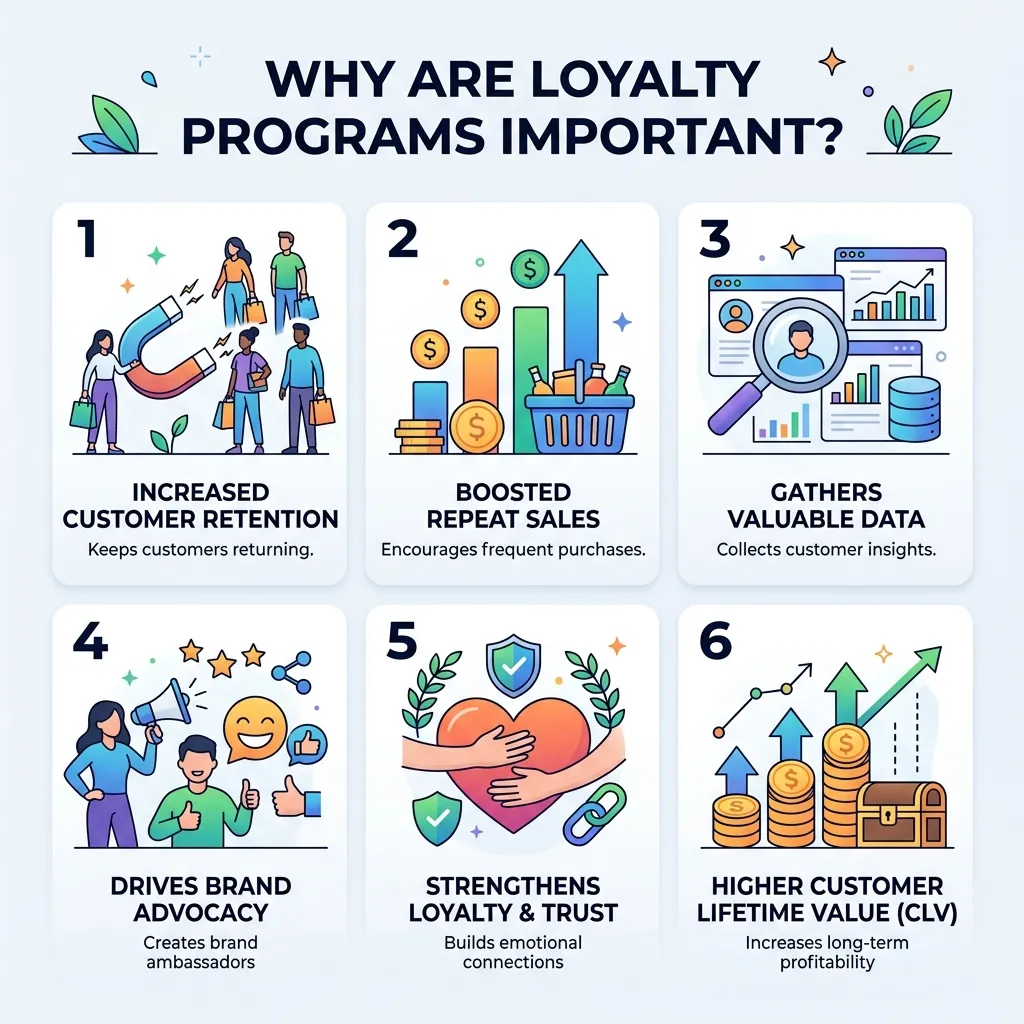
Loyalty programs go beyond offering occasional discounts. When designed effectively, they can help businesses build stronger relationships, increase engagement, and create a greater sense of connection between customers and the brand.
Customers who receive relevant rewards and personalized benefits may have more reasons to return and continue interacting with a business. At the same time, companies can use insights from customer purchases and engagement to better understand preferences and improve their marketing strategies.
Core Objectives of Loyalty Programs:
- Increase Customer Retention: Rewarding existing customers gives them more reasons to return and continue purchasing from the brand.
- Boost Customer Lifetime Value: Encouraging frequent purchases can increase the total revenue generated by each customer over time.
- Enhance Brand Loyalty: Consistent rewards and positive experiences can encourage customers to choose a brand repeatedly.
- Improve Customer Data Collection: Purchase and engagement data can help businesses understand customer behavior and create more personalized marketing campaigns.
- Encourage Word-of-Mouth Marketing: Satisfied customers may recommend the brand to friends, family, and colleagues, helping generate new customers.
- Increase Customer Engagement: Challenges, personalized rewards, exclusive offers, and special events can motivate customers to interact with the brand more frequently.
- Create a Competitive Advantage: A valuable rewards experience can help a business stand out when customers are comparing similar products or services.
Types of Loyalty Programs
Not all loyalty programs are created equal. Choosing the right type depends on your business goals, target audience, and industry. Here are the most common types:
1. Points-Based Loyalty Programs
This is the most widely used type of loyalty program. Customers earn points for every purchase, which they can later redeem for discounts, free products, or other rewards.
Best For: Retail stores, coffee shops, online marketplaces.
2. Tiered Loyalty Programs
In this model, customers achieve different “tiers” based on their activity level or spending. Each tier unlocks new rewards, with higher tiers offering more exclusive benefits.
Best For: Brands with frequent repeat customers, luxury brands, airlines.
3. Paid Membership Programs
Customers pay a recurring fee to access exclusive benefits such as free shipping, members-only deals, or early access to products.
Best For: E-commerce, subscription services, and big-box retailers.
4. Cashback Loyalty Programs
Instead of earning points, customers get a percentage of their purchase back as store credit or direct cashback.
Best For: Financial institutions, online platforms, retail chains.
5. Referral Programs
This program incentivizes customers to refer friends or family in exchange for a reward. Both the referrer and referee often benefit.
Best For: Service-based businesses, SaaS companies, startups.
6. Gamified Loyalty Programs
Gamification introduces elements like challenges, leaderboards, and progress tracking to make the rewards system more interactive and engaging.
Best For: Fitness brands, apps, and entertainment platforms.
7. Coalition Loyalty Programs
Several businesses join forces to offer customers a unified program, where points earned at one brand can be redeemed at another.
Best For: Travel alliances, shopping malls, grocery chains.
8. Value-Based Loyalty Programs
These programs reward customers by aligning with shared values, such as donating to a charity for every purchase or letting customers donate their rewards.
Best For: Mission-driven companies and nonprofit-aligned brands.
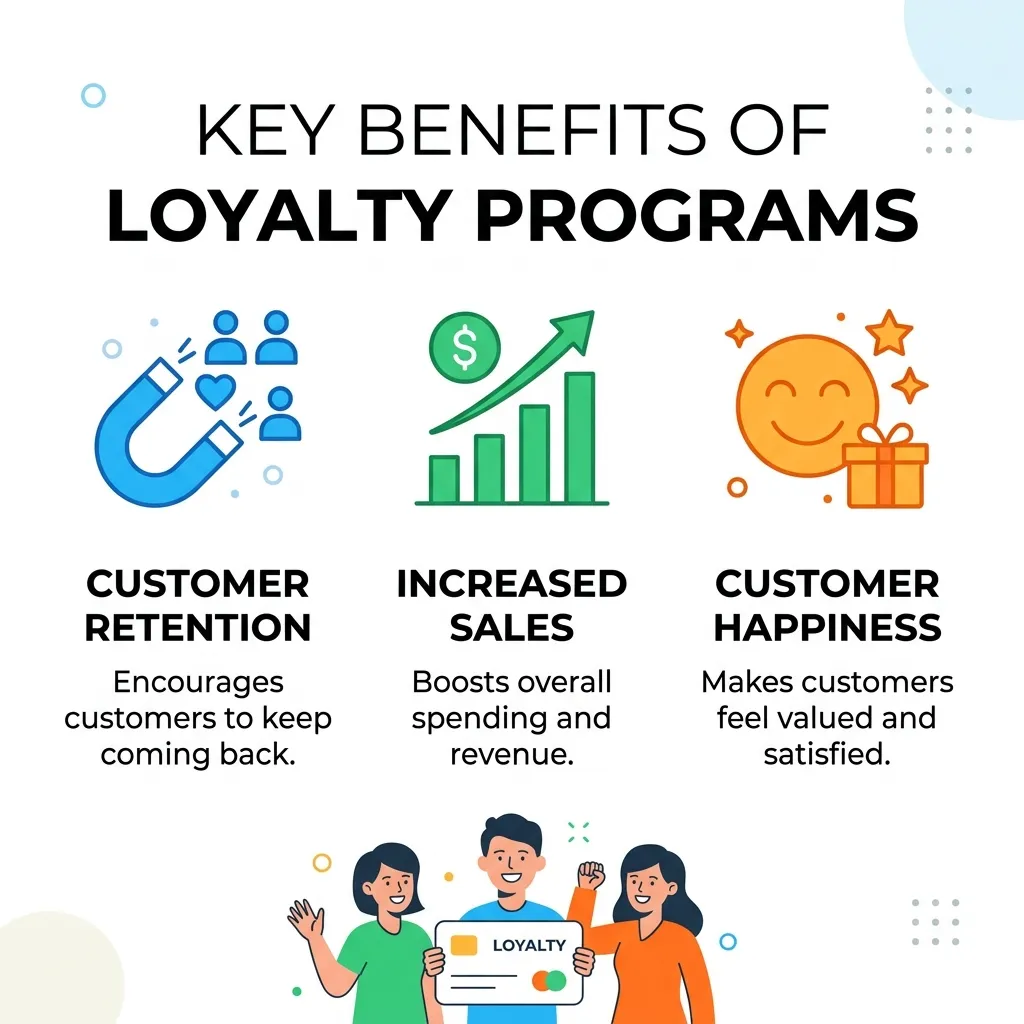
Key Benefits of Loyalty Programs
1. Increased Repeat Business
When customers know they’re being rewarded, they’re more likely to return. This can increase your customer lifetime value significantly.
2. Higher Customer Engagement
Programs that include personalized recommendations and rewards based on user behavior tend to see better engagement and conversion rates.
3. Valuable Customer Insights
By tracking how customers earn and redeem rewards, businesses gather detailed behavioral data that can be used for targeted marketing and product development.
4. Stronger Brand Affinity
Loyalty programs help create emotional bonds. Customers who feel recognized and appreciated are more likely to stay loyal during price wars or market changes.
5. Competitive Advantage
A well-executed loyalty program can be the deciding factor for a customer choosing your brand over another.
How to Create an Effective Loyalty Program
Designing a successful loyalty program requires careful planning. Here’s a step-by-step approach to get you started:
Step 1: Define Your Goals
Determine what you want to achieve: more repeat purchases, increased average order value, higher retention, or stronger customer data.
Step 2: Know Your Customers
Use customer segmentation and buyer personas to understand what motivates your audience. Some may value discounts, while others prefer exclusive access.
Step 3: Choose the Right Model
Pick the loyalty program type that fits your business structure. For instance, a points-based system works well for frequent transactions, while a tiered model is ideal for high-ticket purchases.
Step 4: Keep It Simple
Avoid making the rules overly complicated. Clearly communicate how customers can earn and redeem rewards. If it’s confusing, they won’t participate.
Step 5: Use Technology
Use customer relationship management (CRM) tools and loyalty program software to automate reward tracking, customer segmentation, and email marketing.
Step 6: Promote Your Program
Make sure your customers know about the program. Promote it on your website, social media, checkout pages, receipts, and newsletters.
Step 7: Measure and Optimize
Track metrics like program enrollment, redemption rates, average spend, and customer retention. Continuously refine the program based on performance.
Read our latest blog : SMS Campaign Automation
Real-World Loyalty Program Examples
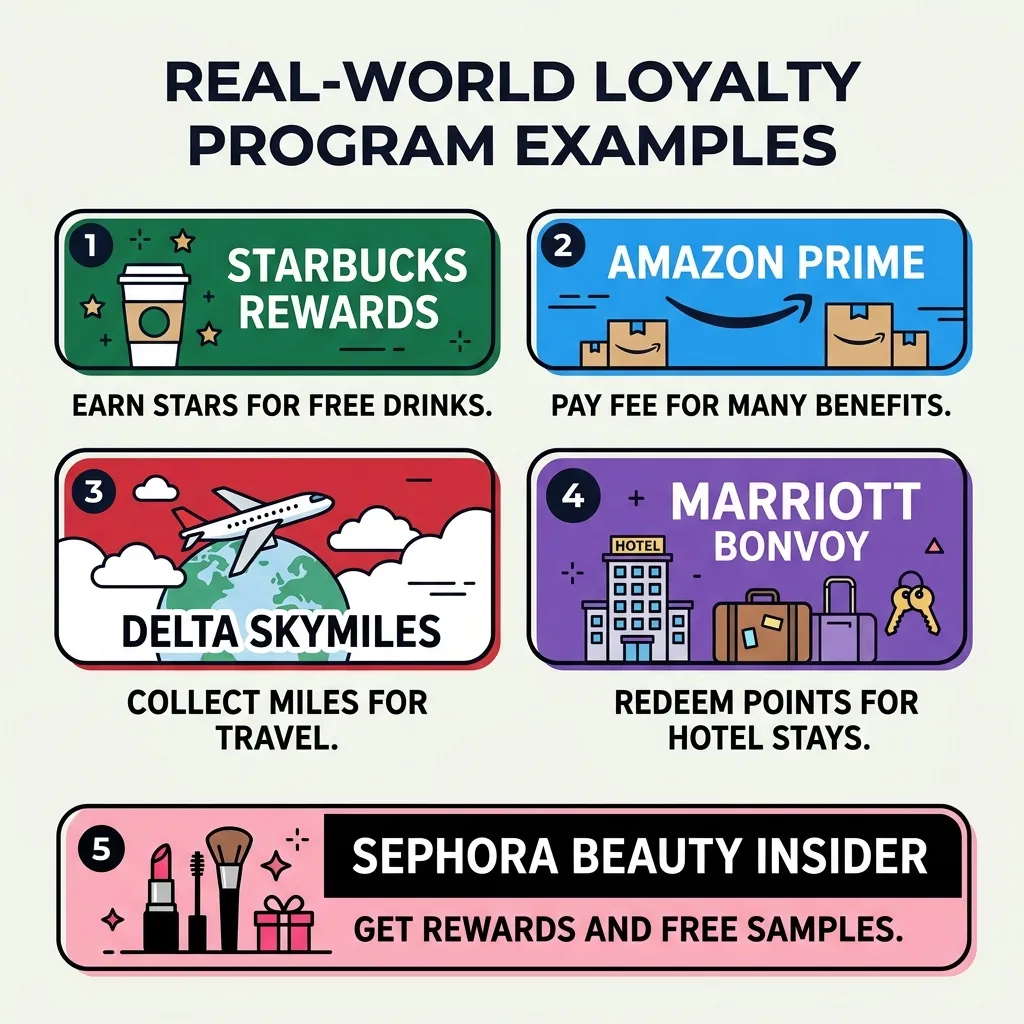
To better understand how these strategies work in practice, it helps to look at examples from different industries. Businesses use different reward structures depending on their customers, purchasing behavior, and business goals. Some focus on frequent purchases, while others use exclusive benefits, gamification, or personalized incentives to increase engagement.
- Airlines: Frequent flyer programs reward travelers with miles or points based on flights and spending. Customers can often redeem these rewards for flights, upgrades, priority services, or other travel benefits. Tiered membership levels may also provide additional perks to frequent travelers.
- Grocery Stores: Shoppers can earn points or receive personalized discounts based on their purchases. These rewards may be converted into vouchers, discounts, fuel savings, or special offers. Grocery businesses can also use purchase data to provide more relevant promotions.
- Streaming Services: Subscription-based platforms can use exclusive perks to encourage continued membership. Benefits may include early access to content, special offers, merchandise discounts, or rewards for long-term subscribers and engaged users.
- Fitness Apps: Fitness platforms often use gamification to motivate users. Members may earn badges, points, challenges, or other rewards for completing workouts, logging meals, reaching step goals, or maintaining consistent activity.
- Retail Chains: Retail businesses may use tiered membership systems where customers unlock better benefits as their spending increases. Higher membership levels can include larger discounts, free shipping, early product access, birthday rewards, or exclusive promotions.
- Coffee Shops and Restaurants: Restaurants and coffee brands can reward customers for frequent visits or purchases. Customers may collect points, receive free items after reaching a certain threshold, or gain access to personalized deals and special promotions.
These examples demonstrate how flexible customer reward strategies can be across different industries. When the rewards are relevant, easy to understand, and valuable to customers, they can help businesses increase repeat purchases, strengthen customer relationships, and encourage long-term brand engagement.
Final Thoughts
Loyalty programs are more than just a marketing gimmick — they’re a powerful strategy for building lasting relationships with customers. When done right, a loyalty program increases repeat purchases, deepens engagement, and strengthens brand loyalty.
Whether you’re a small business or an enterprise-level company, integrating a loyalty program into your strategy can offer measurable benefits. By understanding your customers and offering them real value, you create a win-win scenario that drives growth and long-term success.