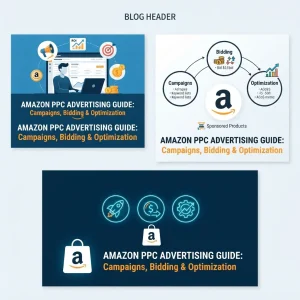
Amazon PPC Advertising Guide: Campaigns, Bidding & Optimization
Amazon PPC advertising lets sellers pay to place their products in front of shoppers actively searching or browsing on Amazon, using an auction-based system similar in structure to Google Ads but built specifically around Amazon’s own search and browsing behavior. With competition for visibility increasing across nearly every product category, a well-run PPC strategy has become less of an optional boost and more of a core requirement for consistent sales on the platform. This guide covers the main Amazon PPC campaign types, how keyword targeting and match types work, bidding strategy fundamentals, how to read and act on performance data, and the common mistakes that quietly waste ad spend even in otherwise reasonable campaigns.
Selling on Amazon without running PPC advertising is increasingly like opening a store in a mall and hoping shoppers wander past. Organic ranking still matters, but sponsored placements now occupy a significant share of Amazon’s search results and product pages, meaning even well-optimized listings often need paid visibility to compete for the same shopper’s attention as everyone else in a category. What was once considered a supplementary tactic for a handful of aggressive sellers has become close to table stakes across most competitive product categories on the platform.
Amazon PPC advertising is its own ecosystem, with campaign types, targeting options, and optimization levers distinct from other advertising platforms. Sellers who understand how the system actually works — rather than simply setting a budget and hoping for the best — consistently spend more efficiently and see stronger returns than those treating PPC as a black box. This guide walks through that system piece by piece, from campaign structure through to the specific metrics worth watching once campaigns are live.
Understanding Amazon PPC Campaign Types
Sponsored Products
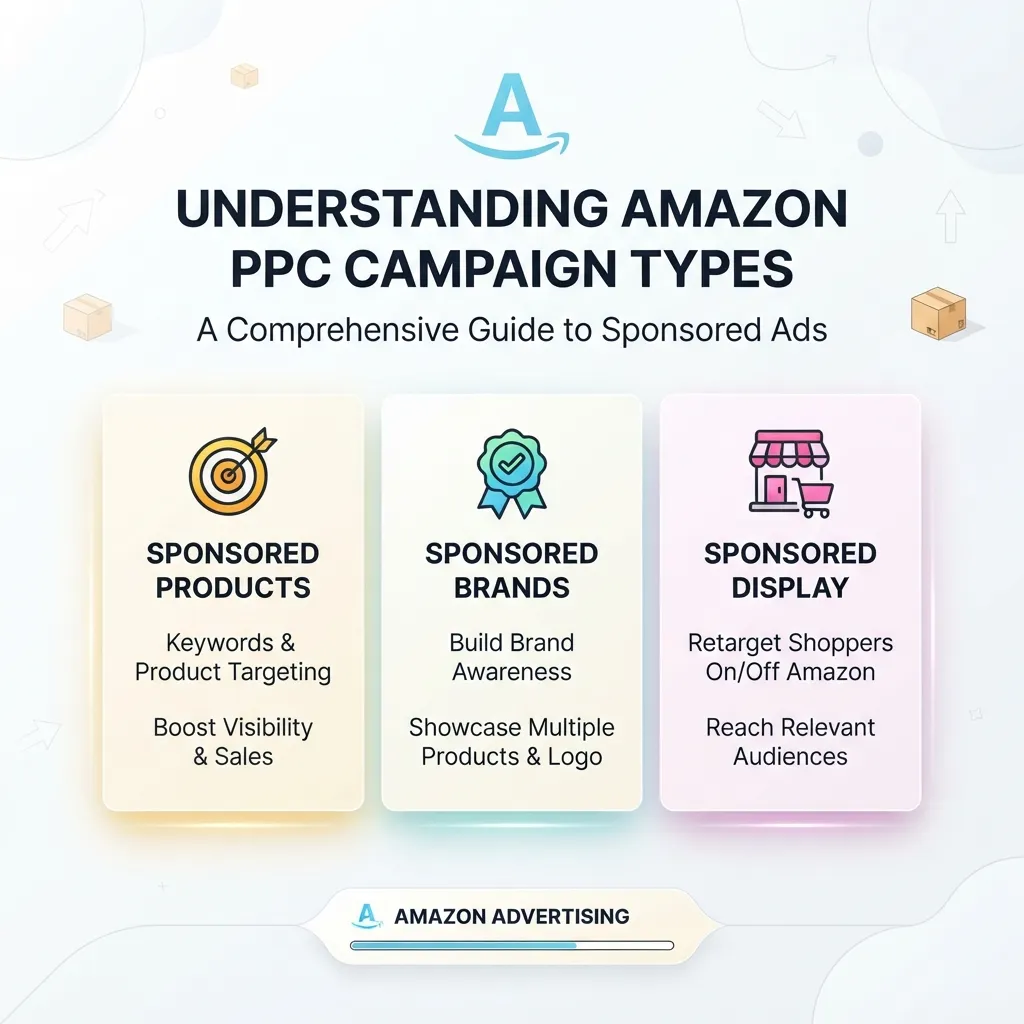
Sponsored Products ads are the most common Amazon PPC format, appearing within search results and on product detail pages, styled to closely resemble organic listings. These campaigns can target specific keywords or use automatic targeting, where Amazon’s algorithm determines relevant placements based on the product listing itself. Most sellers start here, since Sponsored Products campaigns are relatively straightforward to launch and tend to drive the most direct, bottom-of-funnel conversions.
Sponsored Brands
Sponsored Brands ads appear at the top of search results and typically feature a custom headline, logo, and a selection of products, functioning more like a small storefront than a single product ad. These campaigns work well for building brand awareness and showcasing a product range, particularly for sellers with multiple related products a shopper might browse together.
Sponsored Display
Sponsored Display ads extend reach beyond Amazon’s own search results, appearing on product pages, in Amazon’s app, and in some cases across external sites Amazon partners with. This format is particularly effective for retargeting shoppers who viewed a product but didn’t purchase, keeping a brand visible during the consideration phase of the buying journey.
Sponsored TV and Video
Video-based Amazon ad formats have grown quickly, offering placements within Amazon’s streaming properties and on-platform video content. These formats tend to suit brand-building objectives more than immediate conversion, similar to how video is used across other advertising platforms more broadly, where format choice depends heavily on whether the goal is awareness or direct response.
Keyword Targeting and Match Types
Broad, Phrase, and Exact Match
Amazon’s keyword match types control how closely a shopper’s search term needs to match a targeted keyword for an ad to appear. Broad match casts the widest net, potentially matching related searches beyond the exact keyword; phrase match requires the keyword phrase to appear in the search term; exact match requires a much closer match, generally producing higher relevance at the cost of lower search volume. Most effective campaigns use a combination of all three, structured deliberately rather than relying on one match type across an entire campaign.
Automatic vs. Manual Targeting
Automatic campaigns let Amazon’s algorithm determine which search terms and placements to target based on the product listing, which works well for gathering initial keyword data on a new listing. Manual campaigns give sellers direct control over which keywords and placements to target, allowing for more precise optimization once enough performance data has been collected to identify which terms are actually converting.
Negative Keywords
Excluding irrelevant search terms through negative keywords prevents wasted spend on clicks unlikely to convert. Regularly reviewing search term reports and adding clearly irrelevant or underperforming terms as negatives is one of the simplest, most consistently effective ways to improve overall campaign efficiency over time.
Building an Effective Amazon PPC Campaign Structure
Separate Campaigns by Match Type and Goal
Structuring campaigns so that broad, phrase, and exact match keywords sit in separate campaigns, or at least separate ad groups, makes it far easier to control bids and budget allocation for each based on how each match type is actually performing.
Use Automatic Campaigns for Keyword Discovery
Running a dedicated automatic campaign specifically to surface converting search terms, then promoting the strongest performers into manually targeted exact match campaigns, is one of the most reliable ways to build a keyword list grounded in real performance data rather than guesswork.
Allocate Budget Based on Performance Tiers
Not every keyword or campaign deserves equal budget. Directing more spend toward proven, high-converting keywords while limiting spend on exploratory or underperforming ones keeps overall campaign efficiency higher as a portfolio grows.
Bidding Strategies for Amazon PPC
Dynamic Bidding
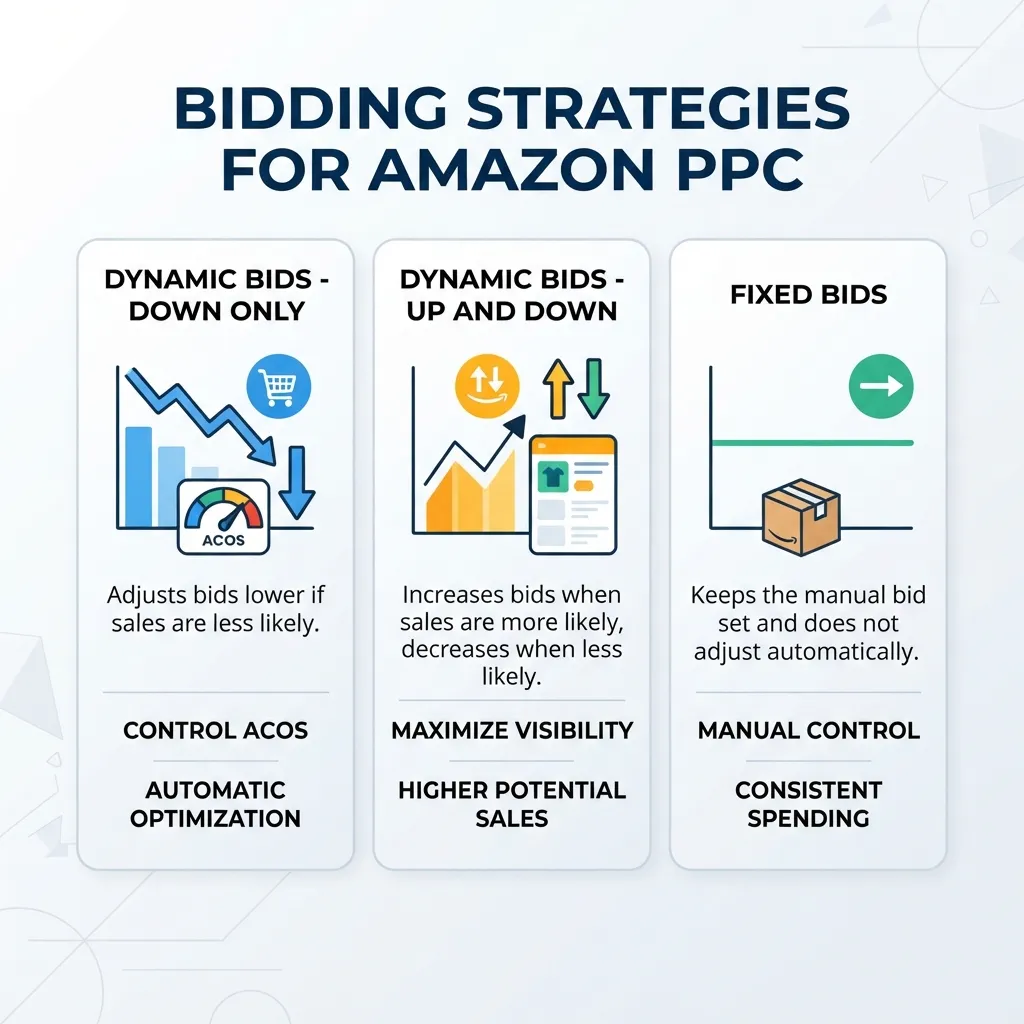
Amazon’s dynamic bidding options automatically adjust bids up or down in real time based on the likelihood of a conversion. “Dynamic bids – down only” reduces bids for less likely conversions, offering a more conservative approach, while “dynamic bids – up and down” can increase bids for higher-probability conversions, which can improve visibility but requires closer budget monitoring.
Manual Bid Adjustments
Setting and adjusting bids manually, informed by conversion data at the keyword level, gives sellers more precise control than relying entirely on automated bidding, particularly once a campaign has accumulated enough data to identify clear winners and losers.
Placement Bid Modifiers
Amazon allows separate bid adjustments for top-of-search placements versus product page or rest-of-search placements, since conversion rates often vary significantly by placement. Increasing bids specifically for high-converting placements, rather than applying a flat bid across all placements, tends to improve overall return on ad spend.
Measuring and Optimizing Amazon PPC Performance
Understanding ACOS and TACOS
Advertising Cost of Sale (ACOS) measures ad spend as a percentage of ad-attributed revenue, while Total Advertising Cost of Sale (TACOS) measures ad spend against total revenue, including organic sales. Watching both metrics together gives a more complete picture, since a campaign with a high ACOS can still be worthwhile if it’s driving meaningful organic sales lift and improved organic ranking over time.
Reviewing Search Term Reports Regularly
Search term reports reveal exactly which customer search queries triggered an ad and led to a click or conversion, providing the raw data needed to refine keyword targeting, identify negative keyword candidates, and discover new keyword opportunities an automatic campaign surfaced.
Testing Systematically
Changing bids, keywords, and ad creative all at once makes it difficult to know which specific change drove a performance shift. Testing one variable at a time, and giving each test enough time and data to reach statistical relevance, produces far more reliable optimization decisions than frequent, simultaneous changes.
Connecting PPC Performance to Broader Metrics
Amazon PPC performance shouldn’t be evaluated in isolation from overall account health. Tracking conversion data alongside broader advertising metrics helps sellers understand how PPC fits into a wider acquisition strategy, rather than treating it as a disconnected line item separate from SEO and other marketing channels.
Applying PPC Fundamentals Consistently
Many of the principles that make Amazon PPC advertising effective mirror broader PPC advertising fundamentals that apply across search advertising platforms generally — relevance between keyword and ad, quality of the landing experience (in this case, the product listing itself), and disciplined bid management all matter regardless of which specific platform is running the campaign. Sellers coming from a Google Ads background often find the underlying logic familiar, even though Amazon’s specific mechanics and reporting differ meaningfully.
Improving Conversion Tracking and Attribution
Accurately tracking which keywords and campaigns actually drive conversions is essential for making good optimization decisions. Applying disciplined conversion tracking practices, even though Amazon’s own attribution model differs from Google’s, reinforces the same underlying habit: never optimize a campaign based on assumptions when actual conversion data is available and reasonably straightforward to review.
The Role of Listing Quality in PPC Performance
A well-optimized product listing directly affects PPC performance, since Amazon’s ranking and relevance systems reward ads that lead to a strong post-click experience. Concepts similar to Quality Score in search advertising apply conceptually to Amazon as well — a listing with strong images, clear bullet points, competitive pricing, and positive reviews will generally convert PPC traffic more efficiently than a weaker listing receiving identical ad spend, meaning that PPC optimization and listing optimization should be treated as connected efforts rather than separate projects.
Common Mistakes in Amazon PPC Advertising
- Relying solely on automatic campaigns long-term. Automatic campaigns are useful for discovery but generally underperform manually optimized campaigns once enough data exists to build one.
- Ignoring negative keywords. Without regular negative keyword additions, campaigns continue wasting spend on consistently irrelevant search terms.
- Setting bids once and never revisiting them. Keyword performance shifts over time due to competition and seasonality, making static, unreviewed bids a common source of inefficiency.
- Evaluating campaigns only on ACOS. Focusing exclusively on ACOS can lead to cutting keywords that contribute meaningfully to organic ranking and long-term sales, even if their direct ad-attributed ACOS looks less impressive.
- Neglecting listing quality. Even a well-targeted PPC campaign underperforms when the product listing itself fails to convert the traffic it receives.
- Launching too many campaigns at once. Spreading a limited budget across dozens of simultaneous campaigns often prevents any single one from gathering enough data to optimize effectively, leaving a seller with a wide but shallow set of underperforming campaigns instead of a smaller number of well-tuned ones.
Scaling Amazon PPC Advertising Over Time
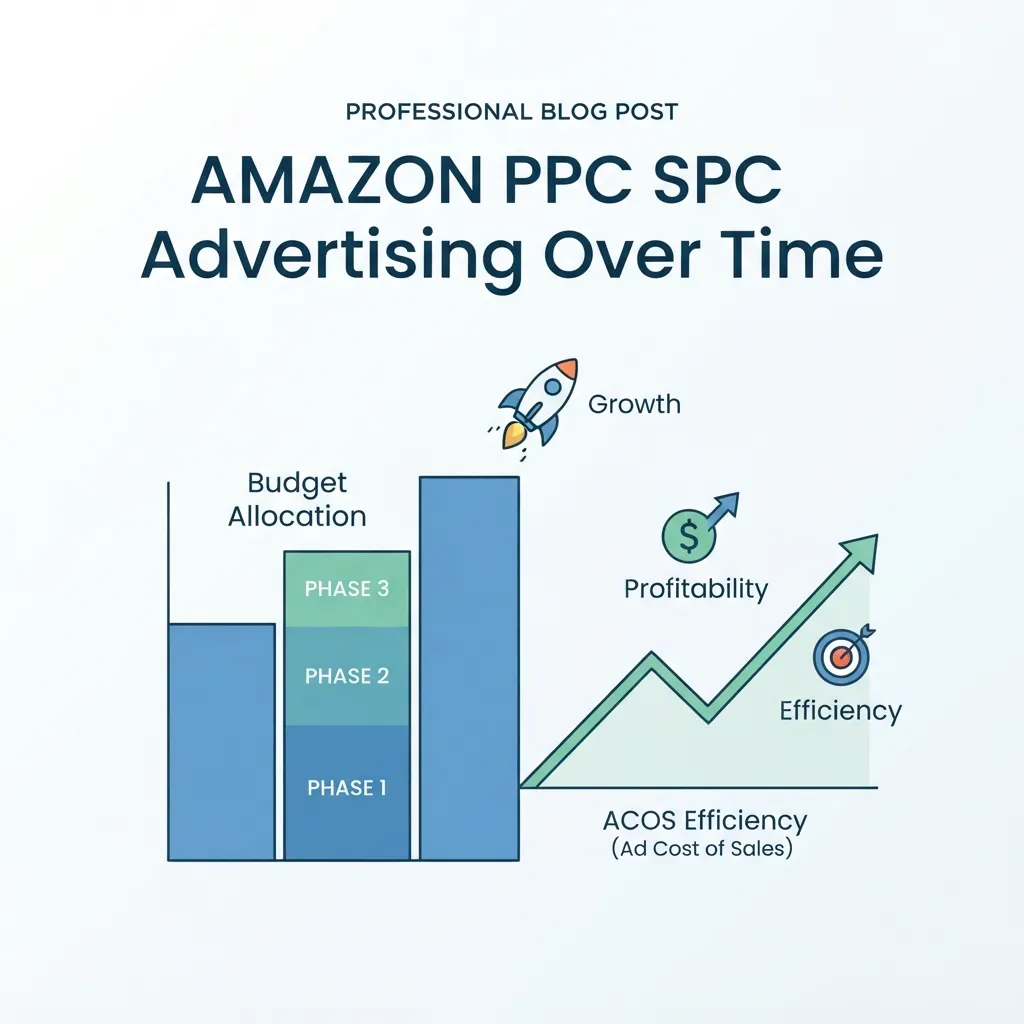
As a seller’s product catalog and budget grow, campaign management typically needs to evolve alongside it. Following broader PPC strategies specifically built for ecommerce sellers helps maintain organization and efficiency as the number of active campaigns increases, since a structure that works well for five products can quickly become unmanageable at fifty without a clear, scalable framework in place from the start.
The Future of Amazon PPC Advertising
Amazon continues to expand its advertising offerings, including growing investment in video formats, streaming ad placements, and increasingly sophisticated automated bidding powered by machine learning. As competition for ad placements intensifies across nearly every category, sellers who combine strong listing fundamentals with disciplined, data-driven PPC management are likely to maintain an edge over those relying on automated settings alone. Expect continued blurring between advertising and organic performance as well, with Amazon’s algorithms increasingly weighing advertising engagement as one signal among several in organic ranking decisions.
Conclusion
Amazon PPC advertising rewards sellers who treat it as an ongoing, data-driven discipline rather than a one-time setup task. Understanding the different campaign types, structuring keyword targeting deliberately, managing bids based on real performance data, and connecting PPC results to listing quality and broader account health all contribute to campaigns that improve steadily over time rather than plateauing after the initial launch. Sellers who commit to regular review — checking search term reports, adjusting bids, and refining negative keywords — consistently outperform those who set a budget once and hope for the best. The learning curve is real, but it flattens considerably once a seller develops the habit of treating every campaign as a source of data to act on, rather than a fire-and-forget marketing expense.
Frequently Asked Questions
1. What is Amazon PPC advertising?
Amazon PPC advertising is a paid, auction-based system that allows sellers to pay for their products to appear in sponsored placements within Amazon search results and product pages.
2. What’s the difference between Sponsored Products and Sponsored Brands?
Sponsored Products promote individual listings within search results, while Sponsored Brands showcase multiple products alongside a custom headline and logo, functioning similarly to a mini storefront.
3. What does ACOS mean in Amazon PPC?
ACOS, or Advertising Cost of Sale, measures ad spend as a percentage of ad-attributed revenue. It helps sellers evaluate how efficiently campaigns convert advertising spend into sales.
4. Should I use automatic or manual targeting?
Many sellers use automatic campaigns for keyword discovery and then move proven, high-performing keywords into manually targeted campaigns for greater control.
5. What are negative keywords in Amazon PPC?
Negative keywords exclude specific search terms from triggering ads, helping prevent wasted spend on clicks that are unlikely to result in conversions.
6. How often should Amazon PPC bids be reviewed?
Bids should be reviewed regularly because keyword performance can change with competition, demand, and seasonality. Static, unreviewed bids can lead to inefficient spending.
7. What is TACOS and how is it different from ACOS?
TACOS measures total advertising spend against total revenue, including organic sales. ACOS focuses specifically on ad-attributed revenue, while TACOS provides a broader view of advertising’s overall impact.
8. Can Amazon PPC improve organic ranking?
PPC-driven sales may contribute to overall sales velocity, which can influence a product’s organic visibility. However, advertising alone does not guarantee higher organic rankings.
9. Why does listing quality matter for PPC performance?
A well-optimized product listing can convert paid traffic more efficiently. Strong images, relevant information, competitive pricing, and clear product details can therefore support better campaign performance.
10. What’s a common mistake sellers make with Amazon PPC?
One common mistake is evaluating campaigns only by ACOS without considering organic sales, overall profitability, conversion rates, or longer-term business performance.
11. How does Sponsored Display differ from Sponsored Products?
Sponsored Display can extend reach beyond standard search placements and may support retargeting shoppers who viewed a product without purchasing. Sponsored Products primarily appear in search results and product-related placements.
12. Is Amazon PPC advertising necessary for every seller?
It is not strictly mandatory, but paid advertising can be an important visibility and sales channel for many sellers, particularly in competitive product categories.