Amazon FBA vs Dropshipping: Which Business Model Wins
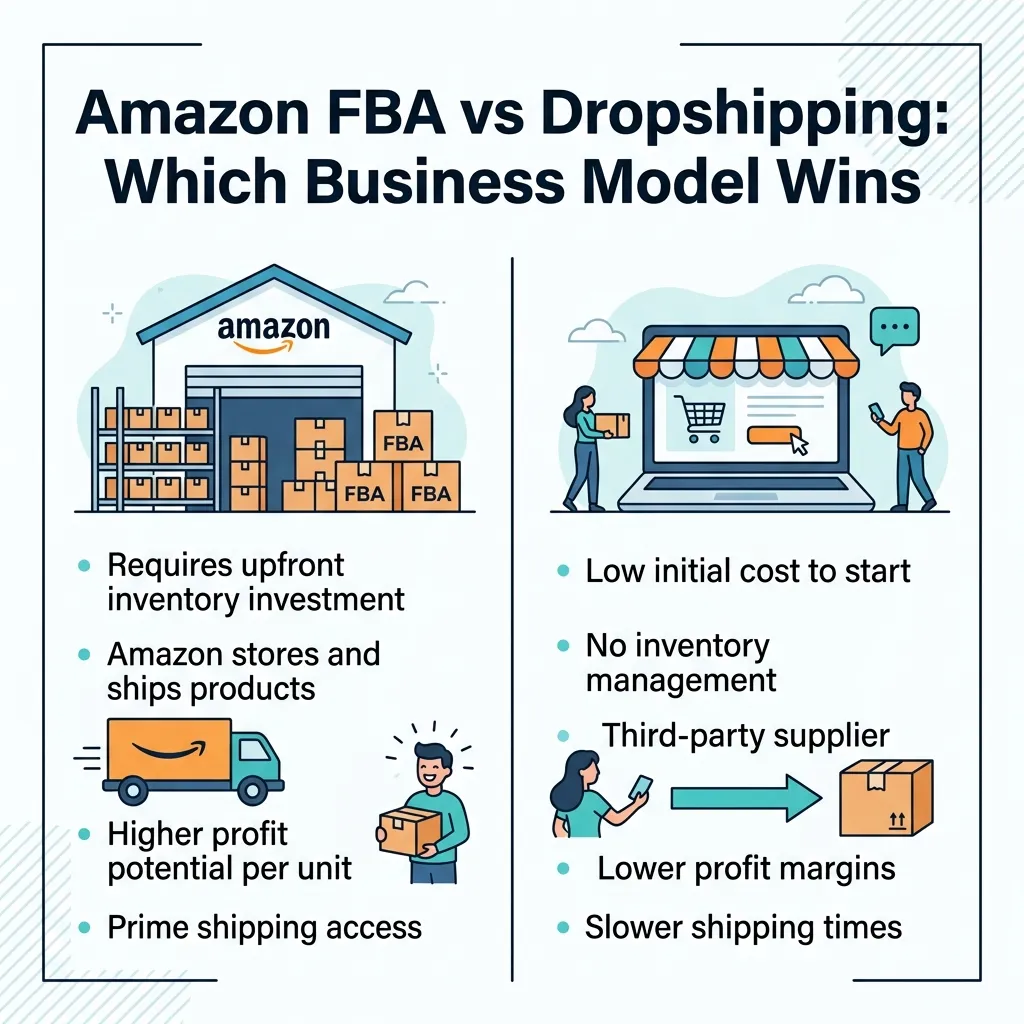
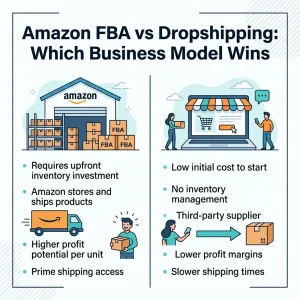
Amazon FBA vs dropshipping is one of the first big decisions almost every new e-commerce seller has to make. Both models let you sell products without personally packing boxes or standing in a shipping line every day, but the similarities stop there. Amazon FBA means buying inventory upfront and letting Amazon store, pack, and ship it for you. Dropshipping means listing products you never touch, with a supplier shipping directly to the customer only after a sale happens.
Neither model is universally “better.” FBA rewards sellers who can fund inventory and want faster growth inside Amazon’s ecosystem. Dropshipping rewards sellers who want to test products with almost no upfront risk, often outside Amazon entirely, on platforms like Shopify. This guide breaks down the real differences in cost, profit margin, control, and scalability so you can decide which model fits your budget and goals in 2026.
Both models have matured a lot over the past few years. Amazon has tightened its fulfillment fee structure and storage limits, which means FBA sellers need tighter inventory forecasting than ever before. At the same time, dropshipping platforms and supplier networks have gotten faster and more automated, closing some of the shipping-speed gap that used to make dropshipping feel risky to customers. Understanding where each model actually stands today — not five years ago — is the only way to make a decision you won’t regret three months into running your store.
What Is Amazon FBA?
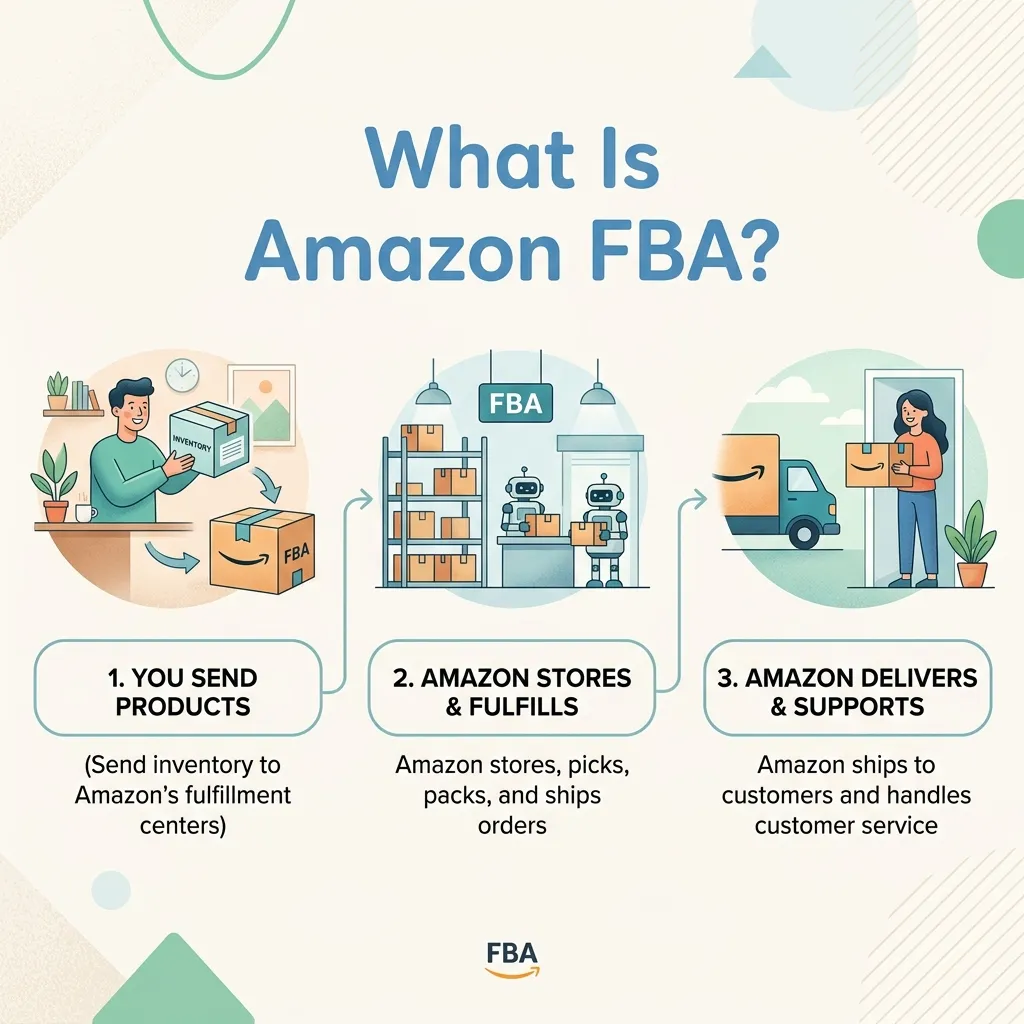
Fulfillment by Amazon (FBA) is a program where you purchase inventory, ship it to Amazon’s warehouses, and Amazon takes over from there — storage, packing, shipping, returns, and even customer service. Your products become eligible for Prime, which means faster delivery and a trust signal that many shoppers actively look for before buying.
The tradeoff is that FBA requires real capital upfront. You are paying for inventory, inbound freight, and Amazon’s storage and fulfillment fees before you have sold a single unit. If you already know a product sells well and you can plan demand accurately, FBA is built to scale that success quickly. If you’re still testing which products will work, though, that upfront investment carries real risk.
Sellers researching this model often also study Amazon PPC advertising early on, since ranking inside Amazon’s search results usually requires some paid visibility alongside organic listing optimization.
Beyond storage and shipping, FBA also hands off returns processing and most customer service inquiries to Amazon, which is a meaningful time-saver once order volume grows. The flip side is that Amazon’s fulfillment and referral fees together commonly consume 25–35% of your sale price, so pricing and product selection have to account for that from day one rather than as an afterthought.
What Is Dropshipping?
Dropshipping is a fulfillment method where you list products for sale without holding any inventory yourself. When a customer places an order, you forward it to a third-party supplier, who ships the product directly to the customer under your store’s branding. You never see or touch the product.
This model dramatically lowers the barrier to entry — you can launch a store and start testing products with a few hundred dollars instead of a few thousand. It is popular both as a standalone Shopify business and as a fulfillment method used inside Amazon’s own marketplace, though Amazon’s dropshipping policy is stricter than most independent stores.
For sellers exploring what dropshipping actually is and how it works, the appeal is almost always the same: minimal upfront risk, fast store setup, and the ability to pivot product lines without being stuck with unsold stock.
Finding reliable partners is the single biggest factor separating a profitable dropshipping store from a struggling one, since your supplier directly determines shipping times, product quality, and how many refund requests you end up handling. That’s why sourcing tends to get more attention than almost anything else in the early stages — many new sellers start with a shortlist of free dropshipping suppliers before ever paying for a premium sourcing tool.
Amazon FBA vs Dropshipping: Key Differences at a Glance
| Factor | Amazon FBA | Dropshipping |
|---|---|---|
| Inventory ownership | You buy stock upfront | No inventory owned |
| Startup cost | Higher ($1,500–$5,000+) | Lower ($100–$500) |
| Shipping speed | 1–2 days with Prime | 3–20 days depending on supplier |
| Profit margins | Typically 15–25% net | Typically 10–20% net |
| Control over branding | Strong with private label | Limited, especially with generic suppliers |
| Customer service | Handled largely by Amazon | Handled by you |
| Risk type | Inventory and capital risk | Supplier and quality-control risk |
| Best for | Validated products, ready to scale | New sellers testing product-market fit |
Startup Costs Compared
This is usually the deciding factor for beginners. Amazon FBA requires you to buy inventory in bulk, pay for inbound shipping to Amazon’s warehouses, and cover storage fees even before your first sale. Total startup costs commonly range from $1,500 to $5,000 or more, depending on the product category.
Dropshipping flips this entirely. You only pay a supplier once a customer has already paid you, which means your upfront investment is mostly limited to your store, samples, and early ad spend. This is why so many first-time sellers start with a dropshipping business plan before ever committing to bulk inventory purchases.
Profit Margins: Which Model Makes More Money?
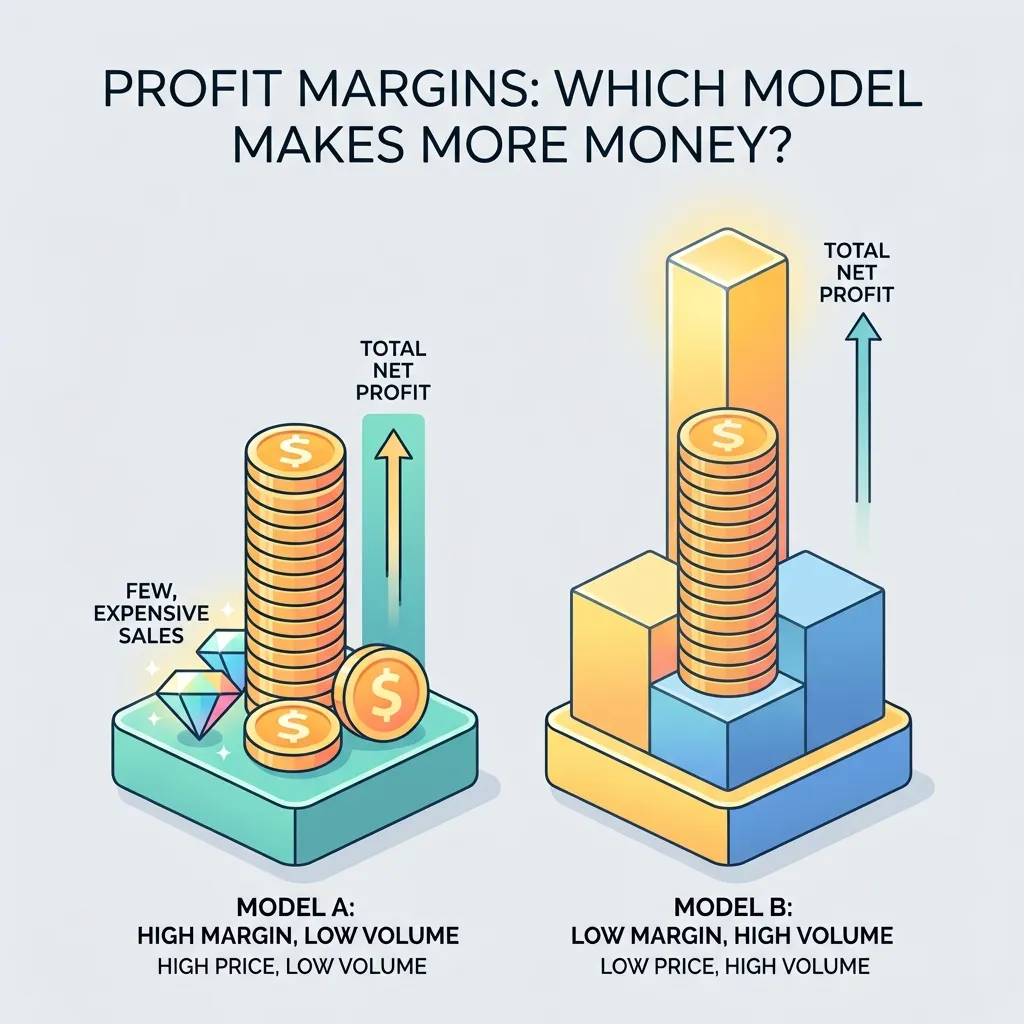
Amazon FBA generally produces stronger long-term margins once a product is validated, often landing in the 15–25% net range after referral and fulfillment fees. Dropshipping margins tend to sit lower, usually 10–20%, because supplier costs, refunds, and ad spend eat into thinner per-unit profit.
That said, margin percentage only tells half the story. Tracking your real customer acquisition cost and return on ad spend matters just as much as the margin on paper, since a “high margin” product with expensive ad costs can still lose money in practice.
Risk and Inventory Management
FBA carries inventory risk: if a product does not sell, you have already paid for it, and Amazon’s long-term storage fees can quietly erode your profit while stock sits unsold. Dropshipping avoids this entirely, since you never purchase stock until a customer has already paid for it.
The risk simply moves elsewhere with dropshipping — toward supplier reliability, product quality, and shipping delays you cannot fully control. A good breakdown of both sides can be found in this guide to the pros and cons of dropshipping for new sellers, which is worth reading before committing to either model.
Shipping Speed and Customer Experience
Amazon FBA products typically ship in one to two days thanks to Prime, which remains one of the strongest trust signals on the platform. Dropshipping orders usually take anywhere from three to twenty days depending on where the supplier is located, which can hurt conversion rates and increase return requests.
If you plan to run dropshipping on Amazon itself rather than an independent store, it helps to study dropshipping on Amazon for beginners first, since Amazon enforces stricter fulfillment-speed and communication standards than most standalone platforms.
Branding and Long-Term Scalability
FBA, especially when paired with private-label products, gives sellers much stronger brand control — custom packaging, product differentiation, and a customer base that can eventually be marketed to directly. Dropshipping is harder to brand meaningfully because many suppliers sell the same generic products to multiple stores, making differentiation difficult.
For sellers who want to build something with brand equity rather than just flip products, a dropshipping brand-building guide is a useful next step, since branding is the main lever dropshippers have to stand out against nearly identical competitors.
Where Each Model Fits: Amazon vs Independent Stores
Amazon FBA is built specifically for selling inside Amazon’s marketplace — you are renting shelf space in the world’s largest storefront and borrowing its logistics network in exchange for fees and reduced control over the customer relationship. Dropshipping, by contrast, works almost anywhere: Shopify, WooCommerce, TikTok Shop, or even Amazon itself under stricter rules.
This flexibility is a real advantage for sellers who want to eventually own their customer data, build an email list, and run retargeting campaigns without depending on a single marketplace’s algorithm. Sellers weighing an independent store against Amazon’s ecosystem often find it useful to compare platform-level tradeoffs directly, since the fulfillment decision and the platform decision tend to shape each other.
Common Mistakes Sellers Make With Each Model
With Amazon FBA:
- Ordering too much inventory before demand is confirmed, leading to costly long-term storage fees
- Ignoring seasonality and getting stuck with unsold stock after a peak season ends
- Underestimating how much of the sale price fulfillment and referral fees actually consume
- Skipping keyword and PPC research, leaving listings invisible in Amazon’s search results
With Dropshipping:
- Choosing suppliers based purely on price instead of shipping speed and product quality
- Promising delivery timelines the supplier can’t actually meet, which drives up refund rates
- Treating every product as disposable instead of building a recognizable brand around winners
- Underinvesting in customer service, since you — not Amazon — are responsible for every complaint
Avoiding these mistakes matters more than picking the “perfect” model, since both FBA and dropshipping can be profitable when run with discipline and can both lose money when run carelessly.
Pros and Cons of Amazon FBA
Pros:
- Prime eligibility and faster shipping
- Amazon handles storage, packing, and customer service
- Stronger long-term margins at scale
- Easier to build a recognizable brand with private label products
Cons:
- High upfront capital requirement
- Inventory risk if products don’t sell
- Storage and long-term fees can add up quickly
- Amazon controls most of the customer relationship
Pros and Cons of Dropshipping
Pros:
- Very low startup cost
- No inventory risk
- Easy to test multiple products quickly
- Flexible across platforms like Shopify, TikTok Shop, and Amazon
Cons:
- Thinner profit margins
- Slower shipping hurts customer experience
- Limited control over product quality
- Harder to build a distinct brand identity
The Hybrid Approach: Using Both Models

Many experienced sellers don’t choose one model exclusively — they combine them. A common strategy is using FBA for proven best-sellers, where fast shipping and Prime visibility maximize conversions, while using dropshipping to test new or seasonal products without tying up capital in unproven inventory.
This hybrid setup lets you validate demand cheaply through dropshipping, then transition winning products into FBA once you’re confident they will sell in volume. Choosing the right products to test in the first place is critical here — this guide on choosing the best dropshipping products for success covers how to spot early winners before committing further budget.
Marketing both channels effectively often comes down to the same fundamentals covered in this guide to digital marketing for dropshipping and this guide to digital marketing for Amazon sellers, since both models depend heavily on getting the right traffic to the right listings.
How to Choose the Right Model for Your Business
Ask yourself these questions before committing:
- How much capital can I comfortably invest upfront?
- Do I already know a product sells, or am I still testing?
- How important is fast shipping to my target customer?
- Do I want to build a long-term brand or move quickly between products?
- Am I selling primarily on Amazon, or building an independent store?
If you’re still unsure which product category to test first, it’s worth reviewing current e-commerce market share leaders to understand where consumer demand is actually concentrated before picking a niche.
Conclusion
The Amazon FBA vs dropshipping decision really comes down to how much risk you’re willing to take upfront in exchange for speed, control, and margin. FBA asks for capital first and pays it back through Prime-driven conversions, faster shipping, and stronger brand potential at scale. Dropshipping keeps your cash flexible and your risk low, but hands you thinner margins, slower shipping, and less control over product quality.
For most beginners, dropshipping is the more forgiving place to start, since it lets you validate product-market fit without a large financial commitment. Once you know a product performs, migrating it into Amazon FBA is often the natural next step to unlock faster shipping, better margins, and long-term brand growth. Many of the most successful sellers eventually run both models side by side, using each one where it performs best — dropshipping to keep discovering what customers want next, and FBA to turn those discoveries into a dependable, scalable revenue stream.
Frequently Asked Questions About Amazon FBA vs Dropshipping
1. What Is the Main Difference Between Amazon FBA and Dropshipping?
Amazon FBA requires you to buy inventory upfront and ship it to Amazon’s warehouses, while dropshipping lets you sell products without ever holding stock, since a supplier ships directly to the customer.
2. Which Is Cheaper to Start, Amazon FBA or Dropshipping?
Dropshipping is significantly cheaper to start, often costing $100–$500, compared to $1,500–$5,000 or more for Amazon FBA once inventory and shipping costs are included.
3. Which Model Has Higher Profit Margins?
Amazon FBA typically has higher long-term profit margins, often 15–25% net, once a product is validated, while dropshipping margins usually sit closer to 10–20%.
4. Is Dropshipping Better for Beginners Than Amazon FBA?
Yes, dropshipping is generally considered more beginner-friendly because it removes inventory risk and allows new sellers to test products before committing significant capital.
5. Can I Do Dropshipping Directly on Amazon?
Yes, but Amazon enforces strict dropshipping policies, requiring sellers to be the seller of record and manage customer service directly, which is stricter than most independent Shopify stores.
6. Does Amazon FBA Guarantee Faster Shipping Than Dropshipping?
FBA products are typically eligible for Amazon’s Prime delivery options and may arrive within one to two days in many locations, while dropshipping orders can take three to twenty days depending on the supplier’s location and shipping method.
7. Which Model Is Easier to Scale Long-Term?
Amazon FBA generally scales more predictably once a product is validated because Amazon’s logistics network can support high order volumes more reliably than many dropshipping suppliers.
8. Do I Need a Business License to Start Dropshipping or Amazon FBA?
Requirements vary by country and platform, but many sellers eventually need some form of business registration as sales grow. It is worth checking local regulations before scaling either model.
9. Can I Combine Amazon FBA and Dropshipping in One Business?
Yes, many sellers use a hybrid approach—dropshipping to test new products cheaply, then transitioning proven products into Amazon FBA for faster shipping and potentially stronger margins.
10. Which Model Gives More Control Over Branding?
Amazon FBA, especially with private-label products, generally offers stronger branding control than dropshipping, where many suppliers sell identical products to multiple competing stores.
11. Is Amazon FBA Riskier Than Dropshipping?
In terms of upfront capital, yes. FBA carries inventory risk because you pay for stock before selling it, while dropshipping shifts more risk toward supplier reliability, product quality, and shipping delays.
12. Which Model Should I Choose If I Have a Limited Budget?
If your budget is limited, dropshipping is usually a lower-capital starting point because it lets you test demand and refine your offer before investing in the bulk inventory required for Amazon FBA.