Best Shopify Apps for Marketing: The Complete 2026 Guide
The best Shopify apps for marketing aren’t a single universal list — they depend on which part of your funnel needs the most help right now, whether that’s email capture, review collection, loyalty, or post-purchase upsells. This guide breaks down the strongest options in each major marketing category, what makes each one worth considering, and how to build a lean app stack that actually moves revenue instead of just adding monthly fees.
Open the Shopify App Store and you’ll find thousands of options claiming to boost sales, and picking through them without a framework wastes time and money fast. Most successful stores don’t run dozens of apps — they run a small, deliberate stack covering the handful of marketing functions that matter most: getting found, capturing leads, building trust, and increasing the value of every order.
This guide walks through the best Shopify apps for marketing organized by category, so you can build a stack that fits your store’s actual stage and goals rather than installing everything that shows up in a “top apps” listicle.
Why Category Matters More Than Any Single “Best” App
There’s no single winner across every marketing function, because email marketing, reviews, loyalty, and upsells solve completely different problems. The more useful question isn’t “what’s the single best Shopify app for marketing” — it’s “what’s the best app for the specific job I need done, and does it fit cleanly with the rest of my stack.” Choosing apps by category, rather than by an undifferentiated ranked list, keeps your stack focused and avoids the common trap of paying for five apps that all do a slightly different version of the same thing.
Email and SMS Marketing Apps
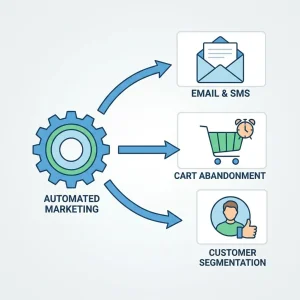
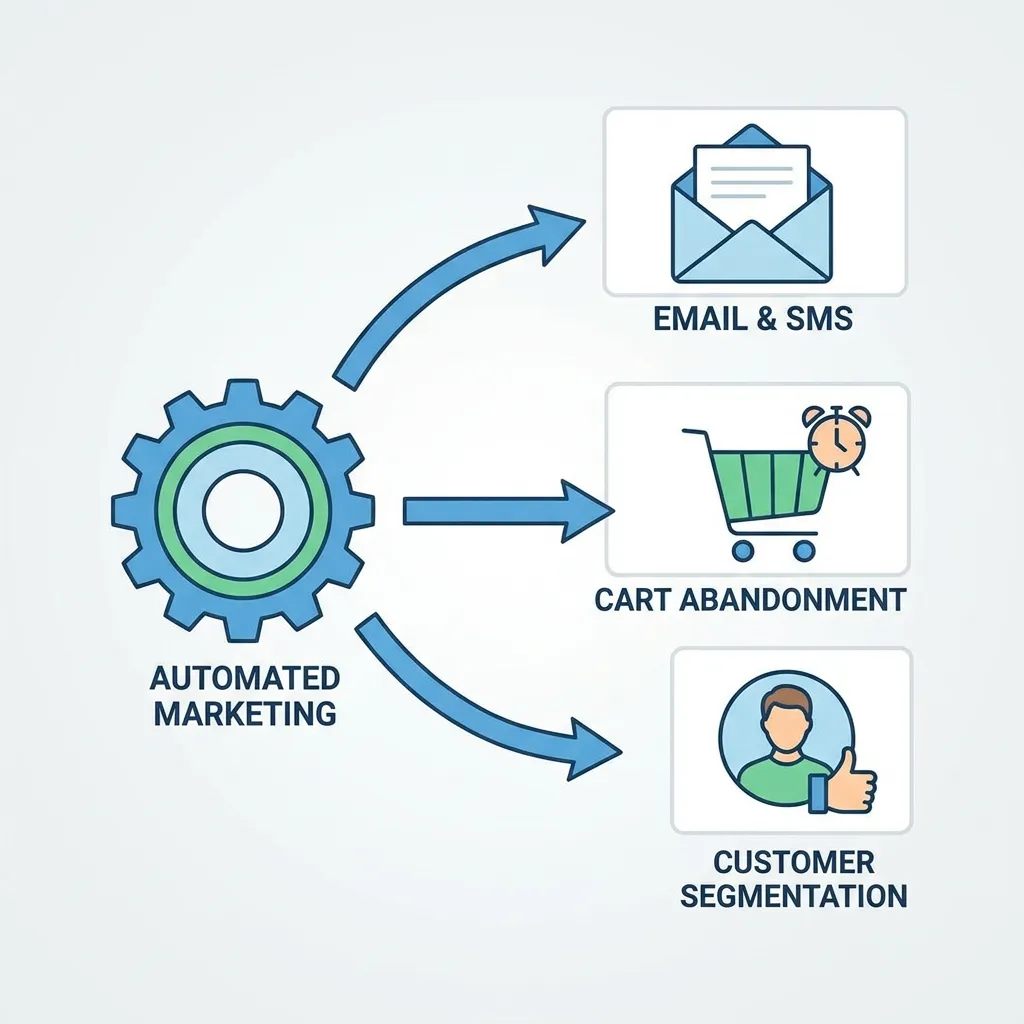
Email and SMS remain two of the highest-ROI marketing channels for Shopify stores, since both let you own the relationship with a customer directly rather than relying on ad platforms. Klaviyo has become the default choice for many growing stores, largely because it syncs deeply with Shopify’s customer and order data, letting you build segments and automated flows like abandoned cart or post-purchase sequences based on real purchase behavior rather than surface-level engagement alone. Omnisend is a strong alternative for stores that want a combined email and SMS platform with a gentler learning curve and pricing model.
For a store just getting started, Shopify’s own built-in email tool is a reasonable first step before graduating to a dedicated platform once volume and segmentation needs grow. Our guide on email marketing strategies for ecommerce covers how to think about sequencing and messaging regardless of which specific tool you choose.
Reviews and Social Proof Apps
Product reviews do double duty — they build trust with new visitors and, when properly configured, contribute directly to SEO through rich snippets that make star ratings visible in search results. Judge.me is a widely used option with a genuinely useful free plan covering unlimited reviews and photo uploads, making it a solid starting point for newer stores. Yotpo positions itself more as a full retention platform, bundling reviews with loyalty and referral functionality for stores that want fewer separate tools to manage.
Reviews also compound with paid acquisition. A store with strong social proof converts better across every channel it advertises on, which is worth keeping in mind when running Google Ads for a Shopify store — traffic quality only gets you so far if the storefront itself doesn’t build trust once visitors arrive.
Loyalty and Retention Apps
Acquiring a new customer is expensive, which makes loyalty and retention apps some of the highest-leverage additions to a marketing stack once a store has meaningful repeat purchase potential. Smile.io is a well-established option for building points-based loyalty programs, referral incentives, and VIP tiers without custom development. LoyaltyLion offers similar functionality with deeper customization for stores with more specific program requirements.
These apps work especially well paired with email and SMS, since loyalty milestones and point balances make for natural automated messaging triggers that keep customers engaged between purchases rather than only hearing from your brand during a sale.
Upsell and Cross-Sell Apps
Increasing the value of each order is often more efficient than acquiring new traffic, and dedicated upsell apps make this easier to execute consistently. ReConvert is a widely used option for building post-purchase upsell offers on the thank-you page, letting stores capture additional revenue after a customer has already committed to buying rather than risking cart abandonment with pre-checkout upsells. Bundling and “frequently bought together” style apps serve a similar function earlier in the funnel, on the product page itself.
Getting this right depends partly on understanding your margins and average order value well enough to know which upsell offers are actually worth surfacing rather than defaulting to whatever an app’s template suggests.
SEO and Organic Traffic Apps
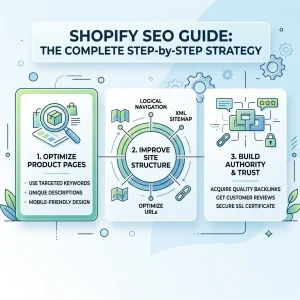
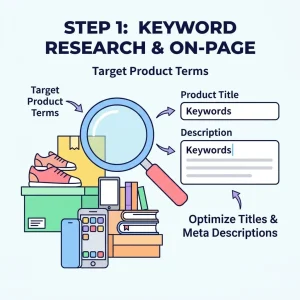
Marketing apps aren’t only about paid acquisition and messaging — a strong SEO foundation reduces how much a store needs to spend on ads over time. Dedicated SEO apps for Shopify typically handle image compression, structured data, broken link detection, and basic on-page optimization checks that would otherwise require manual auditing. These tools work best as a supplement to, not a replacement for, a genuine content and technical SEO strategy that covers the fundamentals any SEO app should be reinforcing rather than replacing. Our Shopify-specific SEO guide walks through those fundamentals in more detail.
Advertising and Social Integration Apps
Running paid campaigns effectively depends on clean data flowing between your store and the ad platforms you use. Native integrations for Google Ads and Meta’s ad platforms sync product catalogs and conversion data automatically, which matters enormously for accurate attribution and automated bidding. Our guide on integrating Shopify with Facebook Ads walks through getting this connection set up correctly, since a broken or incomplete data feed quietly undermines ad performance in ways that are easy to miss.
Customer Support and On-Site Engagement Apps
Marketing doesn’t stop once a visitor lands on your product page — how quickly and helpfully you respond to questions directly affects whether that visitor converts. Live chat and help desk apps built specifically for ecommerce can route order-related questions automatically, surface relevant product information mid-conversation, and reduce the number of abandoned carts caused by an unanswered question at the wrong moment. These tools sit at the intersection of support and marketing, since a fast, helpful response during the buying moment often does more to close a sale than another discount code would.
On-site engagement tools like popups, exit-intent offers, and product recommendation widgets serve a similar purpose earlier in the visit, capturing interest before a visitor leaves rather than only reacting after they’ve already gone.
Why the Best Shopify Apps for Marketing Compound Over Time
None of these apps work in isolation, and the real payoff of the best Shopify apps for marketing shows up when they’re connected rather than run as separate silos. A review collected through your reviews app becomes stronger marketing material when it’s automatically pulled into an email flow or a retargeting ad. A loyalty milestone becomes more effective when it triggers an SMS message instead of sitting quietly in a dashboard nobody checks. The stores that get the most value from their app stack are the ones actively connecting these tools to reinforce each other, rather than treating each app as a standalone feature bolted onto the store.
This same compounding effect is a big part of why genuine customer advocacy matters so much for ecommerce brands specifically. A happy customer who leaves a review, refers a friend, and engages with a loyalty program isn’t three separate wins — it’s one relationship reinforcing itself across multiple channels. Wompromotion’s guide to customer advocacy examples illustrates this same principle in a different context, showing how the most effective advocacy programs stack multiple small actions into one compounding relationship rather than relying on any single tactic alone.
How to Choose the Right Apps for Your Store
Rather than chasing the longest feature list, work through a short set of questions before installing anything new:
- What specific problem am I solving? Install apps to address a defined gap in your funnel, not because a competitor uses it.
- Does it integrate cleanly with my existing stack? An app that duplicates data or conflicts with another tool creates more work than it saves.
- What’s the real cost once I scale? Many apps price based on contacts, orders, or revenue, so a plan that looks affordable now may cost significantly more as the store grows.
- Will it slow down my store? Every app adds some amount of code to your storefront, and a bloated, slow-loading site can undo the conversion gains the app was meant to provide.
- Do I actually need a dedicated app, or does Shopify’s native functionality already cover this? Shopify has expanded its built-in features considerably, and some dedicated apps are only worth adding once you outgrow the native option.
Building a Lean Stack of the Best Shopify Apps for Marketing
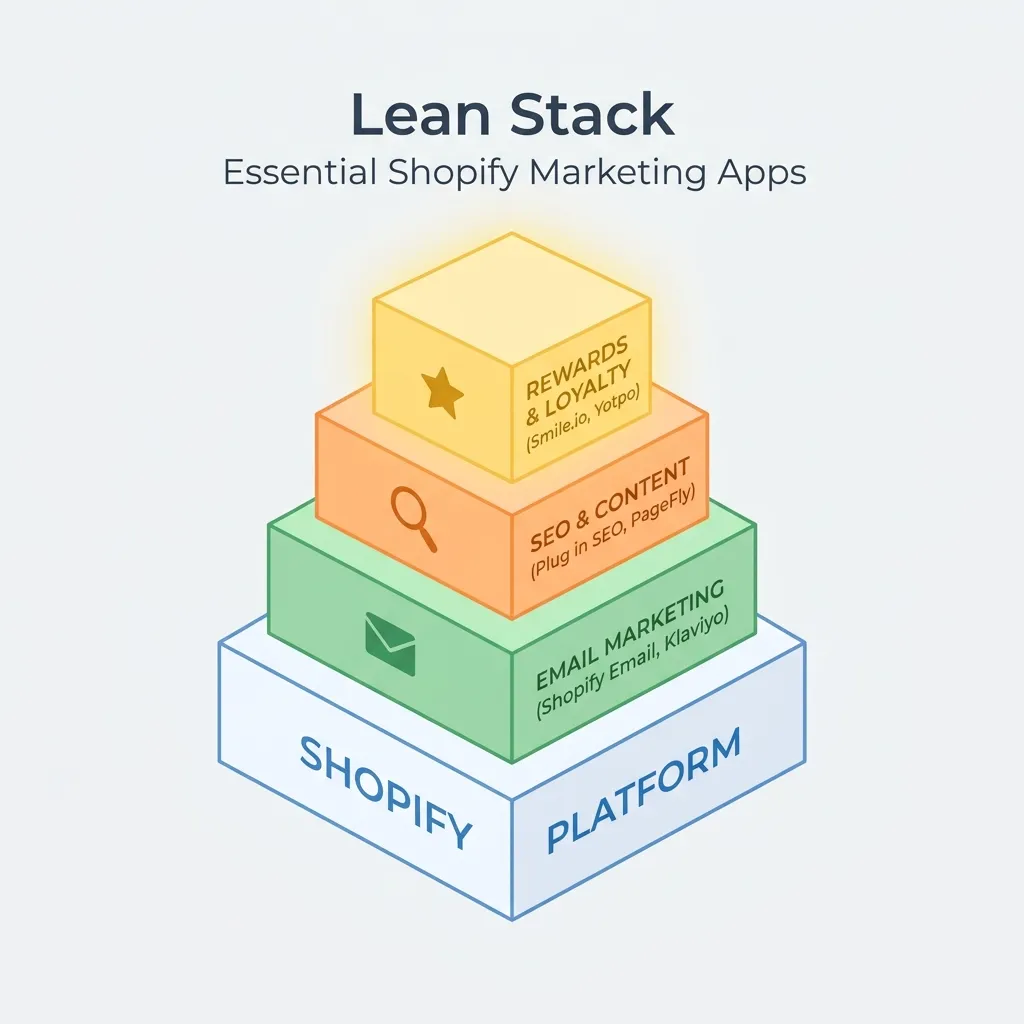
The most successful stores tend to run a focused stack rather than a sprawling one — typically one strong tool per core marketing function: email/SMS, reviews, loyalty, and upsells, plus SEO and ad integration tools running quietly in the background. Adding a new app for every marketing idea that comes up leads to overlapping functionality, conflicting scripts, and a storefront that loads slower with every install.
A useful habit, regardless of which specific tools make your list of the best Shopify apps for marketing, is reviewing your installed apps every quarter and asking whether each one is still earning its place. An app installed for a specific campaign six months ago may no longer be doing meaningful work, and removing unused tools keeps both your budget and your site’s performance in check.
A Similar Principle Applies Beyond Shopify
The instinct to evaluate marketing tools by the specific job they do, rather than chasing an all-in-one solution, holds up well outside ecommerce too. The way trendmarketo evaluates marketing automation tools for small businesses makes a similar point — the right tool depends on the size of the team and the specific workflow it needs to support, not which platform has the most features on paper. The same logic applies just as directly when comparing SMS platforms, and webinarmarketo’s roundup of free webinar tools reflects the same category-first approach: start from the job to be done, then find the tool that fits it well.
Common Mistakes When Building a Marketing App Stack
- Installing too many apps too fast. Adding five new tools in a single week makes it nearly impossible to isolate which one is actually driving results.
- Choosing apps based on price alone. A cheaper app with weak Shopify integration can cost more in lost conversions than a pricier, better-integrated alternative.
- Ignoring page speed impact. Every additional script has a cost, and a slow storefront quietly erodes conversion rate regardless of how good any individual app is.
- Never auditing the existing stack. Apps installed for a past campaign or a since-abandoned strategy often keep charging monthly fees long after they’ve stopped adding value.
- Overlapping functionality across tools. Running two apps that both handle reviews, or both handle upsells, usually means paying twice for one job.
Conclusion
The best Shopify apps for marketing aren’t found in a single ranked list — they’re found by matching the right tool to each specific job in your funnel: email and SMS for owned communication, reviews for trust, loyalty for retention, upsells for order value, and SEO and ad integrations for sustainable traffic. Build your stack deliberately, one strong tool per category, and revisit it regularly to prune anything that’s stopped earning its keep. Done well, a lean, well-chosen app stack becomes one of the highest-leverage investments a Shopify store can make in its marketing.
Frequently Asked Questions
What Are the Best Shopify Apps for Marketing in General?
The best apps depend on the specific function you need, but a strong default stack typically includes one email/SMS platform, one review app, one loyalty app, and one upsell app rather than a single all-purpose tool.
Is Klaviyo Worth It for a Small Shopify Store?
Klaviyo can be worthwhile once a store has enough order volume to benefit from advanced segmentation, though smaller stores just starting out may prefer Shopify’s native email tool or a simpler platform first.
Do I Need a Dedicated Review App if Shopify Has One Built In?
Dedicated review apps generally offer more features, such as photo and video reviews, rich snippets for SEO, and deeper customization than Shopify’s native review functionality.
How Many Marketing Apps Should a Shopify Store Run?
Most well-run stores keep their marketing app stack lean, often around one tool per core function, rather than running many overlapping apps.
Are Free Shopify Marketing Apps Worth Using?
Yes, many reputable apps offer genuinely useful free plans, particularly in the reviews category, making them a reasonable starting point before upgrading to paid tiers as needs grow.
Can Too Many Marketing Apps Slow Down My Shopify Store?
Yes. Every app adds some script weight to your storefront, and running too many at once can measurably slow load times and hurt conversion rates.
What’s the Difference Between a Loyalty App and a Rewards App?
These terms are often used interchangeably; both typically refer to apps that let customers earn points or rewards for purchases, reviews, or referrals to encourage repeat business.
Should I Choose an All-in-One Marketing App or Separate Specialized Apps?
It depends on your team’s bandwidth — an all-in-one platform reduces the number of tools to manage, while specialized apps often go deeper on a single function.
How Do Upsell Apps Actually Increase Revenue?
They surface relevant additional products at key moments, such as the cart or post-purchase thank-you page, increasing average order value without requiring more traffic.
Do Marketing Apps Help With SEO Directly?
Some apps assist with technical SEO tasks like image optimization and structured data, but they work best alongside a genuine content and technical SEO strategy rather than replacing one.
How Often Should I Review My Shopify App Stack?
A quarterly review is a reasonable cadence for checking whether each installed app is still earning its cost and contributing to store performance.
What’s the Biggest Mistake Stores Make When Choosing Marketing Apps?
Installing too many apps at once without a clear framework makes it difficult to isolate what’s actually working and often leads to overlapping, redundant tools.