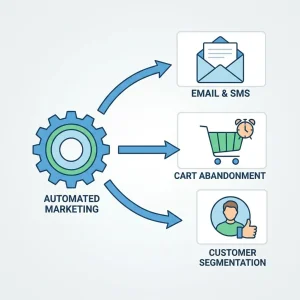
How to Increase Shopify Store Sales: The Complete Guide
Increase Shopify store sales rarely comes down to a single fix — it’s the combined effect of getting more of the right traffic, converting more of that traffic into buyers, increasing how much each customer spends, and bringing customers back for repeat purchases. Many store owners focus almost exclusively on driving more visitors, when in many cases the bigger opportunity sits in converting the traffic already arriving. This guide walks through the full picture: optimizing product pages and checkout for conversion, using SEO and paid channels to bring in qualified traffic, applying proven tactics to increase average order value, and building retention systems that turn one-time buyers into repeat customers.
Every Shopify store owner eventually asks the same question: how do I sell more? The instinctive answer is usually to drive more traffic, but traffic without conversion is just a bigger top of a leaky funnel. Sustainable sales growth on Shopify comes from working on multiple levers simultaneously — a well-optimized store converts a higher percentage of the traffic it already has, sells more per transaction, and earns repeat business, all of which compound far more effectively than traffic growth alone. A store that improves each lever by even a modest amount often sees a larger combined revenue increase than one that pours the entire budget into acquiring more visitors while leaving conversion, order value, and retention untouched.
This guide is organized around those four levers: traffic, conversion, average order value, and retention. Each one offers meaningful, often underused opportunities for a Shopify store to grow sales without necessarily spending more on advertising. Working through them roughly in order — starting with whichever lever currently shows the most obvious weakness in a store’s own data — tends to produce faster, more compounding results than tackling all four at once without a clear priority.
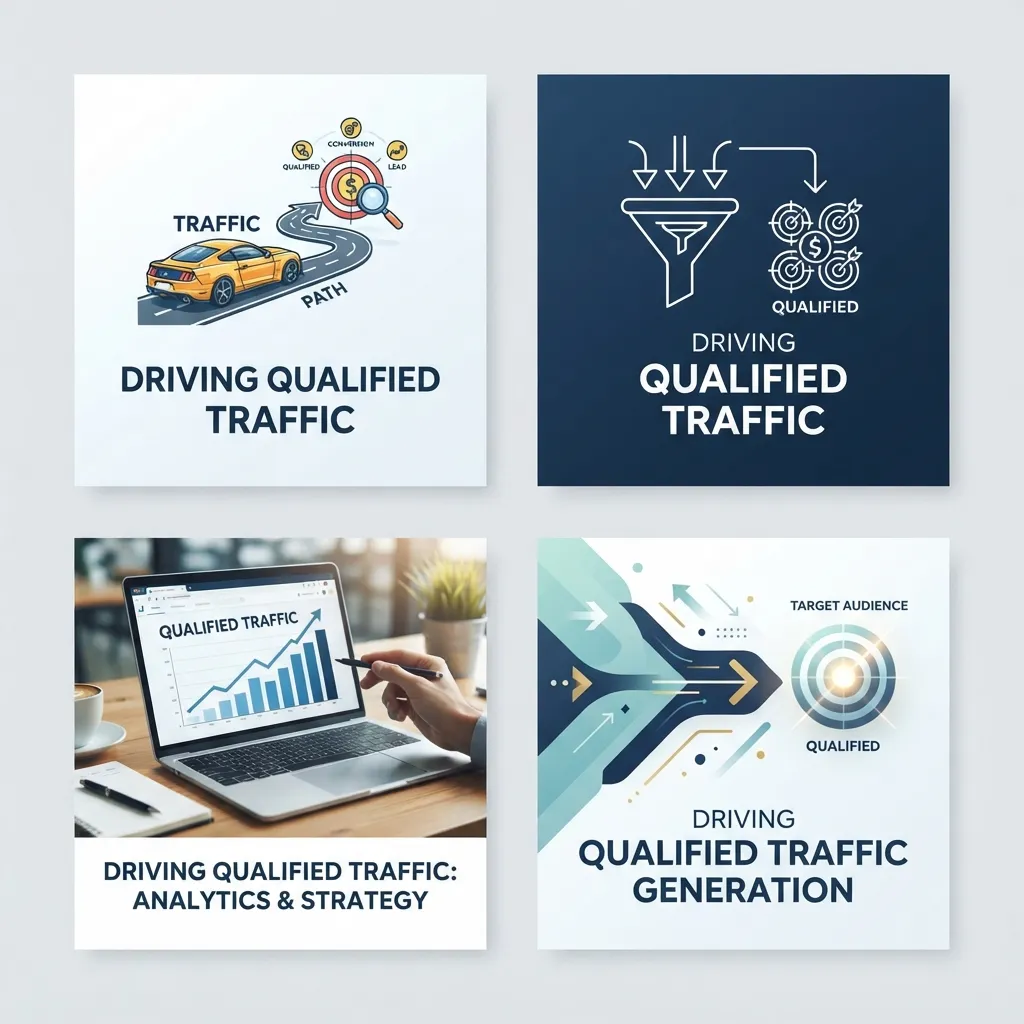
Lever 1: Driving Qualified Traffic
Invest in Shopify SEO
Search traffic is one of the most cost-effective, long-term sources of qualified visitors for a Shopify store. Optimizing product titles, descriptions, and category pages for the terms customers actually search, along with solid technical SEO fundamentals, compounds over time in a way paid traffic never does. Following a structured Shopify SEO strategy rather than making isolated, one-off optimizations tends to produce far more consistent long-term results, particularly for stores with a large product catalog where template-level fixes can improve dozens or hundreds of pages at once.
Run Targeted Paid Campaigns
Paid search and social ads remain a fast way to drive qualified traffic, particularly for new stores still building organic search authority. The key is targeting specificity — broad, unfocused campaigns waste budget on visitors unlikely to convert, while narrowly targeted campaigns built around a clear customer profile tend to deliver a much stronger return.
Use Content Marketing to Build Long-Term Traffic
Blog content, buying guides, and comparison articles attract visitors earlier in their research process, before they’re ready to buy but while they’re forming an opinion about which brand to trust. This kind of content compounds over time, continuing to attract new visitors long after it’s published, unlike a paid campaign that stops the moment spending stops.
Leverage Video for Discovery and Engagement
Video content, particularly short-form product demonstrations and behind-the-scenes footage, has become one of the strongest tools for driving both discovery and engagement on ecommerce storefronts. Reviewing video marketing approaches built specifically for ecommerce is worth doing alongside a traffic strategy, since video increasingly influences purchase decisions even outside of social platforms, including directly on product pages.
Lever 2: Improving Conversion Rate
Optimize Product Pages
Clear, high-quality images from multiple angles, honest and detailed product descriptions, and visible social proof through reviews all reduce the hesitation that keeps a visitor from completing a purchase. Product pages that answer likely objections directly — sizing concerns, material quality, shipping timelines — convert noticeably better than pages that leave those questions unanswered. Even small additions, like a size guide, a materials breakdown, or a short FAQ section addressing the three or four questions customer support hears most often, can meaningfully reduce the number of visitors who leave a product page still unsure.
Simplify the Checkout Process
Every additional step, form field, or unexpected cost at checkout increases the chance a customer abandons their cart. Offering guest checkout, multiple payment options, and transparent shipping costs earlier in the process all reduce this friction meaningfully.
Use Trust Signals Strategically
Security badges, clear return policies, and visible customer reviews reassure first-time visitors who don’t yet have a reason to trust an unfamiliar store. These signals matter most for new stores without an established brand reputation to lean on.
Apply Structured Conversion Rate Optimization
Rather than making conversion changes based on guesswork, structured conversion rate optimization for ecommerce relies on testing specific changes against real visitor behavior, ensuring that adjustments to product pages, checkout flow, or messaging are backed by actual performance data rather than assumption.
Reduce Page Load Time
Slow-loading pages, particularly on mobile, directly reduce conversion rate, since visitors abandon a page before it even finishes loading in many cases. Compressing images, minimizing unnecessary apps, and choosing a lightweight theme all contribute to faster load times.
Lever 3: Increasing Average Order Value
Use Product Bundling and Cross-Selling
Suggesting complementary products at the right moment — on the product page, in the cart, or during checkout — increases the average value of each transaction without requiring any additional traffic. Bundling related items at a modest discount often increases perceived value enough to outweigh the reduced margin.
Set Strategic Free Shipping Thresholds
A free shipping threshold set slightly above the average order value encourages many customers to add one more item to qualify, a simple mechanic that reliably increases order size when implemented thoughtfully.
Offer Volume Discounts
Discounts for purchasing multiple units of the same product, or tiered pricing that rewards larger orders, work particularly well for consumable or frequently repurchased products.
Use the Right Marketing Apps to Support These Tactics
Many of these tactics rely on Shopify apps for implementation, from upsell and cross-sell tools to bundle builders and dynamic pricing plugins. Choosing from a well-reviewed set of Shopify marketing apps rather than installing every available option helps avoid the page-speed and maintenance issues that come from an overloaded app stack.
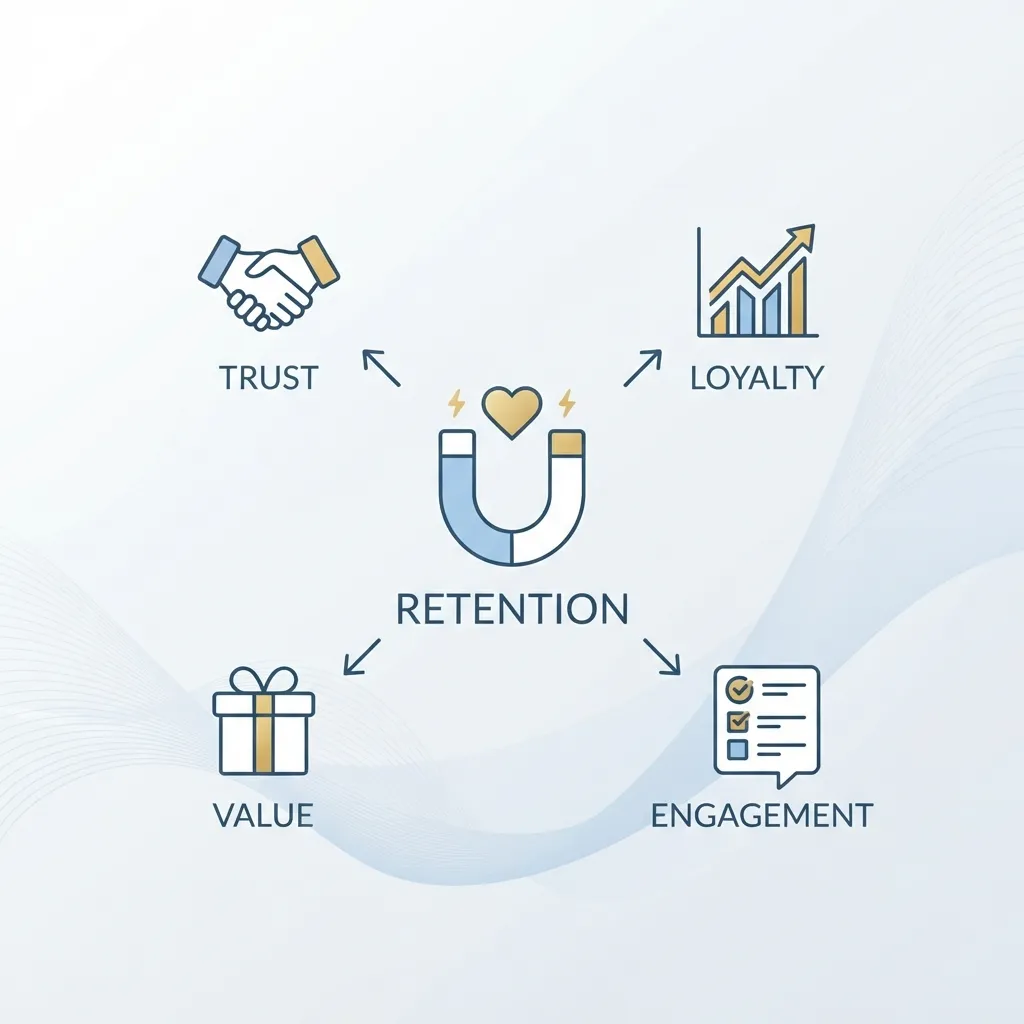
Lever 4: Building Customer Retention
Build an Effective Email and SMS Program
Post-purchase email sequences, abandoned cart reminders, and personalized recommendations based on past purchases keep a store top of mind long after the first sale. Email in particular remains one of the highest-ROI channels available to Shopify stores, since it reaches an audience that has already opted in and shown purchase intent, and it costs relatively little to maintain compared to ongoing paid acquisition once the initial sequences are built and running.
Launch a Loyalty Program
Rewarding repeat purchases with points, discounts, or exclusive perks gives customers a tangible reason to return rather than shopping elsewhere next time. Understanding the different loyalty program models and their benefits helps in choosing a structure that fits a store’s specific margin and purchase frequency, since a program designed for a low-frequency, high-ticket category looks very different from one built for frequently repurchased consumables.
Create Urgency Around Repeat Purchases
Limited-time restocks, seasonal collections, or early access for returning customers all give a reason to come back sooner rather than later, tapping into the same urgency psychology that works during initial acquisition. This tactic connects closely with the broader psychology behind FOMO in marketing, which explains why time-limited offers so reliably prompt action even among already-loyal customers.
Follow Up on Customer Feedback
Actively asking for and responding to feedback, especially after a negative experience, often converts a frustrated customer into a loyal one, since the resolution itself becomes part of the brand relationship rather than just the original transaction.
Common Mistakes That Limit Shopify Sales Growth
- Focusing only on traffic while ignoring conversion rate. Doubling traffic to a store converting at 1% produces the same result as improving conversion rate to 2% on existing traffic, but the latter is often cheaper and more sustainable.
- Installing too many apps. Every additional app adds page load time and potential conflicts, which can quietly undermine the conversion gains those same apps were meant to deliver.
- Neglecting mobile experience. With the majority of ecommerce traffic now arriving on mobile devices, a store that performs poorly on mobile is leaving a significant share of potential sales on the table.
- Underinvesting in post-purchase communication. Treating the sale as the end of the relationship, rather than the beginning of a retention opportunity, leaves significant repeat revenue unclaimed.
- Copying competitor tactics without testing. What works for one store doesn’t automatically work for another; testing changes against a store’s own traffic and audience produces far more reliable results than copying a competitor’s approach wholesale.
- Setting and forgetting pricing and promotions. Discount structures, bundle offers, and shipping thresholds that once performed well can quietly lose effectiveness as customer expectations and competitor offers shift, making periodic review just as important as the initial setup.
Measuring Progress Across All Four Levers
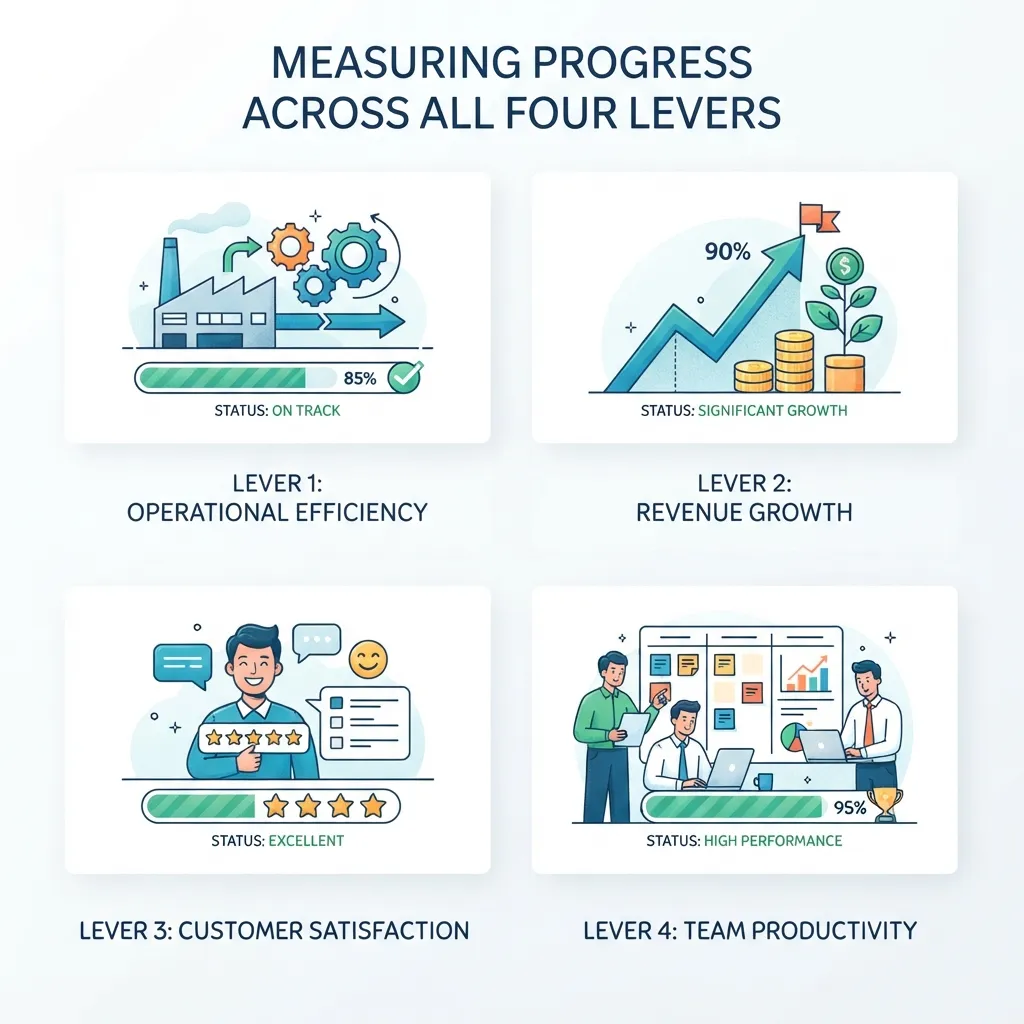
Tracking the right metrics for each lever makes it possible to identify exactly where a store’s biggest opportunity lies:
- Traffic metrics, including organic and paid sessions, show whether acquisition efforts are working.
- Conversion rate, ideally segmented by traffic source and device, reveals where visitors are dropping off.
- Average order value, tracked over time, shows whether bundling and upsell tactics are actually increasing transaction size.
- Repeat purchase rate and customer lifetime value indicate how well retention efforts are converting one-time buyers into long-term customers.
- Cart abandonment rate highlights specific friction points in the checkout process that may be costing sales that were nearly closed.
- Customer acquisition cost relative to lifetime value ties the other metrics together, showing whether the overall economics of the store are moving in the right direction as each lever improves.
Building a Prioritized Action Plan
Rather than attempting every tactic simultaneously, most Shopify stores see faster results by identifying which of the four levers currently has the most room for improvement. A store with strong traffic but a low conversion rate should prioritize product page and checkout optimization before investing further in acquisition. A store with solid conversion but a low repeat purchase rate should prioritize email and loyalty program development. Running the numbers on each lever honestly, rather than assuming traffic is always the answer, tends to reveal a much clearer and more efficient path to increased sales.
It’s also worth revisiting this prioritization on a regular cadence rather than treating it as a one-time exercise. A store that fixes its weakest lever this quarter may find a different lever becomes the limiting factor next quarter, once the first improvement has had time to take effect. Building a simple quarterly review — pulling the same core metrics each time and comparing them against the previous period — turns this from a one-off audit into an ongoing growth habit, which tends to produce more consistent results than periodic, reactive fixes made only when sales noticeably slow down.
Conclusion
Increasing Shopify store sales isn’t about finding one magic tactic — it’s about systematically improving traffic quality, conversion rate, average order value, and retention, then measuring which lever offers the most room for growth at any given time. Stores that treat these four areas as connected parts of a single system, rather than isolated projects, tend to see more sustainable and compounding sales growth than those chasing traffic alone. Small, consistent improvements across all four levers, sustained over several months, generally outperform a single dramatic change in any one area, simply because the gains reinforce each other rather than operating in isolation. Start by identifying the weakest of the four levers in your own store’s data, and focus improvement efforts there before spreading attention thin across every possible tactic at once.
Frequently Asked Questions
1. What’s the fastest way to increase Shopify store sales?
To increase Shopify store sales quickly, focus first on improving conversion rates from existing traffic. Better product pages, clearer calls to action, and a simpler checkout can often produce faster results than increasing traffic alone.
2. Does SEO really help increase Shopify store sales?
Yes. Shopify SEO can help increase Shopify store sales by attracting relevant organic traffic over time. Unlike paid traffic, organic visibility can continue generating visitors without requiring payment for every click.
3. How many apps should a Shopify store use?
Use as few apps as necessary. Every additional app can affect page speed and create potential conflicts, which may reduce conversions and make it harder to increase Shopify store sales efficiently.
4. What is average order value and why does it matter?
Average order value is the average amount customers spend per transaction. Increasing it through bundles, cross-sells, or upsells can help increase Shopify store sales without requiring additional website traffic.
5. How does a loyalty program help increase Shopify store sales?
A loyalty program encourages customers to return by providing incentives for repeat purchases. Strong retention strategies can increase Shopify store sales by turning existing customers into recurring buyers.
6. Should I focus on new customers or repeat customers to grow sales?
Both are important. However, repeat customers can often be more cost-effective to sell to because they already know the brand and products. Balancing acquisition with retention can help increase Shopify store sales sustainably.
7. How does page load speed affect Shopify store sales?
Slow-loading pages can reduce conversion rates because visitors may leave before the page finishes loading, particularly on mobile devices. Improving site speed can therefore support efforts to increase Shopify store sales.
8. What role does email marketing play in Shopify sales growth?
Email marketing reaches an already-engaged audience and can support sales through abandoned-cart recovery, post-purchase sequences, product recommendations, and promotional campaigns. These strategies can contribute significantly to efforts to increase Shopify store sales.
9. How do I know which growth lever to prioritize first?
Review your traffic, conversion rate, average order value, and repeat purchase data. Identifying the weakest area can help you determine where to focus first when trying to increase Shopify store sales.
10. Does video content actually help increase ecommerce sales?
Yes. Product videos can help shoppers understand features, appearance, and usage more clearly than static images alone. Adding relevant video content can support your broader strategy to increase Shopify store sales.
11. What’s a common mistake that limits Shopify sales growth?
Focusing exclusively on increasing traffic while ignoring conversion rate optimization is a common mistake. More visitors do not necessarily produce more revenue if the store struggles to convert them into customers.
12. How often should Shopify conversion optimization be reviewed?
Review conversion performance regularly because customer behavior, competitors, product offerings, and website content change over time. Ongoing testing and optimization can help maintain progress toward increasing Shopify store sales.